All Activity
- Yesterday
-

Why is the Forest Service and BLM so quiet about Bigfoot?
Will replied to georgerm's topic in General Bigfoot Discussion
I think Mount Saint Helens had to be a big one for them. But like you, I think they’ve had them long before that. Yep agreed. -
Why is the Forest Service and BLM so quiet about Bigfoot?
norseman replied to georgerm's topic in General Bigfoot Discussion
No. Hence the nutshell game. I think they had the bones by the 1800s. Watching all the Giant conspiracies like Lovelock caves and others. Amateurs were sending giant bones to the Smithsonian. The Smithsonian says they never got them. But the Smithsonian is exempt from the Indian Graves Act and cannot be audited. It’s essentially a archeological skunk works. By now? With their tech? They undoubtedly have much more than just bones. -
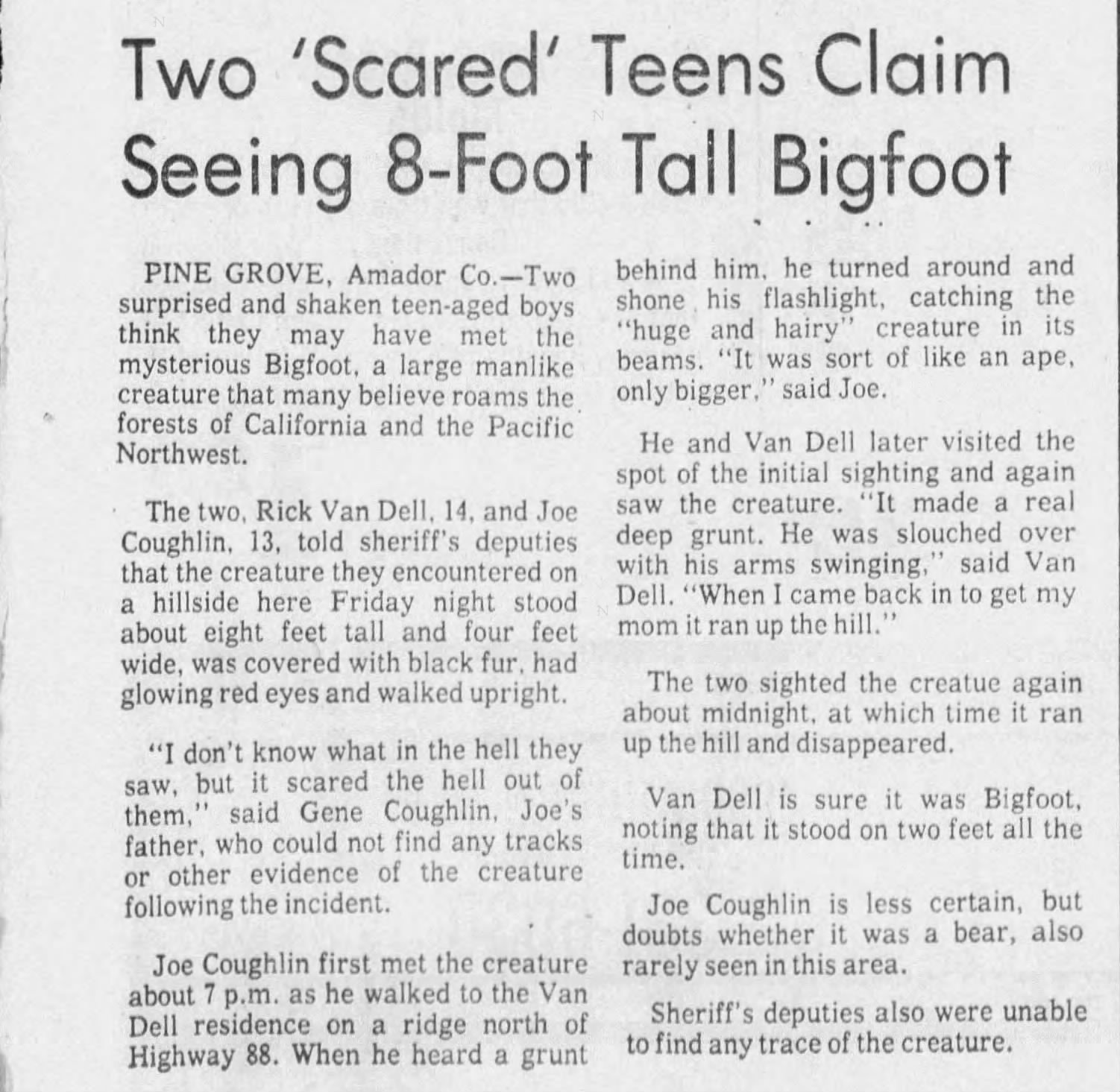
California 1975/11/16 - Two Young Teens See Bigfoot Near Pine Grove
Trogluddite posted a topic in More Historical Newspaper Archives
Published in The Sacramento (CA) Bee on November 16, 1975.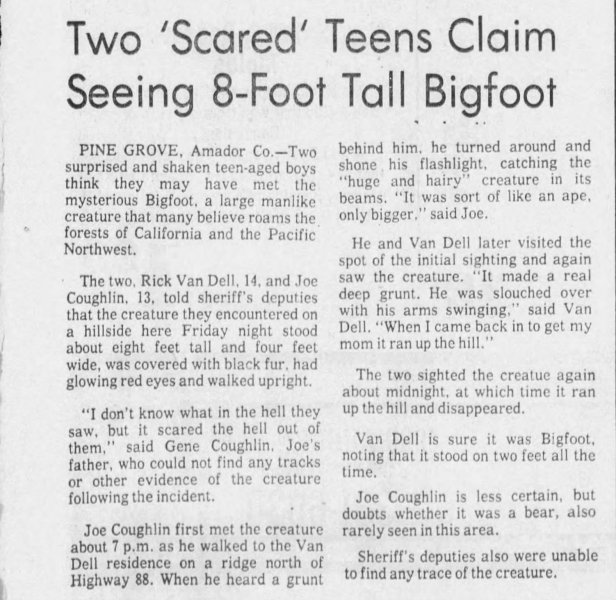
-

Why is the Forest Service and BLM so quiet about Bigfoot?
Huntster replied to georgerm's topic in General Bigfoot Discussion
They won't have to sue. There are plenty of people who will sue for them. And, again, that is an example of why government doesn't want to go there. I suspect you are correct. They are almost certainly not wanting to do that. -
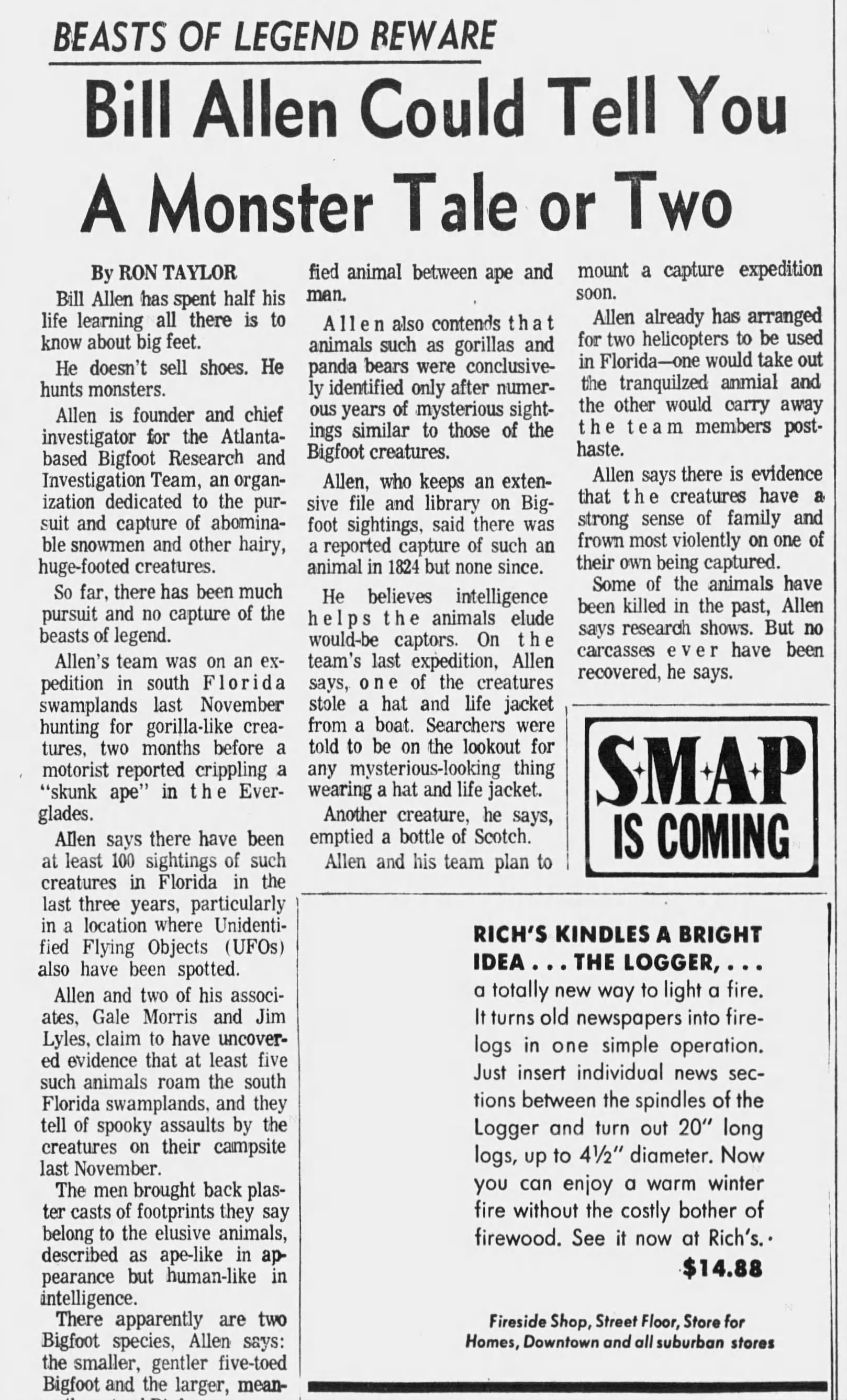
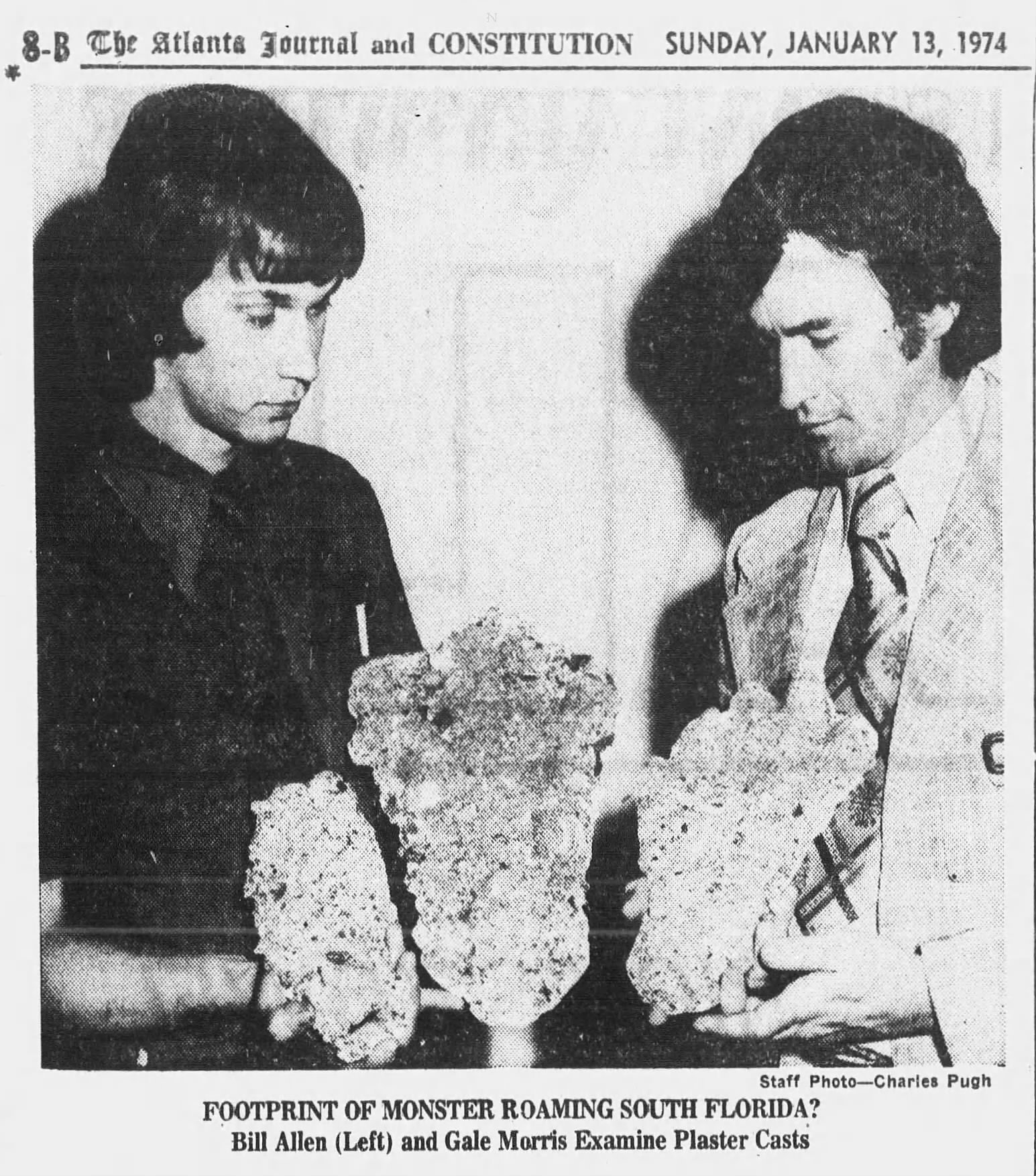
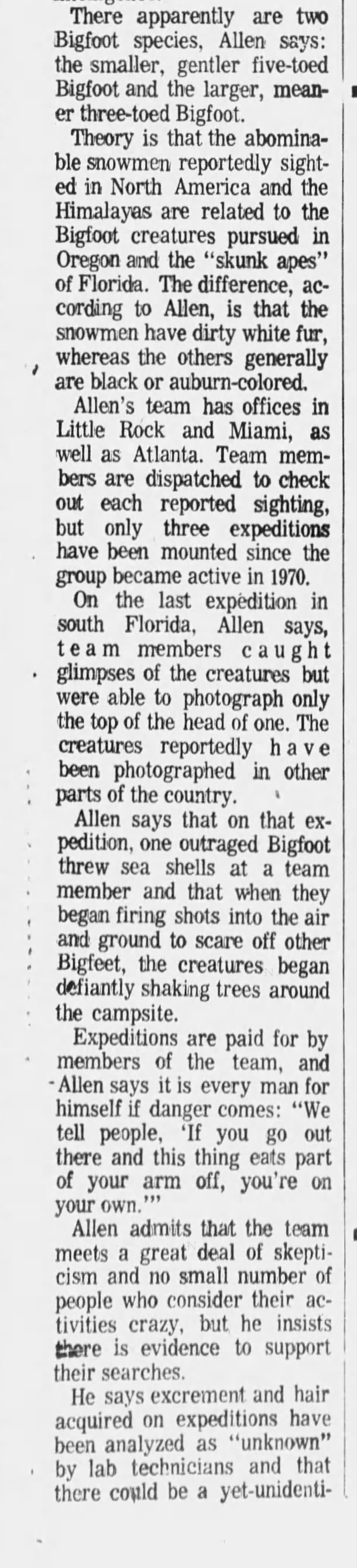
Georgia 1974 - Early Researcher Bill Allen
Trogluddite posted a topic in More Historical Newspaper Archives
Published in The Atlanta Constitution of Atlanta (GE) on January 13, 1974.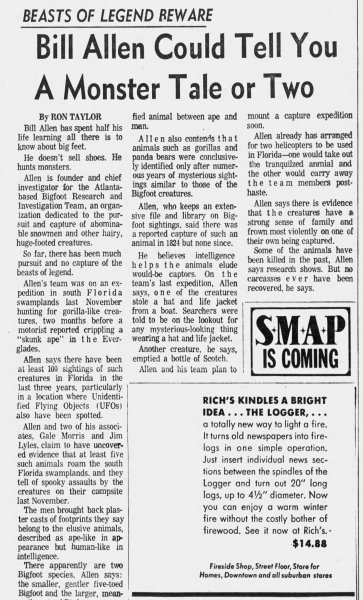
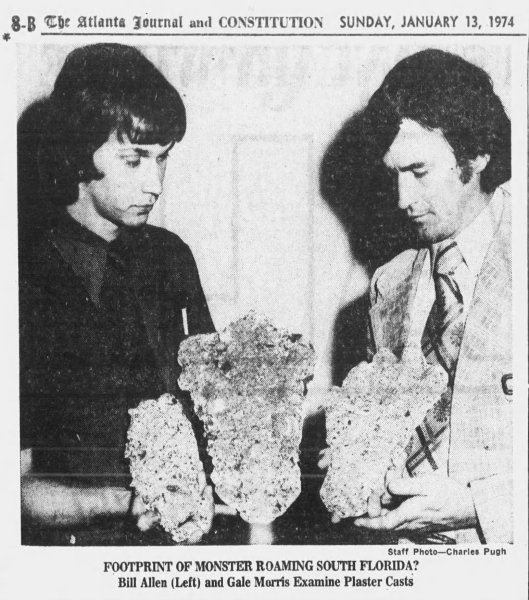
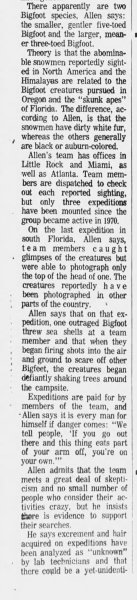
-
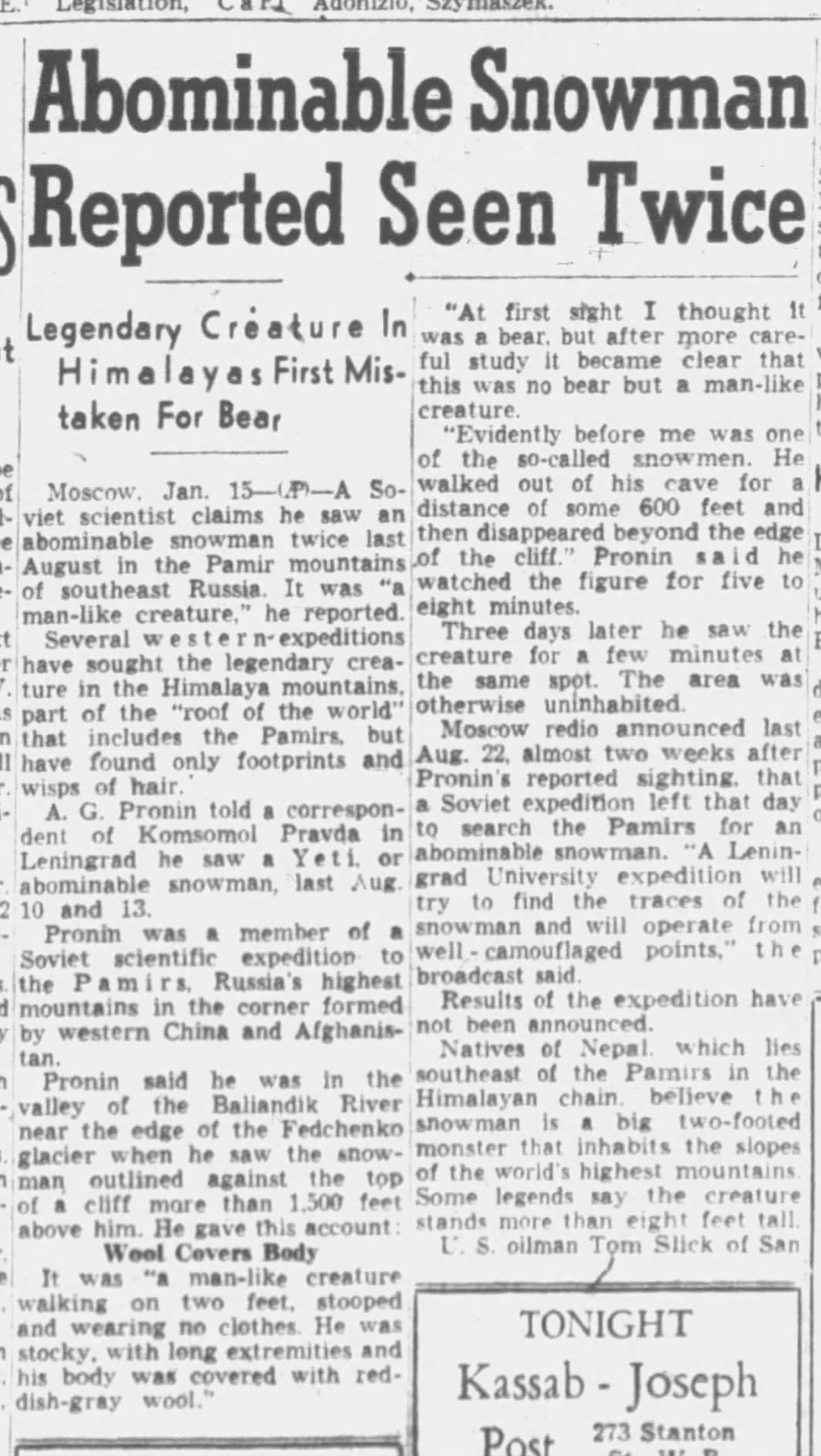
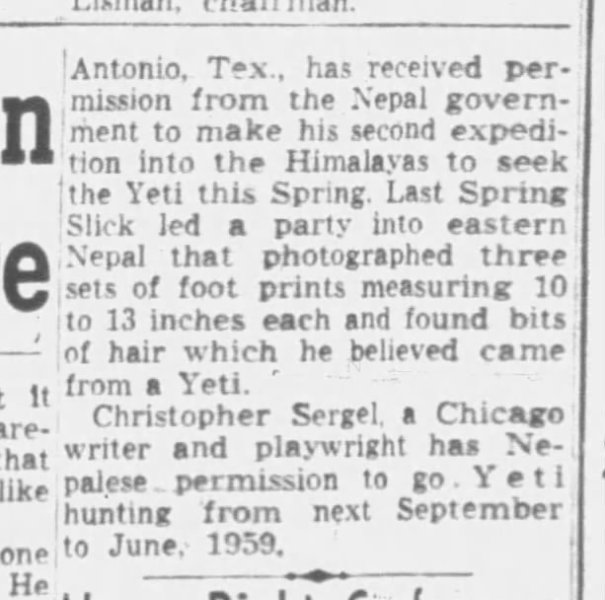
International 1957/08/01 - Russian Scientists See Two Yetis (Tajikistan)
Trogluddite posted a topic in More Historical Newspaper Archives
Published in the Wilkes-Barre (PA) Times Leader, the Evening News on January 15, 1958. This story is from 1957, but apparently only made it to the western press in 1958.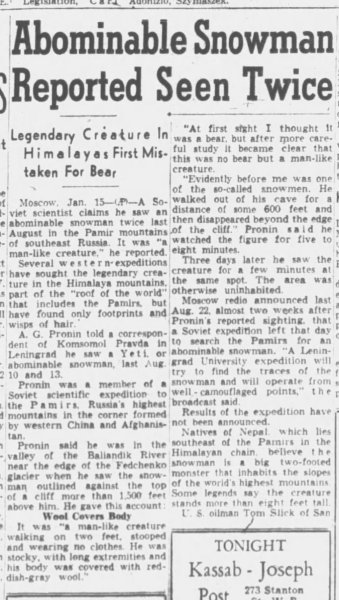
-
Why is the Forest Service and BLM so quiet about Bigfoot?
Will replied to georgerm's topic in General Bigfoot Discussion
Will the “authorities” be able to admit that? -
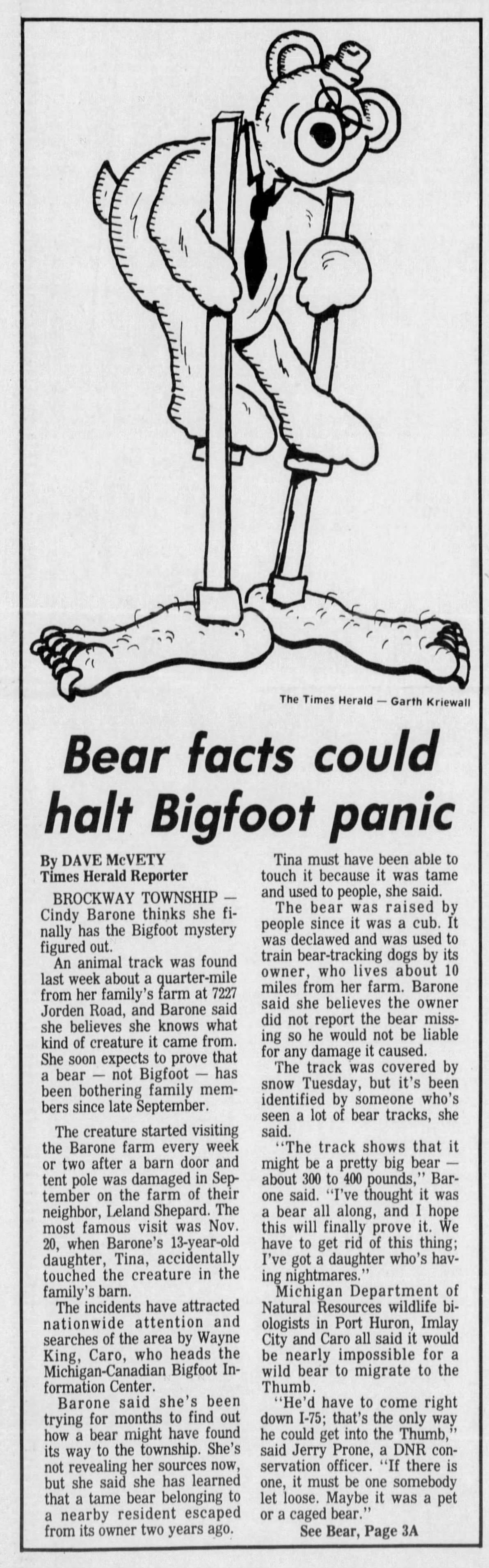
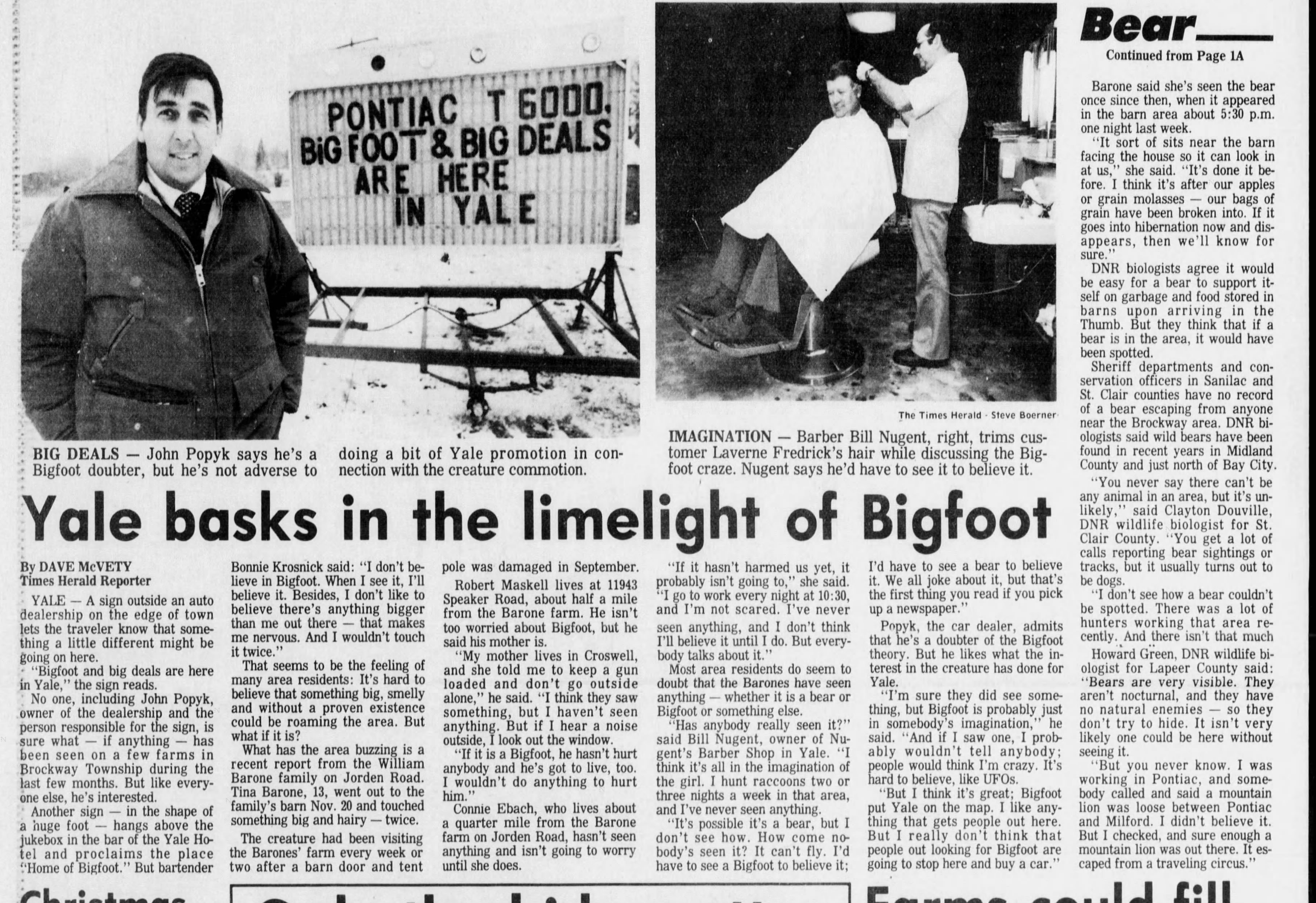
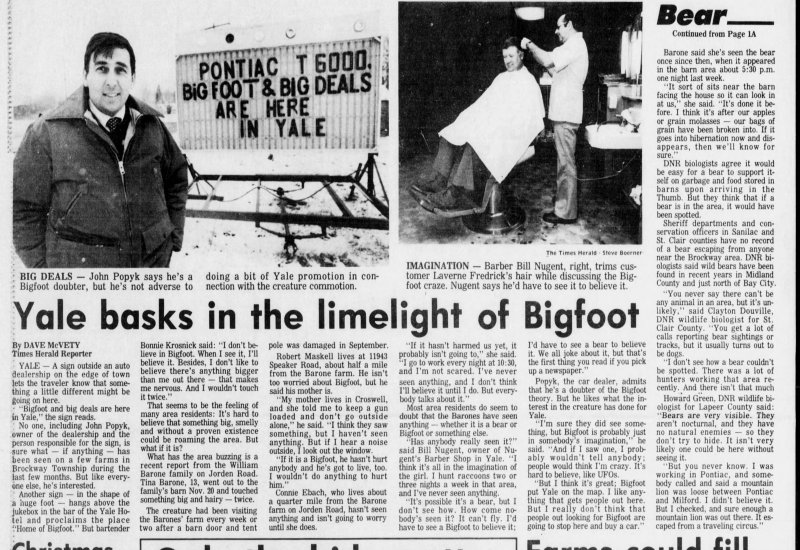
Michigan 1981/12/09 - Tracks Found on Farm In Brockway Township
Trogluddite posted a topic in More Historical Newspaper Archives
From The Times Herald of Port Huron (MI) on December 9, 1981.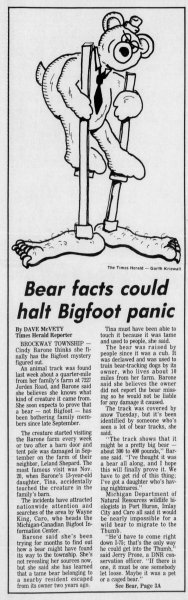
-
Here is Meldrum’s 3d printed skeleton. https://isubengal.com/sixteen-hundred-hours-of-sasquatch-skeleton/
-
Why is the Forest Service and BLM so quiet about Bigfoot?
norseman replied to georgerm's topic in General Bigfoot Discussion
Gorillas, Chimps and Orangs have all been taught sign language. Once that is established? If it’s an ancient human with vocal cords? It will go fairly quickly. -
Why is the Forest Service and BLM so quiet about Bigfoot?
norseman replied to georgerm's topic in General Bigfoot Discussion
That’s probably already happened. -
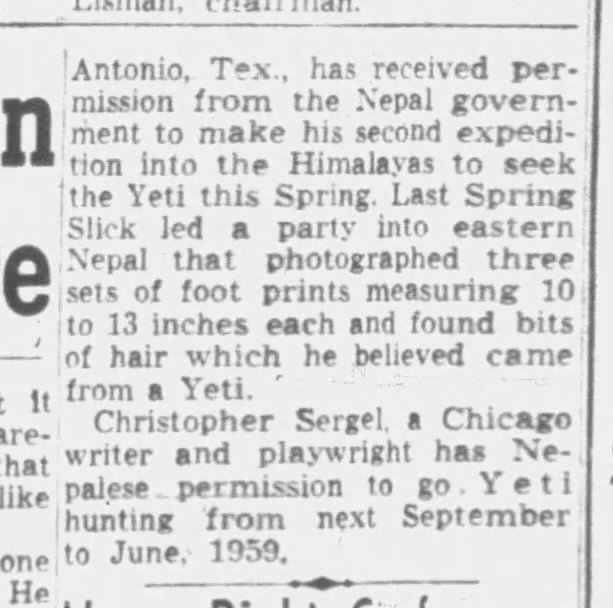
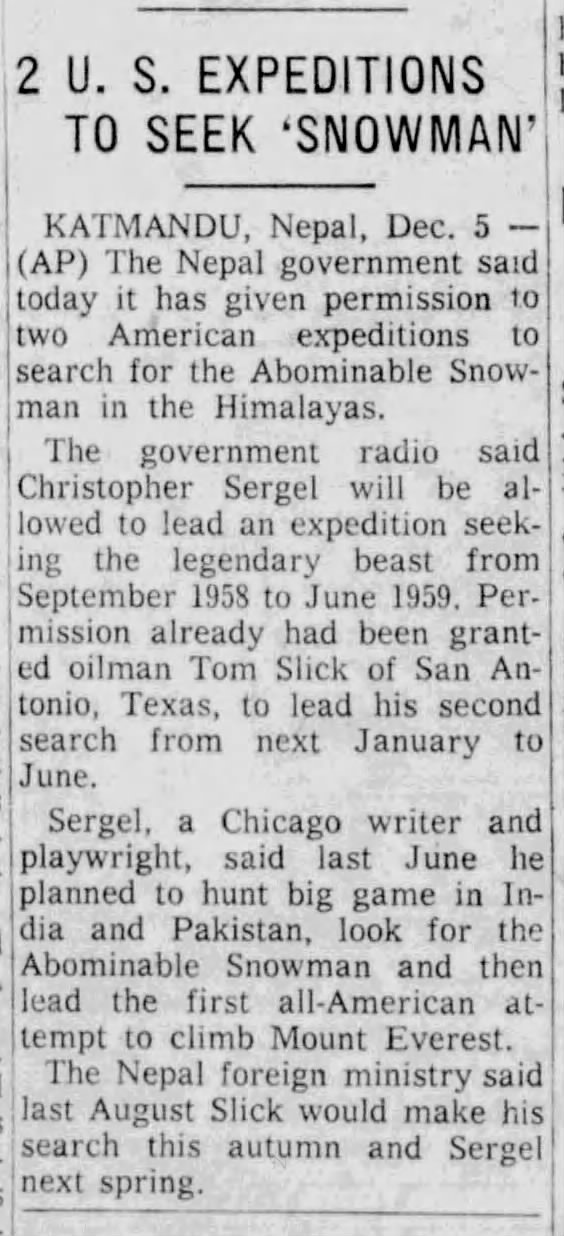
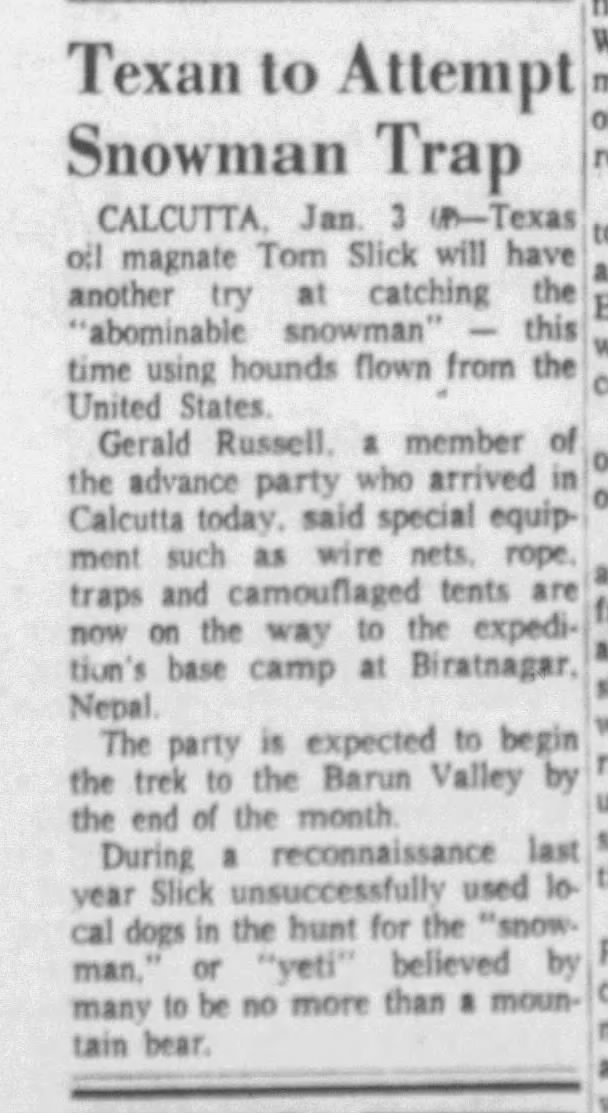
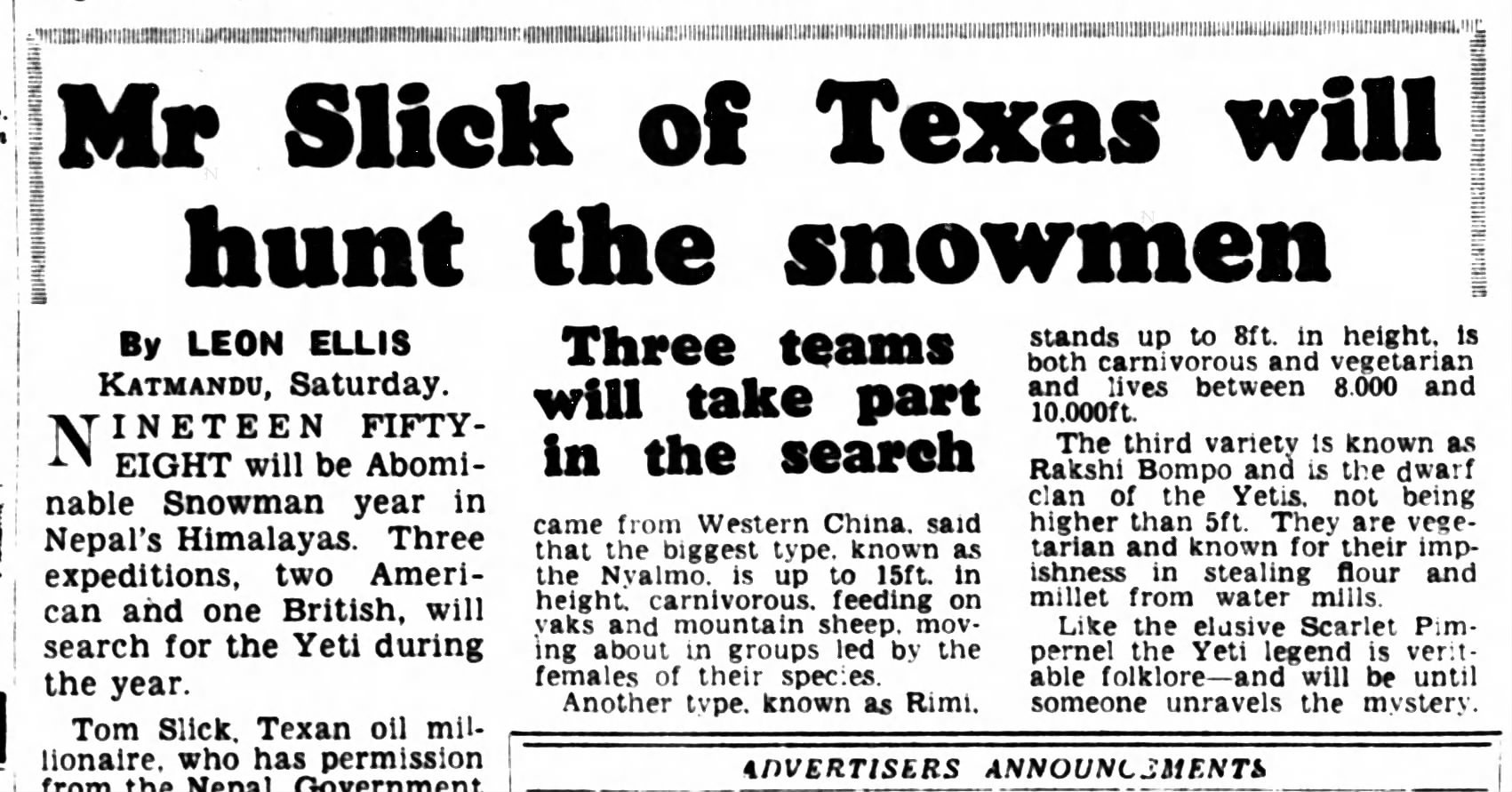
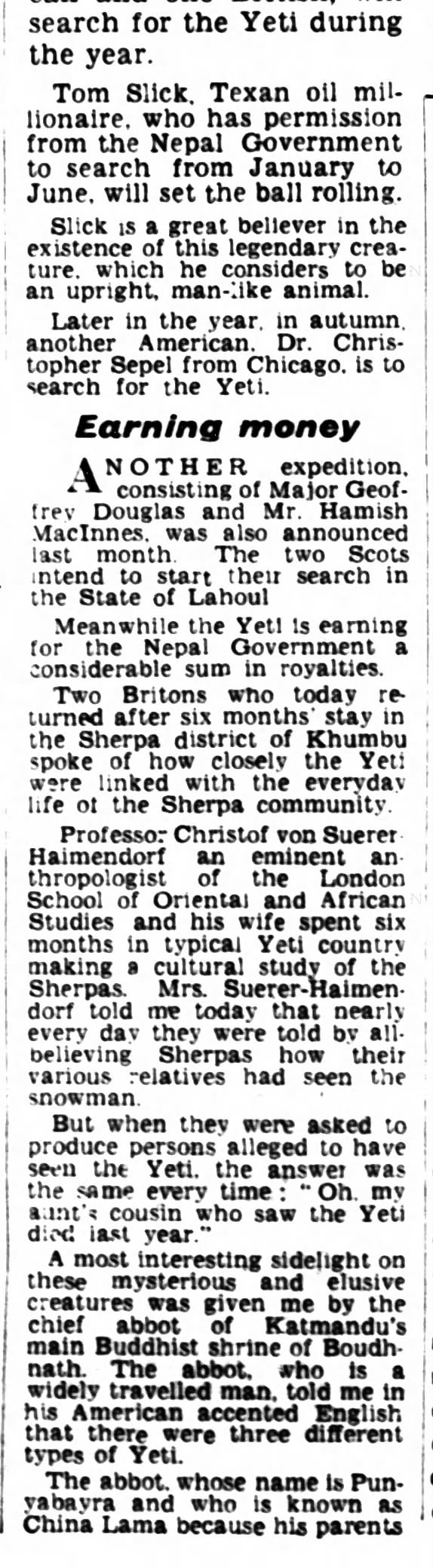
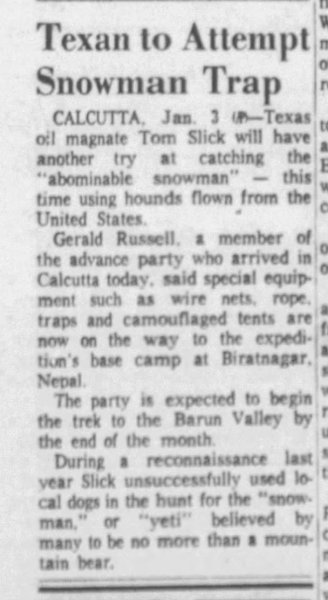
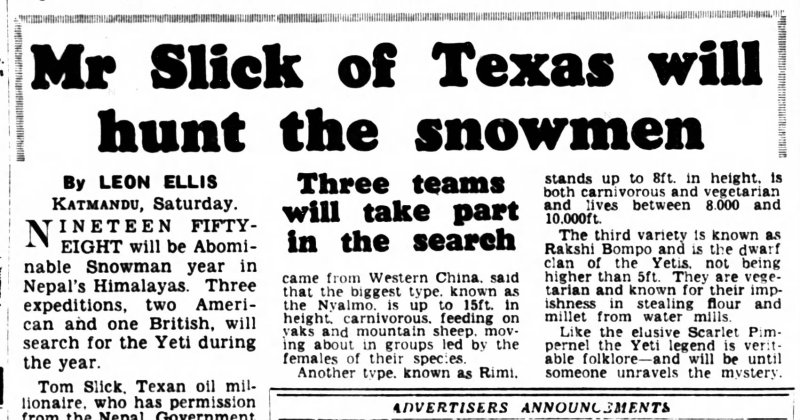
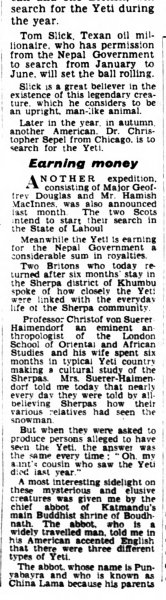
International 1957/12/05 - Nepal Permits Two American and One British Yeti Expedition
Trogluddite posted a topic in More Historical Newspaper Archives
From The Bridgeport Post of Bridgeport (CT) on December 5, 1957. The article likely refers to Tom Slick's expedition as his second because his first "expedition" was not widely publicized. The article describing the "snowman trap" is from the Victoria (TX) Advocate on January 4, 1958. In addition to the two American expeditions, a British Yeti expedition also received permission to search; they are described in an article published by the Sunday Dispatch of London, England on January 5, 1958.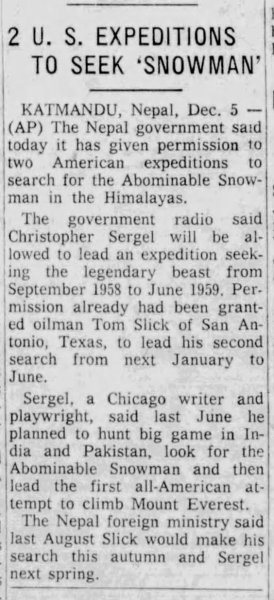
-
Very good video, well worth the time to listen through all of his analysis. Highly recommend giving this a listen and I would be very interested in opinions.
-
Why is the Forest Service and BLM so quiet about Bigfoot?
Will replied to georgerm's topic in General Bigfoot Discussion
If they are an animal I would agree. If were to give them rights, they would be studied under duress in captivity. Will they be able to sue after, will rights have been violated? -
Why is the Forest Service and BLM so quiet about Bigfoot?
Will replied to georgerm's topic in General Bigfoot Discussion
Well, that’s gonna be very interesting trying to figure out the language of this animal. -
Why is the Forest Service and BLM so quiet about Bigfoot?
Huntster replied to georgerm's topic in General Bigfoot Discussion
Yes, if they are determined to be hominin, ie another species of humans like Neanderthal, Denisovan, or Floresiensis, there will be those who will fight legally to see that their human rights are recognized legally. I doubt that sasquatches will be granted land like aboriginal people are, but I'm confident that government landowners will manage government lands with sasquatch rights as a new factor of consideration. A language can't be "assigned". It either exists or it doesn't. -
Why is the Forest Service and BLM so quiet about Bigfoot?
Huntster replied to georgerm's topic in General Bigfoot Discussion
If they exist, and if "discovered" (ie, all of mankind comes to accept as truly existing), then yes, we can safely assume that government(s) will capture and study them in every way imaginable. -
Why is the Forest Service and BLM so quiet about Bigfoot?
Will replied to georgerm's topic in General Bigfoot Discussion
They’re going to capture and study every way imaginable a newly discovered hominid…..hominin, that we are to assign rights, a language and land too? -
Why is the Forest Service and BLM so quiet about Bigfoot?
Huntster replied to georgerm's topic in General Bigfoot Discussion
They can identify all that over time. Sasquatch researchers already understand much of that just by analyzing sighings and footprint reports. Agreed, and that, too, is already understood, especially with regard to large timber industry lands. There is already cooperation between private landowners and sasquatch researchers going on. Human activity affects even human activity. People don't fish in industrial waste ponds or recreate in war zones. -
Why is the Forest Service and BLM so quiet about Bigfoot?
Will replied to georgerm's topic in General Bigfoot Discussion
where is the intensively critical range? Migration routes? No one can identify any of that. There could actually be more bigfeet on private property than on public ground. Human activity doesn’t seem to sway them one way or another. -
Why is the Forest Service and BLM so quiet about Bigfoot?
Huntster replied to georgerm's topic in General Bigfoot Discussion
True, but you can expect "migration routes" to and from "intensively critical range" to be identified and managed, and the "intensively critical range" to be "intensively" managed. The migratory routes come later............. -
Why is the Forest Service and BLM so quiet about Bigfoot?
Huntster replied to georgerm's topic in General Bigfoot Discussion
Yup. Once discovery cannot be denied, you can expect a pair or more of sasquatrches to be held captive and "studied" in every way imaginable. Lawyers have the magical ability to read minds and souls, and communicate your every thought, word, and intent for you. -
Why is the Forest Service and BLM so quiet about Bigfoot?
Will replied to georgerm's topic in General Bigfoot Discussion
Agreed I disagree because they can’t be contained and are found everywhere. If all information is fair game, then industry would be able to prove that modern human living and activities don’t seem to affect them. If they can be found in the dumpster just like the raccoon there isn’t much protection needed. -
Why is the Forest Service and BLM so quiet about Bigfoot?
Will replied to georgerm's topic in General Bigfoot Discussion
Lawyers of special interest groups, just like environments and animals are? You’ll have to sit down with a Bigfoot to get that done. The lawyers won’t be able to determine it because no one can commute with them. -
Why is the Forest Service and BLM so quiet about Bigfoot?
Huntster replied to georgerm's topic in General Bigfoot Discussion
I'm not sure that much additional land would be "set aside" per se. All land is "classified" to one extent or another. Among the loosest classified lands are managed by the BLM. I would expect increased access restrictions or requirements in federal lands where sasquatches would be determined to use extensively, and most of these lands already have extensive access restrictions. But commercial access? Yeah, resource development would most definitely become more expensive and restricted.