All Activity
- Past hour
-
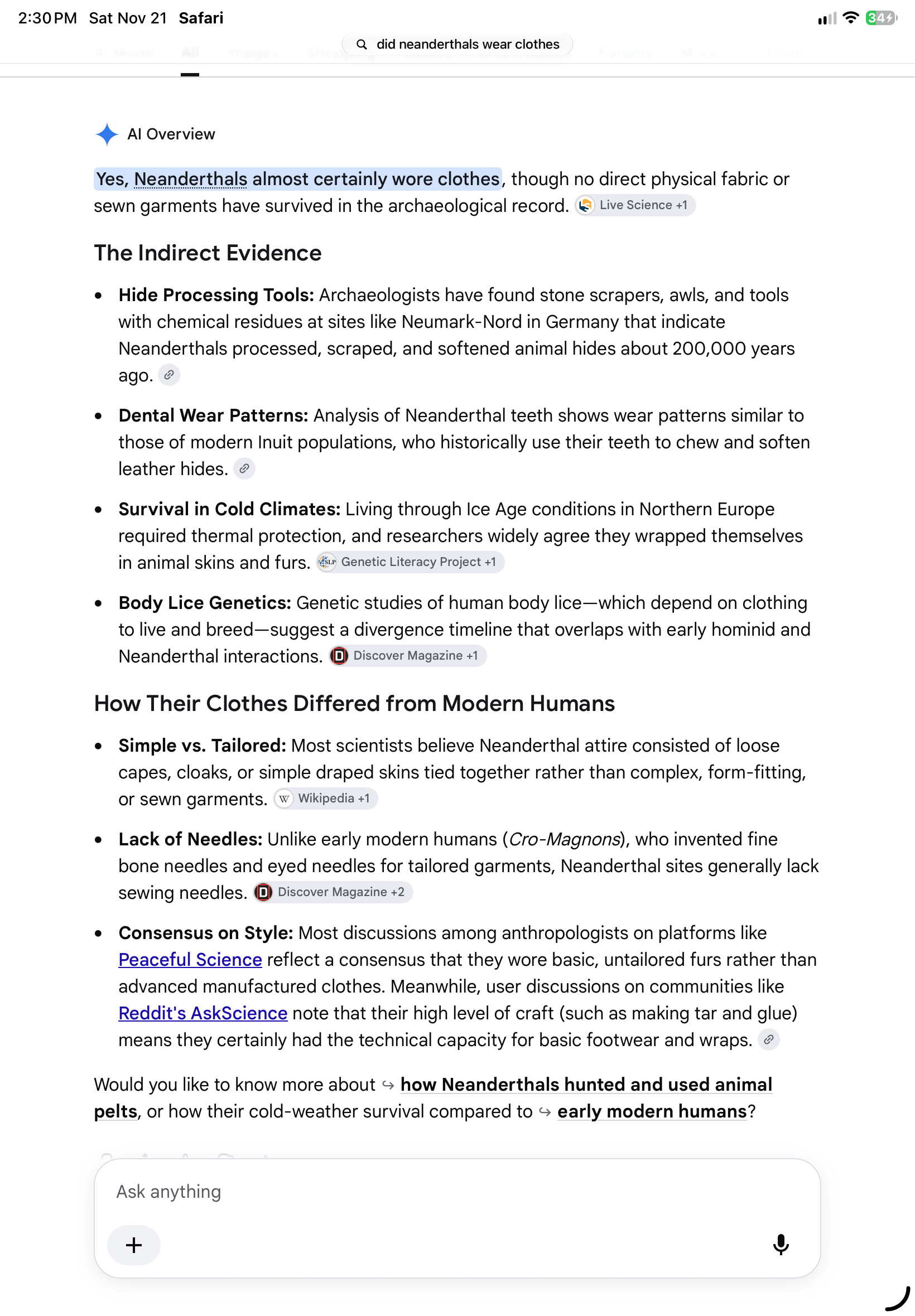
They wore clothes. We can debate how good those clothes were. But they wore clothes.
-
 cactusj00 joined the community
- Today
-
I don't disagree that they were advanced and If I had to bet serious money on it, I'd probably bet that they did at least occasionally wear some form of clothing or animal hides at least. However, there's no DIRECT evidence that they wore clothing and that's been a legitimate point of contention with scientists for a long time. Not only has no clothing been found, but also no tools found that can can identified as used exclusively on clothing (no bone needles for instance). Also, it's still in dispute about whether they were "hairy" or not. Again, it's unfortunate that this area of science depends too heavily on assumptions. https://www.discovermagazine.com/ice-age-fashion-the-murky-origins-of-neanderthal-clothing-46142
-
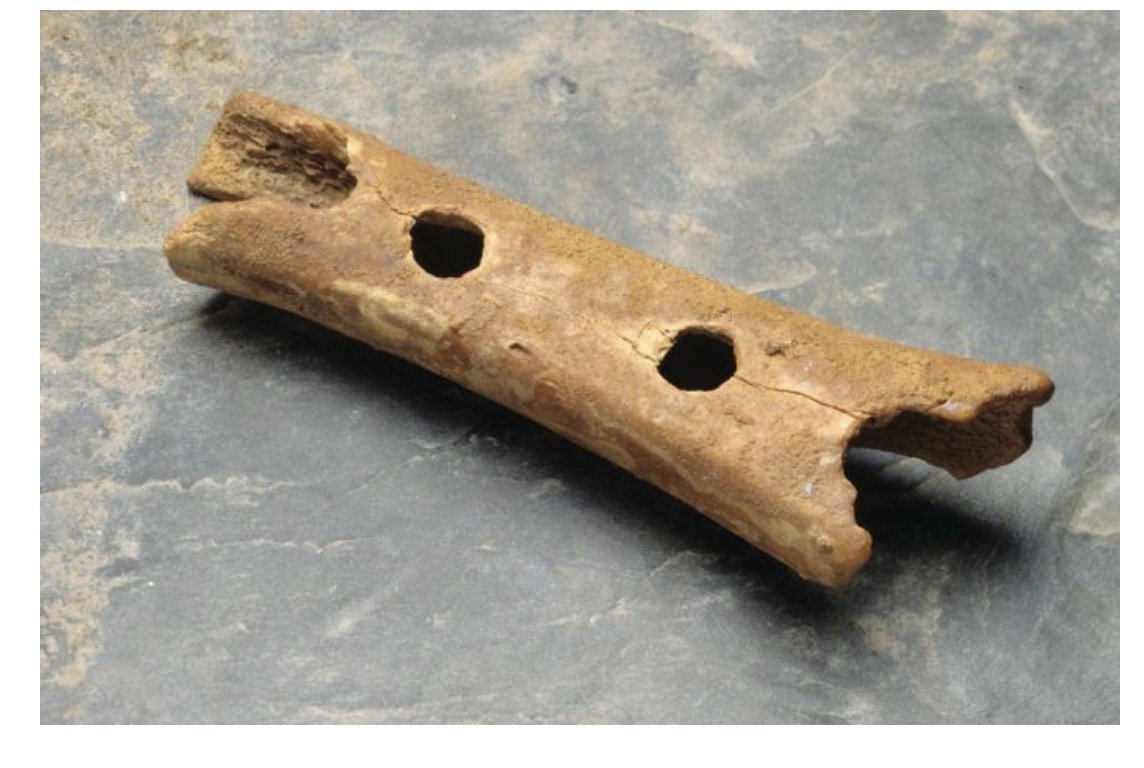
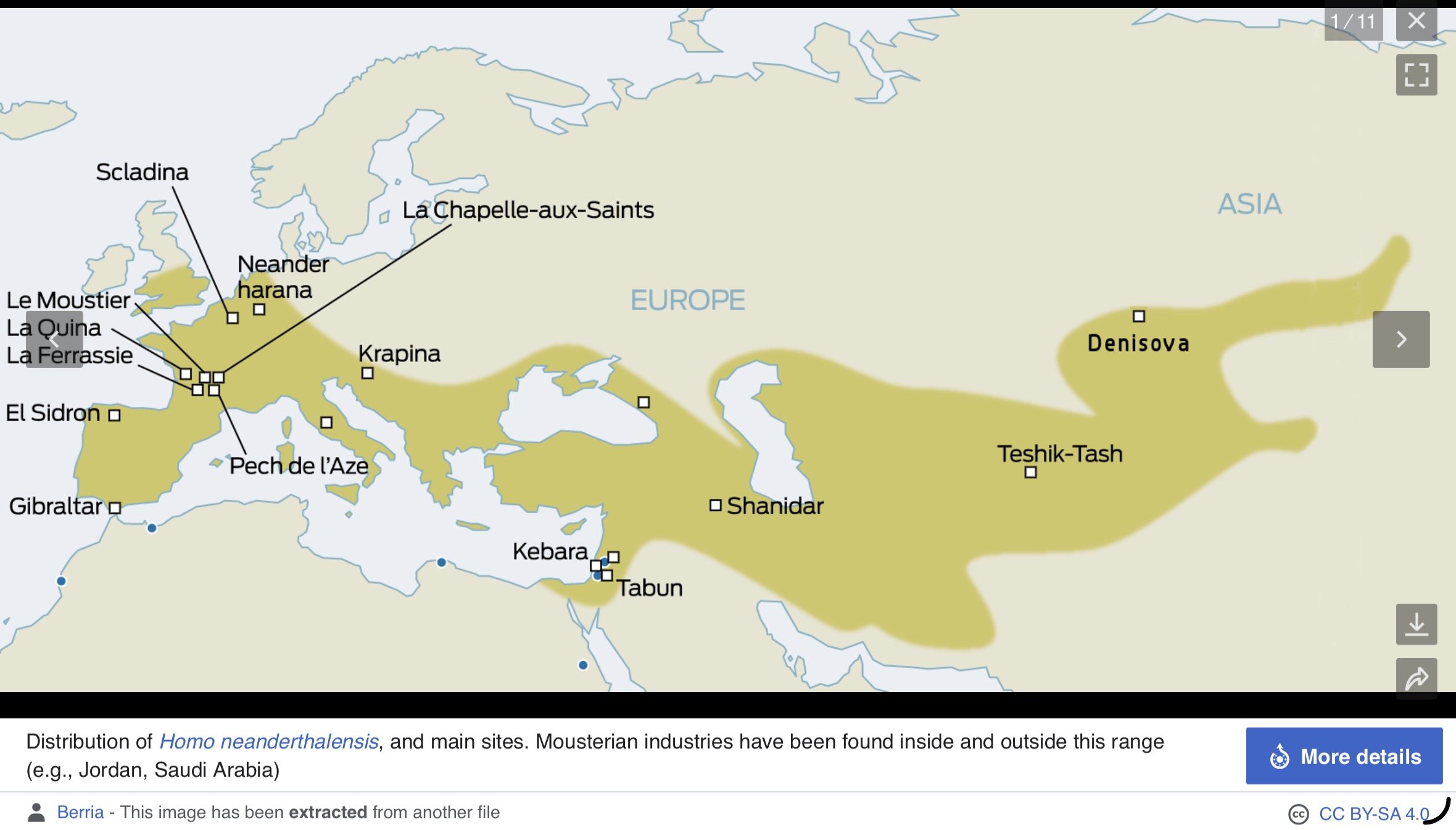
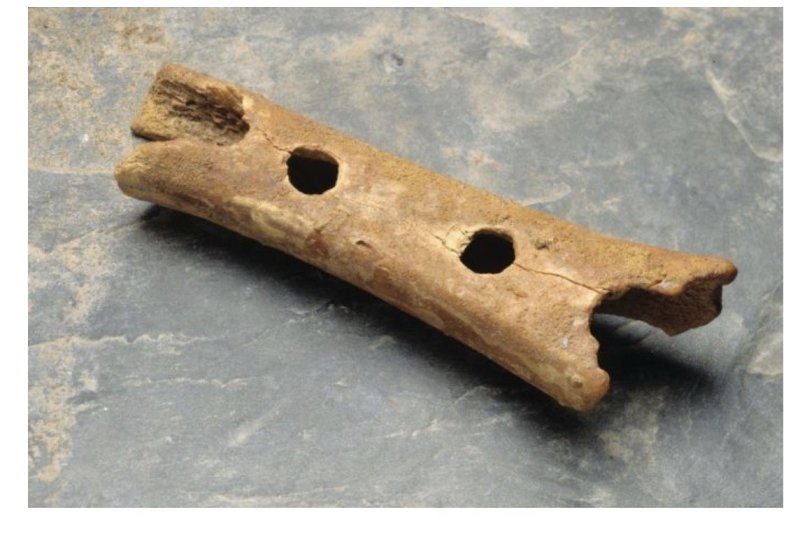
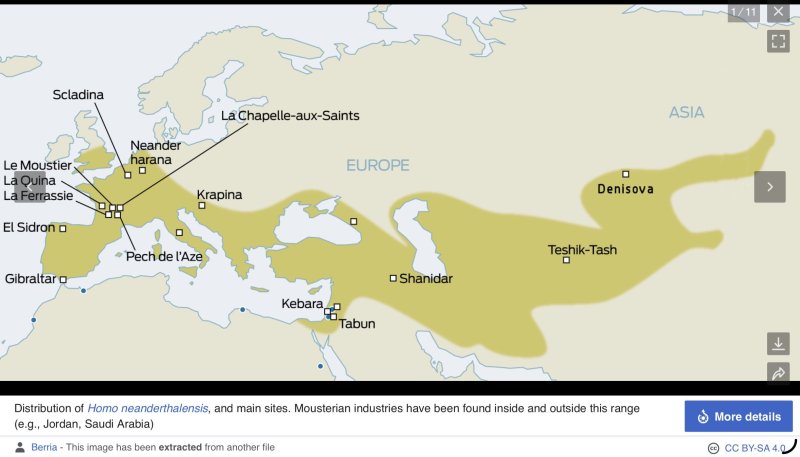
We do have direct evidence that Neanderthals wore clothing. None of the clothing survives to this day. But their stone tools do. They made both hide scrapers and awls. And we also have a bone flute made from a cave bear cub leg bone. And eagle talon pendants. So they were making holes in items. And Denisovans were making jewelry. They were boring holes through jade. These people are highly intelligent and very sophisticated. Their stone culture is called Mousterian. And was present from England all the way to Siberia. We also know that Neanderthals and Denisovans interbred where their ranges overlapped. And so probably there was technology overlap as well. https://en.wikipedia.org/wiki/Mousterian#/media/File:Neanderthal_distribution.jpg https://www.science.org/content/article/neandertals-made-their-own-jewelry-new-method-confirms?referrer=https%3A%2F%2Fwww.google.com%2F https://www.nyu.edu/about/news-publications/news/2024/february/did-neanderthals-use-glue--researchers-find-evidence-that-sticks.html?challenge=d06e90d7-4d8f-4b88-9d8c-10b73beb60f1 Its scientifically accepted that they wore clothes, jewelry, played music, buried their dead, glued stone spear heads to wooden shafts and did all the things we as Homo Sapiens recognize as “human”.

-

USDA Releases Decades of Bigfoot Investigation Records - cwibc.co.id
BFFbot posted a topic in News Articles
USDA Releases Decades of Bigfoot Investigation Records cwibc.co.idView the full article -
USDA Releases Government Files on Bigfoot Sightings Across America - bsinews.id
BFFbot posted a topic in News Articles
USDA Releases Government Files on Bigfoot Sightings Across America bsinews.idView the full article -
For reference, : !) The oldest known human fossils or artifacts of humans outside of Africa were found in Dmanisi in Georgia and dated to 1.8 million years ago. 2) The oldest widely accepted human-made artifacts in Siberia come from Diring Yuriakh on the Lena River (at least 260,000 years old, with estimates ranging up to 270,000–370,000 years ago, and disputed claims pushing much further back), while the oldest securely dated physical human fossils are ~200,000-year-old Denisovan remains from Denisova Cave. There are no verified wild ape fossils in Siberia's fossil record—fossil apes during the Miocene lived in regions like Europe, Anatolia, Africa, and warmer parts of South and East Asia 3) China's oldest known human (hominin) fossils and stone artifacts date back roughly 1.7 to 2.25 million years, while its oldest known primate fossil—Archicebus achilles—dates to 55 million years ago 4) The oldest known human fossils or artifacts of humans in the New World are the fossilized footprints at White Sands National Park in New Mexico, dated to roughly 21,000 to 23,000 years ago There is an interesting spread of time between human traces between China and Siberia, and Siberia and the New World.
-
Speaking of a Bering land bridge? It’s becoming apparent that Homo Erectus did not see deep ocean as a barrier.
-
This is not correct. Probably taken out of context. Lets steal from Google (and by saying that, cite the source :)) See below!! But first .. There is something else to be understood here. What we're talking about here is fundamentally rooted in the Milankovitch Cycles and there is a change partway through of which of the 3 cycles is dominant. "Cycle 1" is eccentricity which is really 2 parts, about 100K years and about 405K years, "cycle 2" is obliquity which operates on a roughly 41K year cycle, and precession which operates on a roughly 23K to 26K year cycle. During the period of about 700K to 1.25 MYA, the cycle for glaciation transitioned from being mostly driven by obliquity to mostly driven by eccentricity. The earlier cycles were shorter and less intense, later cycles longer and more intense. (Note that this is from both ice core samples and from marine sediment samples, in other words, not theory but rather repeatable science.) ++++++ Now, the "below" --> Across the entire Pleistocene epoch (2.58 million to 11,700 years ago), the Bering Strait cycled between a flooded seaway and an exposed land bridge more than a dozen times as global ice sheets grew and shrank. [1, 2, 3] Because the Bering Strait sill is roughly 50 meters (164 feet) deep, geologists reconstruct its opening and closing across the full 2.58-million-year epoch using Marine Isotope Stages (MIS)—even-numbered stages represent cold glacials (land bridge exposed) and odd-numbered stages represent warm interglacials (strait flooded). [1, 2] 1. Early & Middle Pleistocene (2.58 Million – 130,000 Years Ago) Rather than having single continuous dates, the corridor alternated on two major orbital rhythms: 2.58 Million – ~900,000 Years Ago (41,000-Year Cycles): During the Early Pleistocene, glacial cycles were shorter and shallower. The land bridge emerged briefly during cold peaks (such as MIS 22 around ~900,000 years ago, when major North American ice sheets expanded) and flooded every ~41,000 years during warmer interglacials. ~900,000 – 130,000 Years Ago (100,000-Year Cycles): Following the Mid-Pleistocene Transition, ice ages grew much longer and deeper, exposing a wider land bridge for tens of thousands of years at a time during major glacials, separated by flooded seaways during interglacials: [1, 2] Interval Type Marine Isotope Stage Approximate Dates (Years Ago) Bering Strait Status Glacial MIS 16 ~676,000 – 621,000 Land Bridge (Major glaciation) Interglacial MIS 15 ~621,000 – 563,000 Flooded Seaway Glacial MIS 12 ~478,000 – 424,000 Land Bridge (Anglian / Elsterian glacial) Interglacial MIS 11 ~424,000 – 374,000 Flooded Seaway (Long warm period) Glacial MIS 10 ~374,000 – 337,000 Land Bridge Interglacial MIS 9 ~337,000 – 300,000 Flooded Seaway Glacial MIS 8 ~300,000 – 243,000 Land Bridge Interglacial MIS 7 ~243,000 – 191,000 Flooded Seaway Glacial MIS 6 (Illinoian) ~191,000 – 130,000 Land Bridge (Extensive exposure) 2. Late Pleistocene (130,000 – 11,700 Years Ago) The final 130,000 years are the most precisely dated using ocean sediment cores, paleogenomics, and sea-level records: ~130,000 – 115,000 Years Ago (MIS 5e / Last Interglacial): Flooded Seaway. Global sea levels were higher than today, completely submerging the strait. [1] ~115,000 – 35,700 Years Ago (MIS 5d–MIS 3): Mostly Flooded / Intermittent. Older models assumed the land bridge formed around 70,000 years ago (MIS 4), but recent Arctic Ocean nitrogen-isotope reconstructions show the strait remained flooded through most of this period until ~35,700 years ago, with at most brief, shallow exposures during cold stadials. [1, 2, 3] ~35,700 – 13,000/11,000 Years Ago (Late MIS 3 – MIS 2): Land Bridge. Rapid ice-sheet growth dropped sea levels enough to connect Siberia and Alaska continuously through the Last Glacial Maximum (26,500–19,000 years ago). [1, 2] ~13,000 – 11,000 Years Ago (End of Pleistocene): Flooded Seaway. Meltwater from retreating ice sheets breached the sill around 13,000–11,500 years ago, permanently reopening the Bering Strait just as the Pleistocene ended at 11,700 years ago. [1, 2, 3] ++++++++++++++++ Then, finally, my own stuff kinda playing the clock representing rate of mutation which seems to be pretty constant, I came up with the notion that we're looking for a latest common ancestor between us and sasquatch to support the level of compatibility / incompatibility suggested by the Nor Cal tribal lore at about 800K years ago. At the time I said Homo erectus but we have a bit more information to work with now. Since scientists are at least tentatively linking "Dragon Man" (Homo longi) which has been dated to 1MYA to about 51KYA to Denisovan, then Denisovans do have to be considered. Remember that there may be others we have not discovered or timelines that have to be adjusted: we should be focusing on asking the right question, not jumping ahead to try to force a wrong/premature answer! I guess that's probably enough outa me for a bit ..
-
Hello Buckaloo and nice to hear from you. Let's get into Yetis, Denisovans and Bigfoot in basic terms. Himalayan guides or Sherpas who have seen Yetis, estimate their height, depending on the age of an individual, to be 6' tall for teen age Yetis and all the way up to 10' tall for a rare full grown male. This is also the height range of Sasquatches derieved from the numerous BFRO reports. A 6' tall Bigfoot or Yeti probably ranges from 250 pounds and up to 400 pounds for the stocky, muscled Bigfoot. I suppose for a 10' creature, it might weigh in at 800 to 1200 pounds and they are most likely rare. The average full grown male 8' Bigfoot, could weigh 500 to 800 pounds and keep in mind these figures are estimates from what I've read. Now to complicate matters, in Europe and parts of Asua, we have fossil records of Denisovans who ranged from 6' tall and up to 6'3” that are figures taken from fossil records unlike Yetis and Bigfoots which are measued from estimation. A Denisovan or Homo longi leg bone called the Pengu specimen found near Taiwan dated about 44,000 years ago provide measurements of height and weight. The Tibia leg bone would make the individual 6'3” with a weight of 201 pounds but it may not be the bones of an adult and could be an adolescent.
-
Forest Service Releases 1982 Bigfoot Track Records - Hoodline
BFFbot posted a topic in News Articles
Forest Service Releases 1982 Bigfoot Track Records HoodlineView the full article -
USDA releases decades of Bigfoot files, including 1982 investigation - FOX 5 New York
BFFbot posted a topic in News Articles
USDA releases decades of Bigfoot files, including 1982 investigation FOX 5 New YorkView the full article -
US releases decades of Bigfoot files (PHOTOS) - Big News Network.com
BFFbot posted a topic in News Articles
US releases decades of Bigfoot files (PHOTOS) Big News Network.comView the full article -
Trump releases 'evidence' of Bigfoot as man reveals terrifying encounter: 'We had chills' VTView the full article
-
Trump administration quietly declassify files on '300-pound' Bigfoot sightings Daily Express USView the full article
-
Trump Administration Releases Files On 'Bigfoot' TMZView the full article
-
Trump Administration Reveals Secret Documents on Alleged Bigfoot Sightings - Daily Beirut
BFFbot posted a topic in News Articles
Trump Administration Reveals Secret Documents on Alleged Bigfoot Sightings Daily BeirutView the full article -
US government quietly releases Bigfoot files revealing what officials found in 1982 UNILADView the full article
-
Trump releases 'evidence' of Bigfoot & secret expedition to track mystery beast - The Sun
BFFbot posted a topic in News Articles
Trump releases 'evidence' of Bigfoot & secret expedition to track mystery beast The SunView the full article -
Is Bigfoot real? Trump administration releases chilling secret files on mysterious creature WIONView the full article
-
Is Bigfoot real? Trump administration releases chilling secret files on mysterious creature WIONView the full article
-
GTA 6: How and Where to Find UFO and Bigfoot in the Game - EGW.News
BFFbot posted a topic in News Articles
GTA 6: How and Where to Find UFO and Bigfoot in the Game EGW.NewsView the full article -
"A 300-pound plus two-footed being:" Trump's Forest Service rejects 'Bigfoot' track claims following a wave of UFO file releases AOL.comView the full article
-
"A 300-pound plus two-footed being:" Trump's Forest Service rejects 'Bigfoot' track claims following a wave of UFO file releases Soap CentralView the full article
-
USDA releases Bigfoot files, including 1982 Forest Service probe of footprints in Washington's Umatilla National Forest Tippah NewsView the full article
-
USDA Releases Bigfoot Files Detailing Reported Footprints and Sightings - SSBCrack
BFFbot posted a topic in News Articles
USDA Releases Bigfoot Files Detailing Reported Footprints and Sightings SSBCrackView the full article