
Leaderboard


Popular Content
Showing content with the highest reputation since 06/04/2026 in all areas
-
We'll never know the truth unless a Mothershop lands on the whitehouse lawn and an alien steps out wanting to talk to the President. UFOs are used as cover for black projects, doesn't mean all UFO cases are fabricated by the government, but a lot are.4 points
-
Do y'all remember the old saying, " If you keep doing the same thing over and over, you'll keep getting the same outcome"? I think that's a lot of the problem. People assume or believe they know what bigfoot is so they keep looking for physical evidence, which at this point, will have to be a body. I don't think that will work either and I'll tell you why. I've kept this opinion under wraps for years but I'm dying of metastatic breast cancer that has now spread to major organs, so I don't have much time left to tell the tale. Many years ago, I went to Selma, Alabama to investigate a giant skeleton on display in a restaurant that was supposedly Cheif Tuscaloosa. For those who aren't familiar, Cheif Tuscaloosa was documented by the Spanish to be over 8 feet tall. I suspected that this skeleton wasn't human or some historic Indian Chief, so I went on down to Selma to check it out. The owner of the restaurant provided the documentation from the US government that the skeleton was over 7 feet tall. They took that skeleton for further study, but what they returned was obviously a human skeleton typical of what you would find in an anatomy class in school. I measured the skeleton and it was only slightly taller than me. These medical school skeletons can sometimes be a conglomeration of bones from different people. I took a toe bone for DNA analysis but after talking to a well-known geneticist we decided it wasn't worth the effort to do DNA testing based on what I found. The point I'm getting at is that no matter what you believe bigfoot to be it is a real phenomenon. I say that because the government obviously swapped out those skeletons and sent a regular human skeleton back to the owners instead of the original skeleton. I'm pretty sure the documents that she showed me were legitimate, she did not realize the skeleton was swapped out until I examined it and it didn't fit the measurements on the documentation. The government wanted that original skeleton for a reason, now what they found out is anyone's guess. The same will happen if someone manages to obtain a type specimen. All I can say is when you look down into the abyss, it certainly looks back at you. Keep that in mind as you continue your quest for truth. I think the government knows what they are and it is probably nothing that we assume it to be. I think people that are interested in bigfoot get bored with the same results, or lack of results, that happens over and over again when you simply look for physical evidence, keeping the focus and assumptions about a being so narrow.4 points
-
It was Bob Heironimus.3 points
-
The threats against whistleblowers and even the outbreak of missing and assumed deceased scientists is grist for the mill about how national security will continue to be used to cover up black box programs and funds, we can only hope the gold bars at Ft Knox haven't flown the coop already. Family of potential whistle blowers are now threatened and false charges used to wreck careers so the stories about BF researchers having home invasions and computers snatched in the past is totally believable. Mr. Gold's comments on the paranormal are as normal as remote viewing now.3 points
-
I have not seen this film, and will not, but I will speculate about it within the overall history of sasquatchery since 1955 (the Jerry Crew event). Firstly, it is most similar to the Greg Long book thus far. Long's book was an immediate hit with the skeptic community, and it became their bible. Since its publication, it rose quickly in prominence, but since has been roundly considered a hoax in and of itself among all who give it any measure of honest consideration. The skeptic community still tries to defend it amongst themselves, but appear to be True Believers by many, and the scientific community pretty much ignores them. Indeed, there is increasing interest in the phenomenon by the scientific community, especially the DNA field, and this probably frightens the skeptic community. Secondly, the commercial side of sasquatchery is exploding. Cartoonish and AI sasquatches are all over YouTube and commercial products. My grandson bought me Bigfoot shampoo and hair conditioner for my birthday last fall. It's nuts. My family buys me Bigfoot T-shirts all the time. If sasquatches exist or not in biology, they clearly exist in fantasy and imaginations BIG TIME, and it's growing. This alone is crushing the skeptic religion. They're done in the short term regardless of "discovery". That's the primary reason why I speculate that this film is desperation, and may even be the reason why they produced it. They know they're on the ropes.3 points
-
That guy is everywhere!😶🌫️2 points
-
2 points
-
I think this is the report of which you remembered: https://www.bfro.net/GDB/show_report.asp?id=501242 points
-
Giant squid are huge, the size of a school bus. They're extinct or nearly so, right? Impossible to film. Never before seen in their natural habitat? Turns out, there are tens of millions of giant squid in the oceans, plenty enough to support the current Sperm Whale population. Only a few years ago (literally, like 2024) we thought them near extinction, and had never filmed a live one except under extremely unusual accidental conditions or the few washed up on beaches or caught stuck to the mouth of a whale mid-meal. Now we can film them any time we want. The secret? Changing the light used to film the deep. This is an analogous situation to sasquatch, just in case you were wondering why I'm talking about giant squid.2 points
-
Three months later (almost), can we stick a needle in this one?2 points
-
I came for more in depth discussion on the topic. Most places are so tribal that real discussion doesn’t really take place.1 point
-
Orang Pendek and Otang are 2 undiscovered primates I believe to be more likely to be true than not.1 point
-
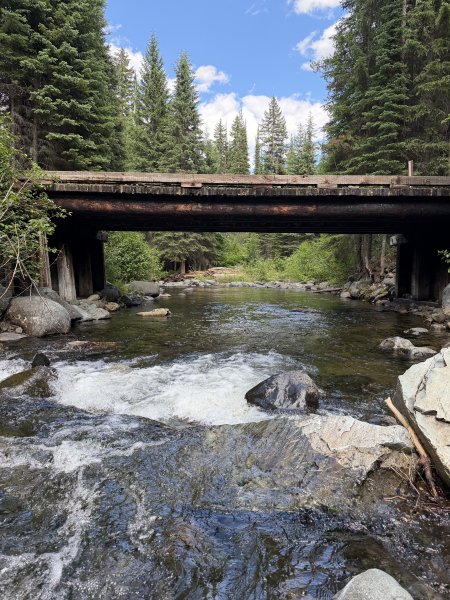
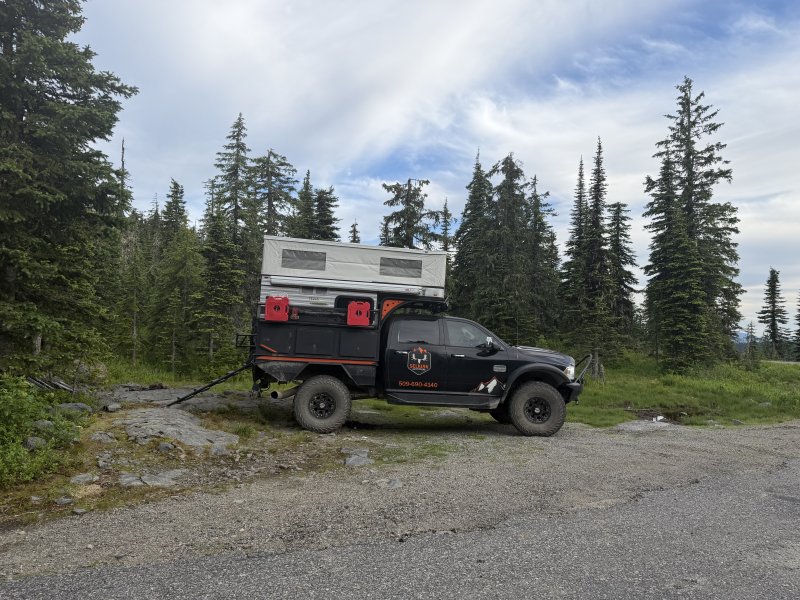
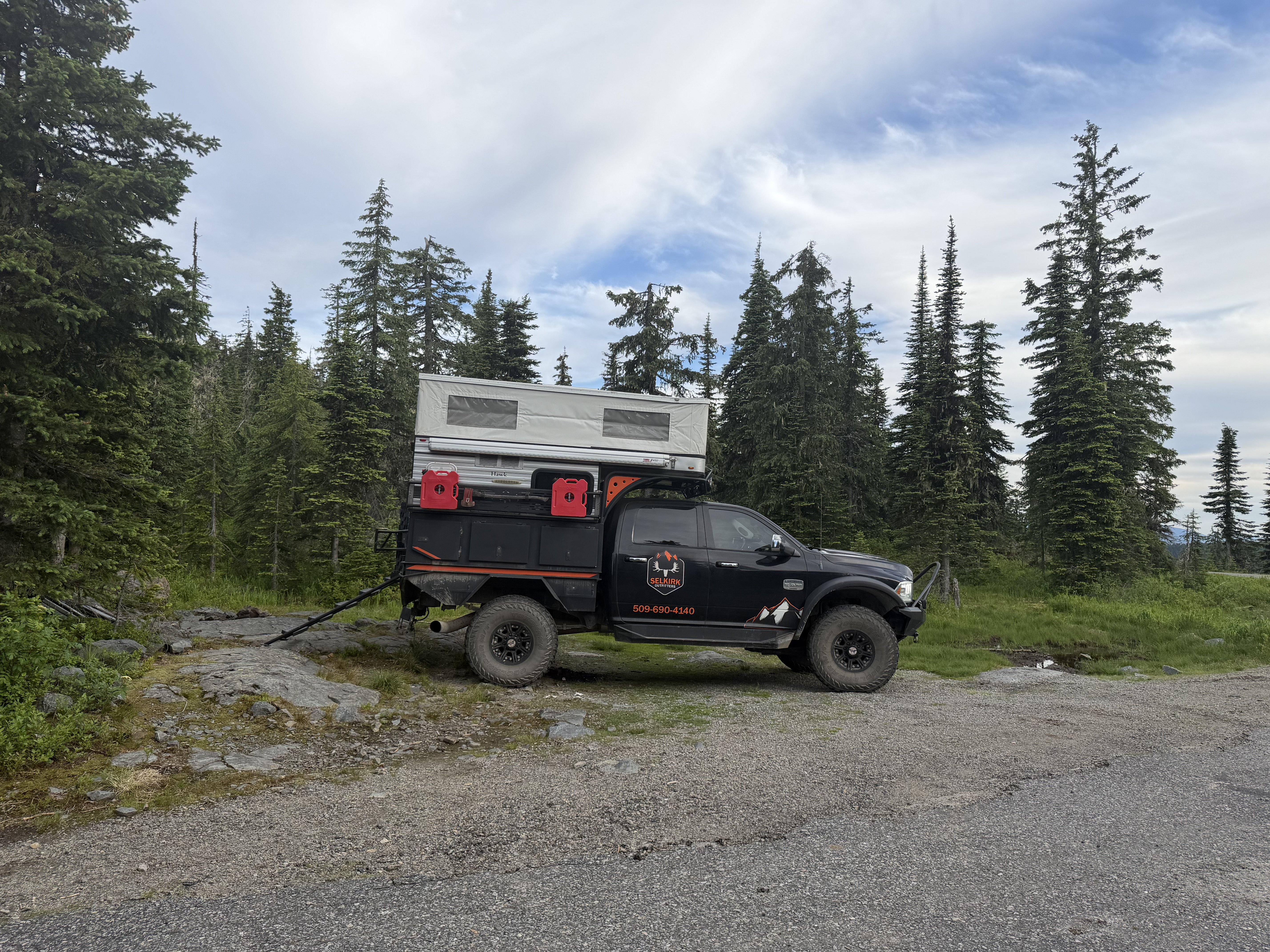
Camp
 1 point
 -
IMG_0533.mov1 point
-
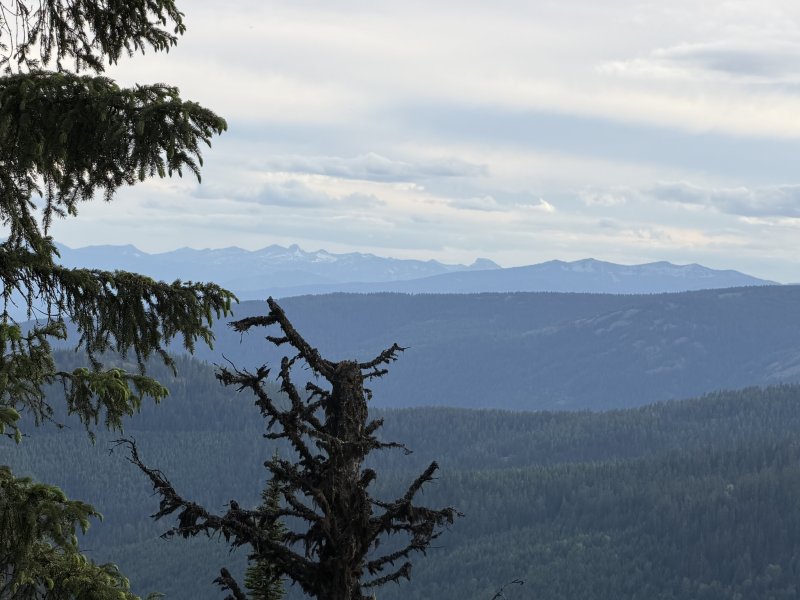
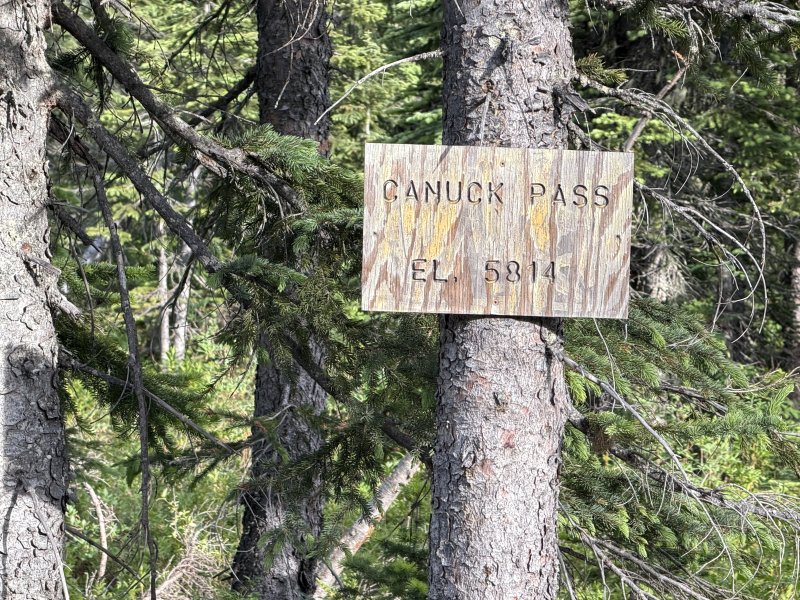
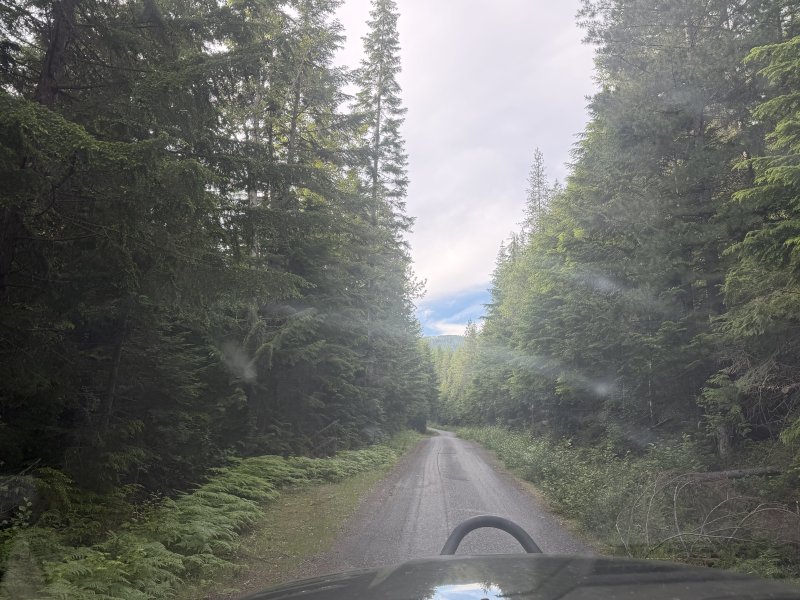
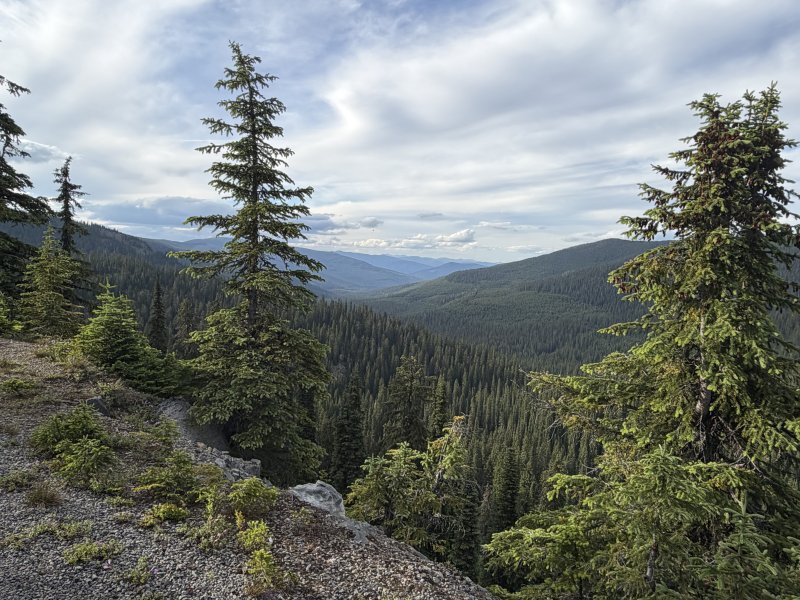
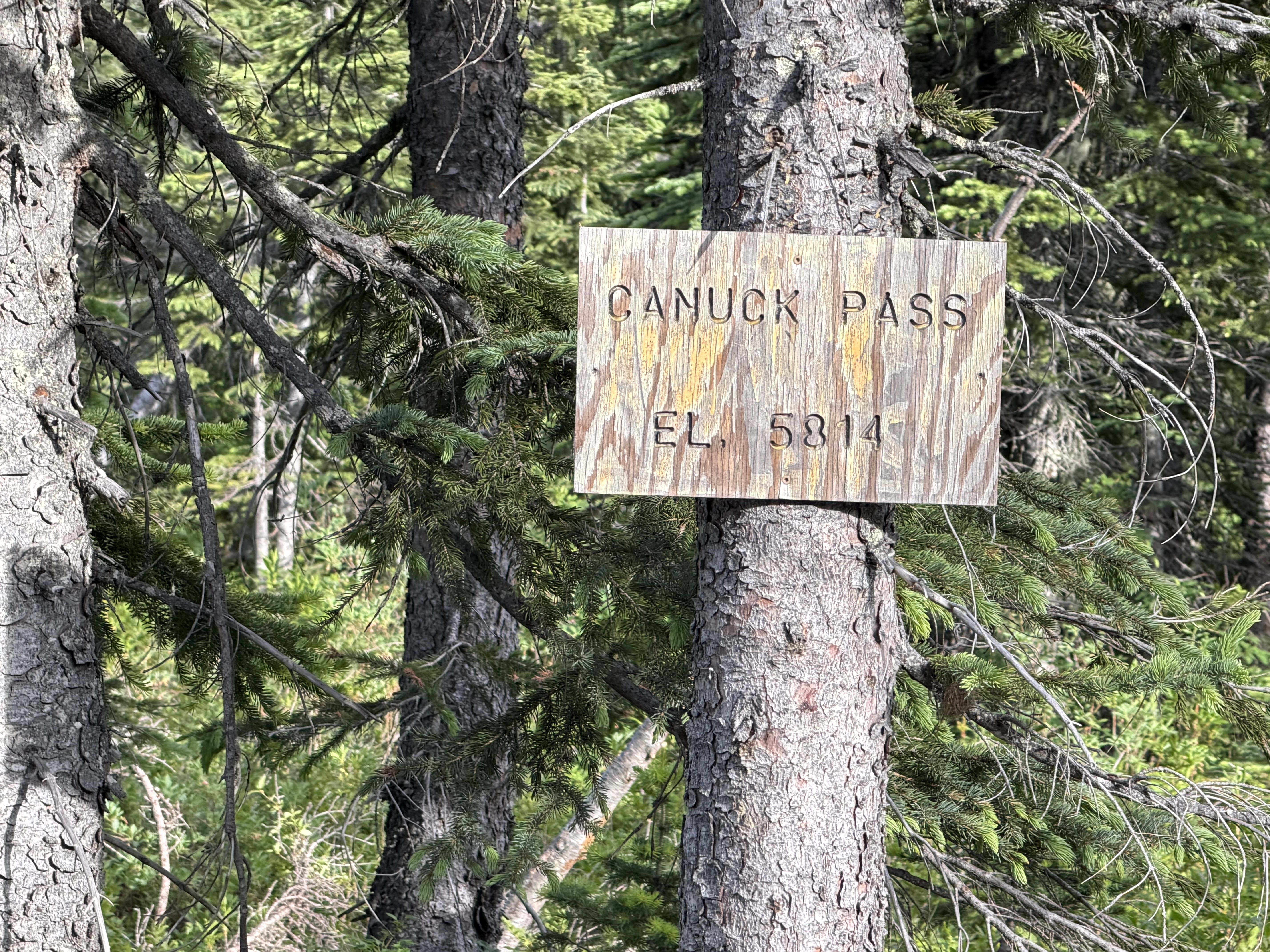
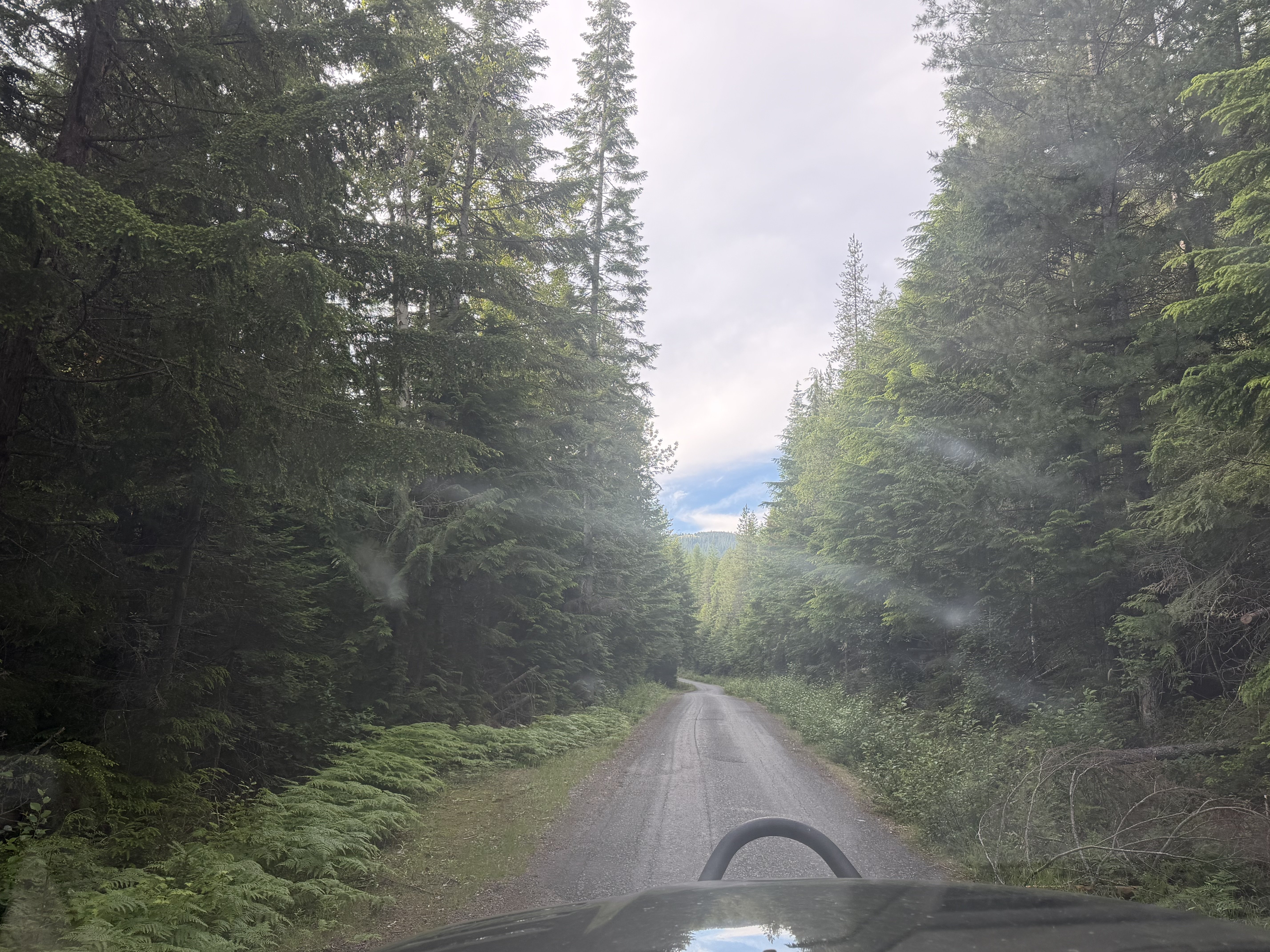
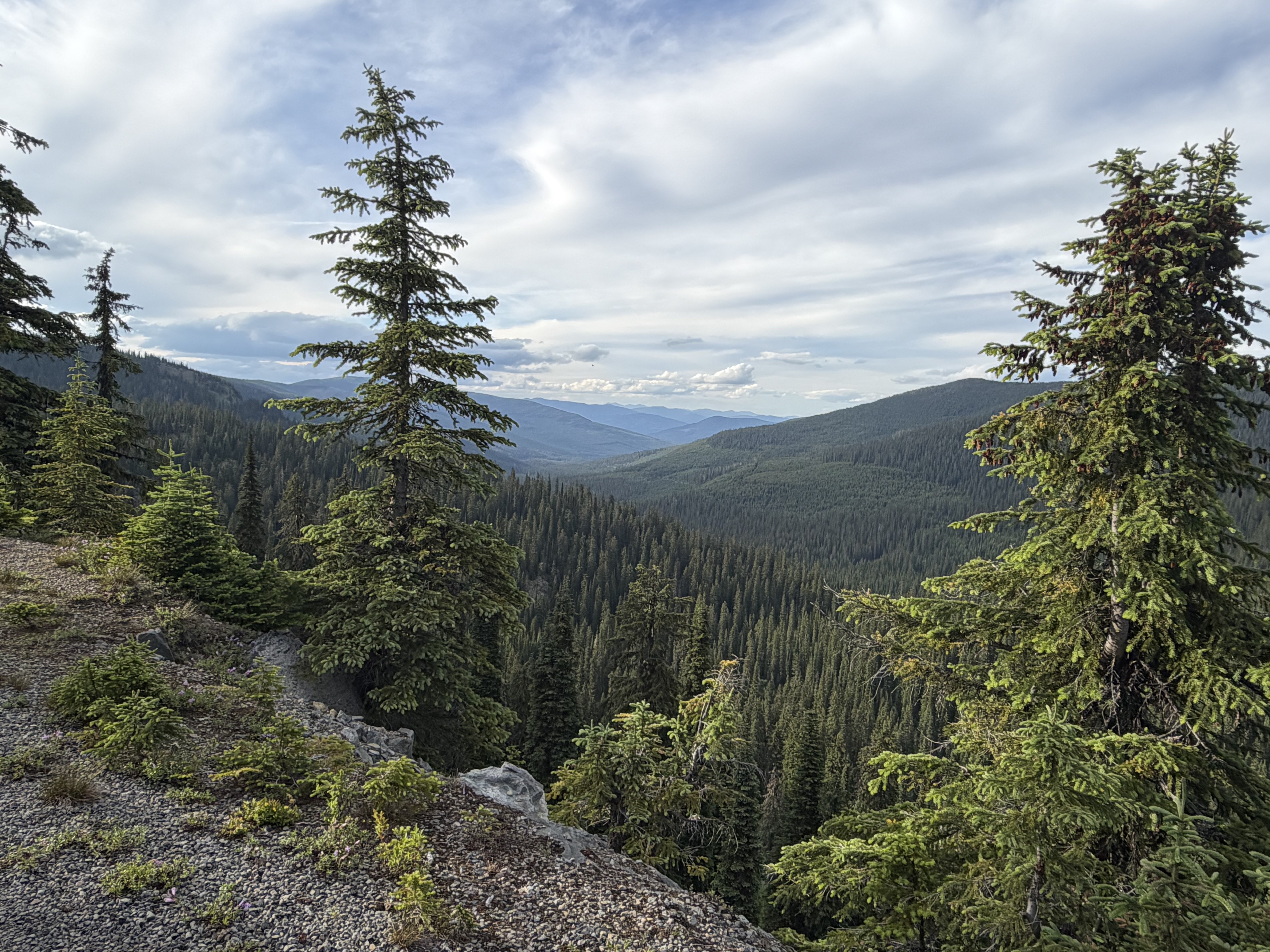
Canuck Pass Baby Bull Moose in camp this morning!
 1 point
 -
1 point
-
Does he want it back? 🔥1 point
-
They can't even get the state it was taken in correct. And oddly enough, they say that the JACOB'S photos were taken by someone by the name of Wilson. More internet slop.1 point
-
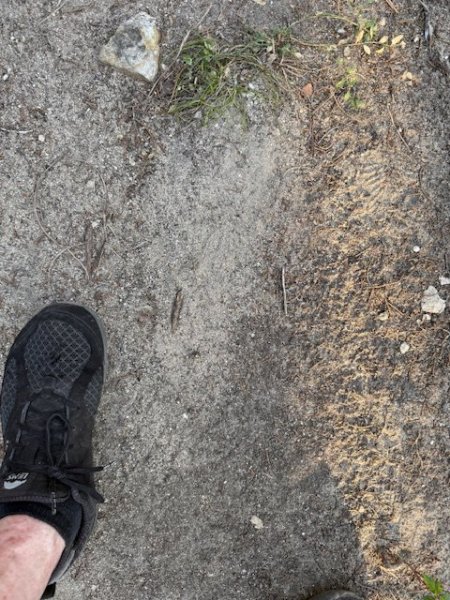
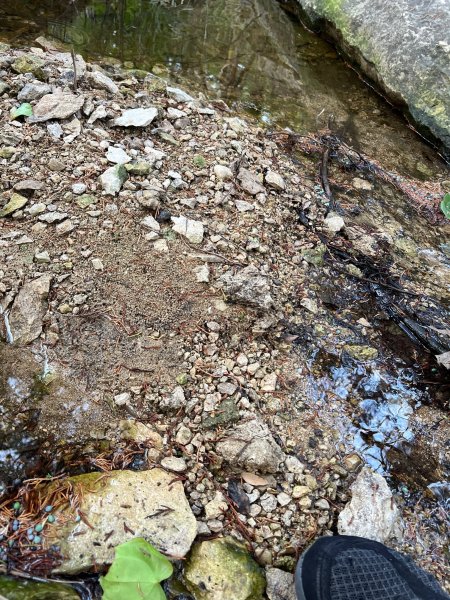
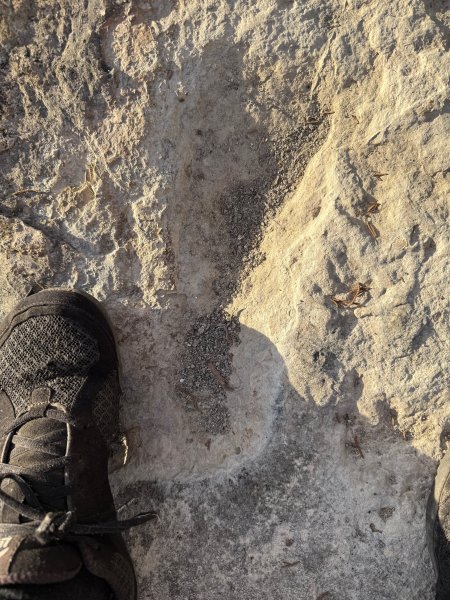
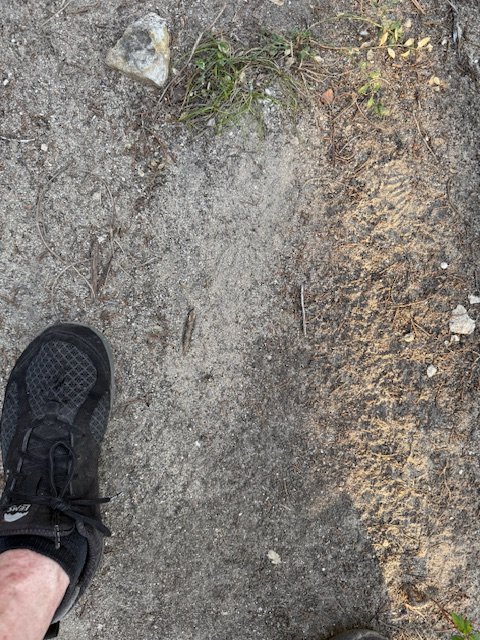
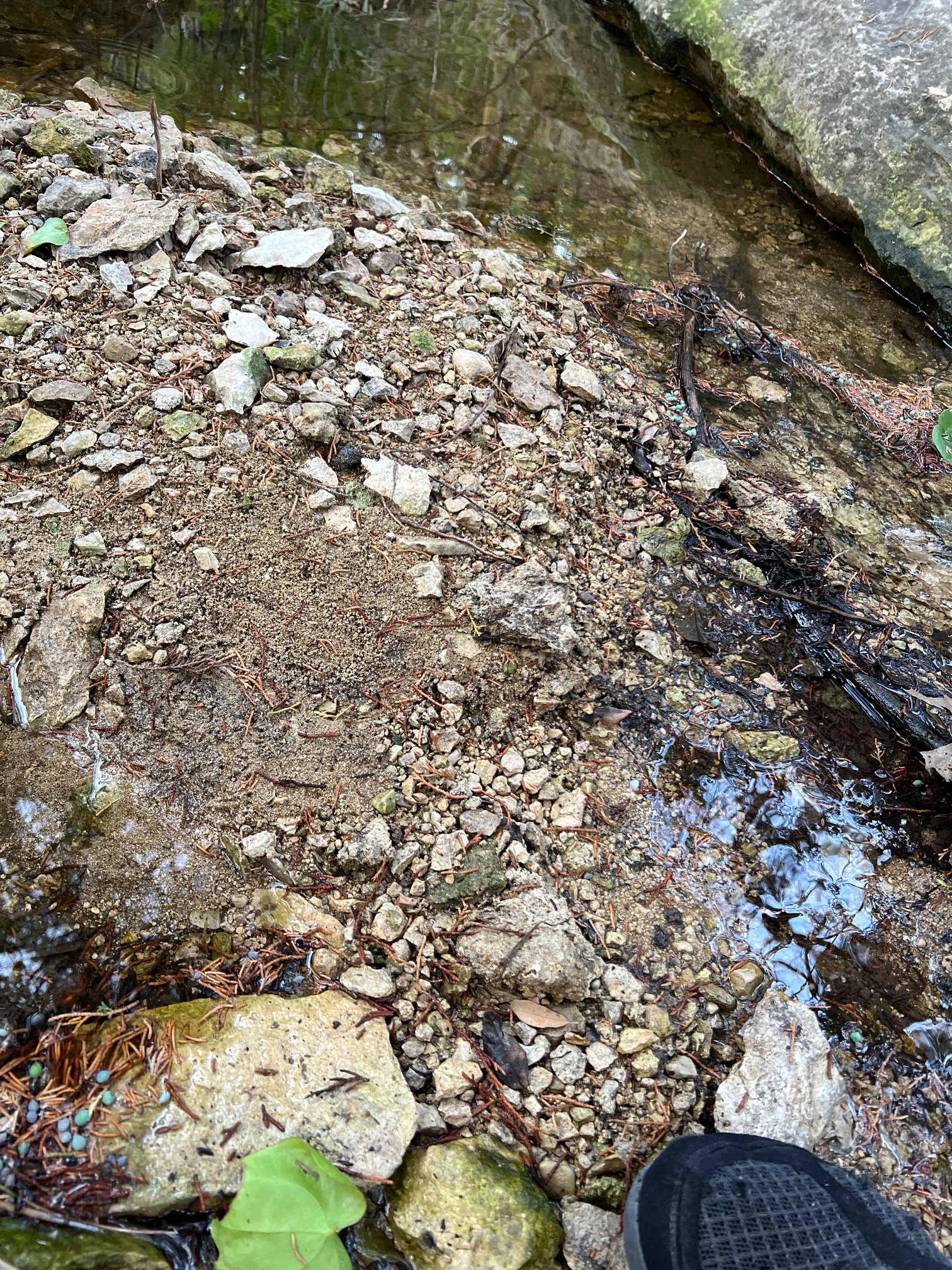
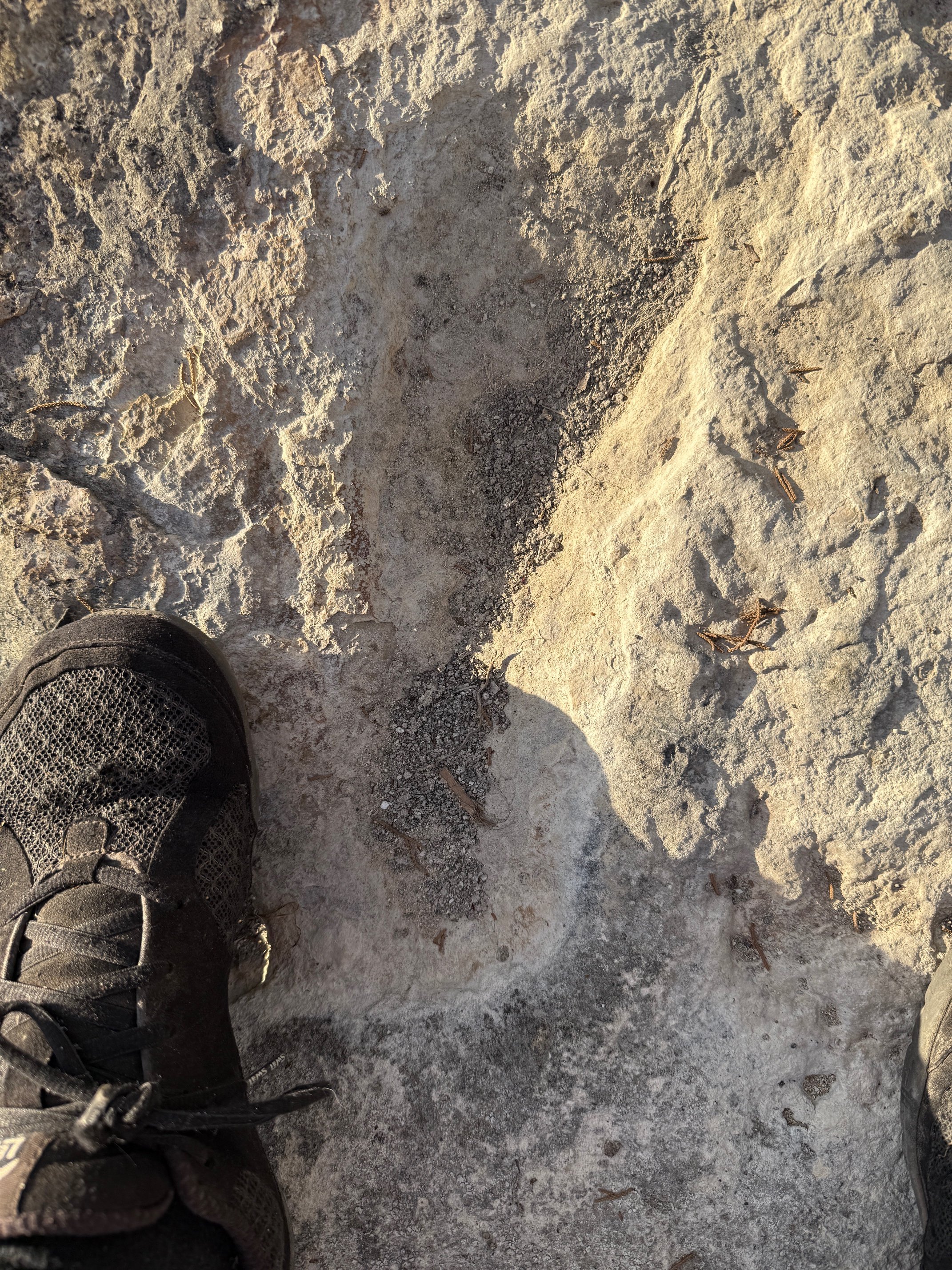
Hope everyone is doing well and having a great summer! I have a bunch of pics that I need to catch up with.....here are 3 interesting prints, one guy moving through the creek and his cousin a few million years ago.
 1 point
 -
7’6” 1000 lbs What would something 8’6” tall weigh or could lift?1 point
-
There are a LOT of repeating themes in the report data, factors common to a goodly number of reports. It could easily be a different report with shared characteristics. It's that very "I think there's an echo in here" aspect which leads many bigfooters to believe they exist even without personal experience of any sort.1 point
-
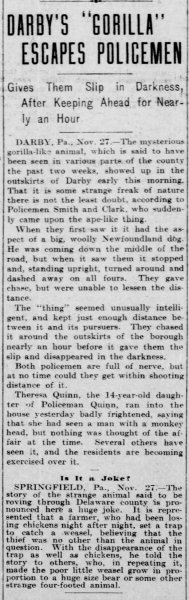
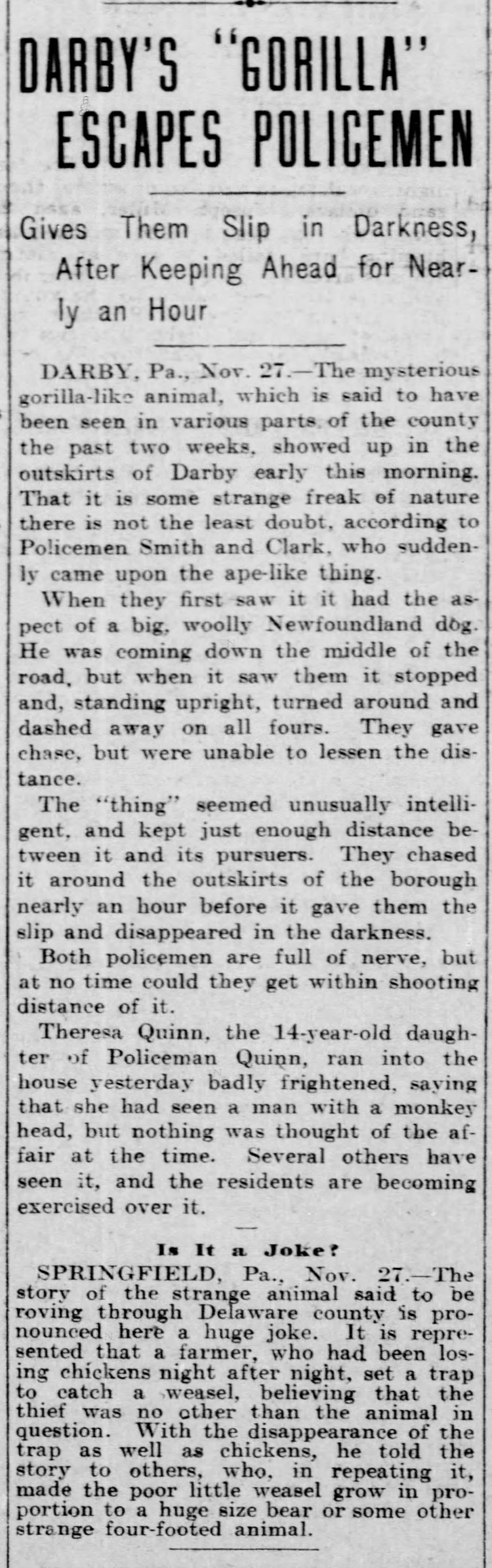
The Philadelphia (PA) Inquirer updates readers with two reports concerning the "Darby Gorilla" published on November 28, 1906.
 1 point
 -
Hello all! I am from the UK and have had an interest in Bigfoot for many years. I wish to further the research into this via this website and hopefully gain more insights and see some interesting evidence. 😊1 point
-
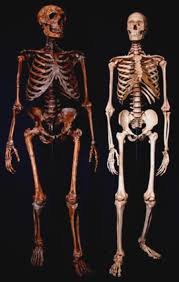
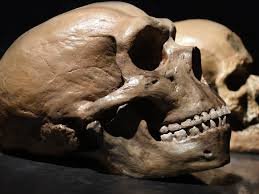
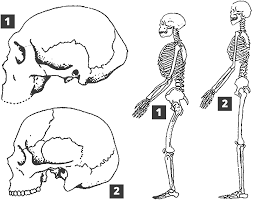
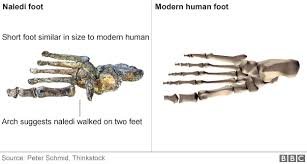
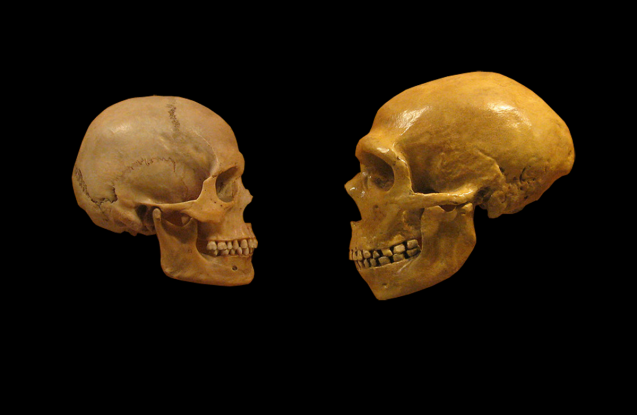
Just look at our closest extinct cousin. Shorter. Way more robust. Now imagine something still bipedal but even larger and more robust. Would love to know more about Denisovans. They are truly a species that is in the right place at the right time to cross the land bridge before Homo Sapiens. Or it’s not closely related to us at all. It’s coming out of left field. Anyhow I thought Darden could put some perspective into supposed Sasquatch strength.
 1 point
 -
He was considerably bigger than even Andre the Giant. It really does make you wonder what something 8+ft. could weigh and how strong they would be. I remember reading a BFRO report by an elk hunter a few years ago that I haven't been able to find again, but I can recall the main parts. We would just have to assume he was telling a true account. The elk hunter used an ATV and went along a path to get to his spot. At one point he had to cross a small creek. One morning he said he found a big log blocking his path right at the creek. He was able to get around the log and continue on. However, the next morning he found two more logs in place, in addition to the first one. He did some looking around and said the logs did not come from right around that small area. I think he said the trees around there were not the same type as the logs. Here is the interesting part. He said the logs were too big and heavy for one person to have dragged it there. And were far too heavy for two people to have picked it up and carried it there. To assume the story was true, it makes you wonder just what put those logs there, and how they got them there. He didn't mention anything about machinery, but I think it was a bit of a remote area, and apparently there was no sign of any machinery having been there. I don't think there were any signs of anything having been there except for his ATV. I'm not certain but I don't think it was private land.1 point
-
Hyperbole aside, 2012 is the date that the discovery bore fruit... The point stands, at some point, we'll figure out how to observe these animals in their native habitat, then they'll revert to just another curious creature in the woods like bear or wolves.1 point
-
Hi everyone, I’m from the UK and have been interested in Sasquatch and Bigfoot for many years. Although I haven’t had a personal encounter myself, I’ve spent a lot of time researching the subject and watching countless videos, documentaries, witness interviews, and audio recordings. The amount of footage and sound evidence I’ve come across over the years has led me to genuinely believe there’s something real behind the Sasquatch phenomenon. Whether it’s visual evidence, vocalizations, or eyewitness accounts, I find the topic fascinating and enjoy keeping up with new discoveries and discussions.1 point
-
I played high school football with a Samoan guy who weighed 285 lbs as a freshman and graduated at some 475 lbs. He was @ 6' tall. He was huge and could actually run quite fast. The California high school sports regulatory body banned him from wrestling in his senior year.1 point
-
Well said. For the Believing community, the PGF IS their champion. It's their hero. It is their best-case evidence to prove Bigfoot exists. For the Skeptic community their hero or Champion ends up being anything they perceived which disproves the PGF. For them, it's Longs book. Also, there are other things the lazy skeptics will latch on to This includes any news story about someone who came forward and confessed. It can be some story they heard where AI video analysis saw a bell pull zipper on the PGF suit. I would say the more believer scientific approach of people like Meldrum, Munns, Bindernagal, and so on have created a playing field where the skeptic or science skeptic will at least sit at the same table as the believing community. Just like UFO movies (Outer limits, Twilight zone, ET, Independence Day) have entertained the public they have also soften the public on the subject of UFOs. Now if the government wanted to spend 100 million dollars on some project involving the search for extra-terrestrial life the public accepts that as reasonable. The same thing has happened- at least a little bit- with Bigfoot. As Messin' with Sasquatch or Discovery channel puts Bigfoot in their mind they tend to soften the "Bigfoot is fake" position. To any extent these things help increase the serious nature of the subject, I consider it useful foolishness.1 point
-
Makes sense but it's also common where I'm at to put out salt for legal hunting purposes. I'd say mainly as an attractant for your nearby game-camera so you can assess the animals that frequent the area. A block works, or just bags of water-softener salt. Like @PNWexplorersaid, once it's gone they will lick at the ground for years afterwards.1 point
-
Desperation. But, really, just putting the headline out there sucks in and bolsters the spirits of their own tribe. Not much else.1 point
-
^^^ Surprising that the documentary exposing a major hoax pulled on the news media, Americans, and the world hasn't been snapped up like a Denny's Grand Slam special and been broadcast on 20 different channels already, isn't it. I forget, do we have an official sarcasm font here?1 point
-
So sorry to hear this news. You are in our thoughts and prayers!🙏❤️ And thank you for sharing your story. I too think that the Government isn’t telling us the truth. And much of my opinion is based on researching giant skeletons.1 point
-
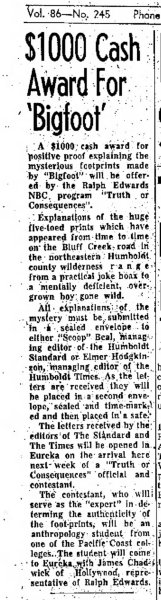
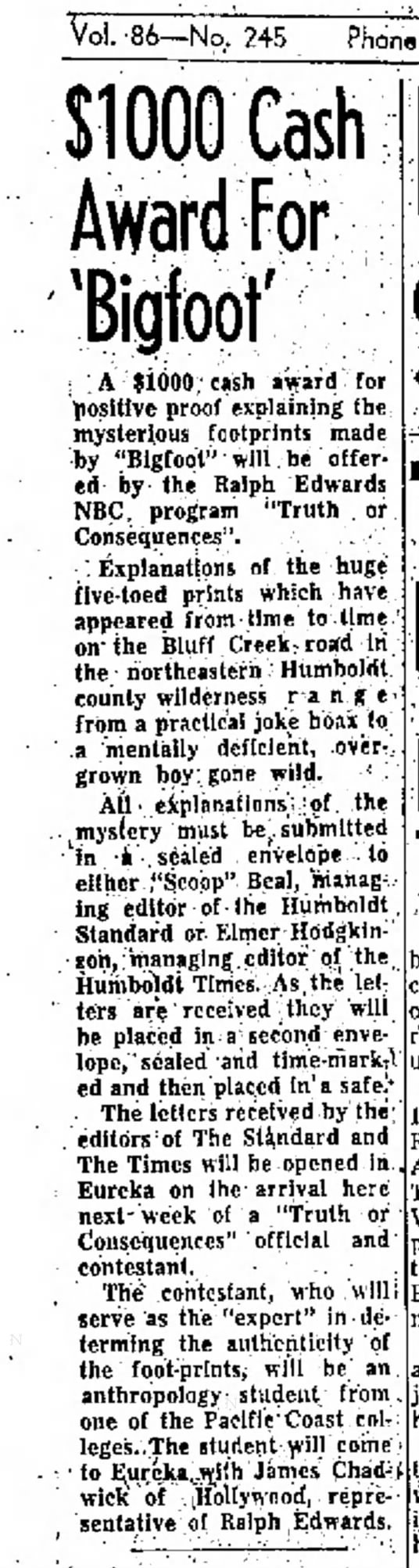
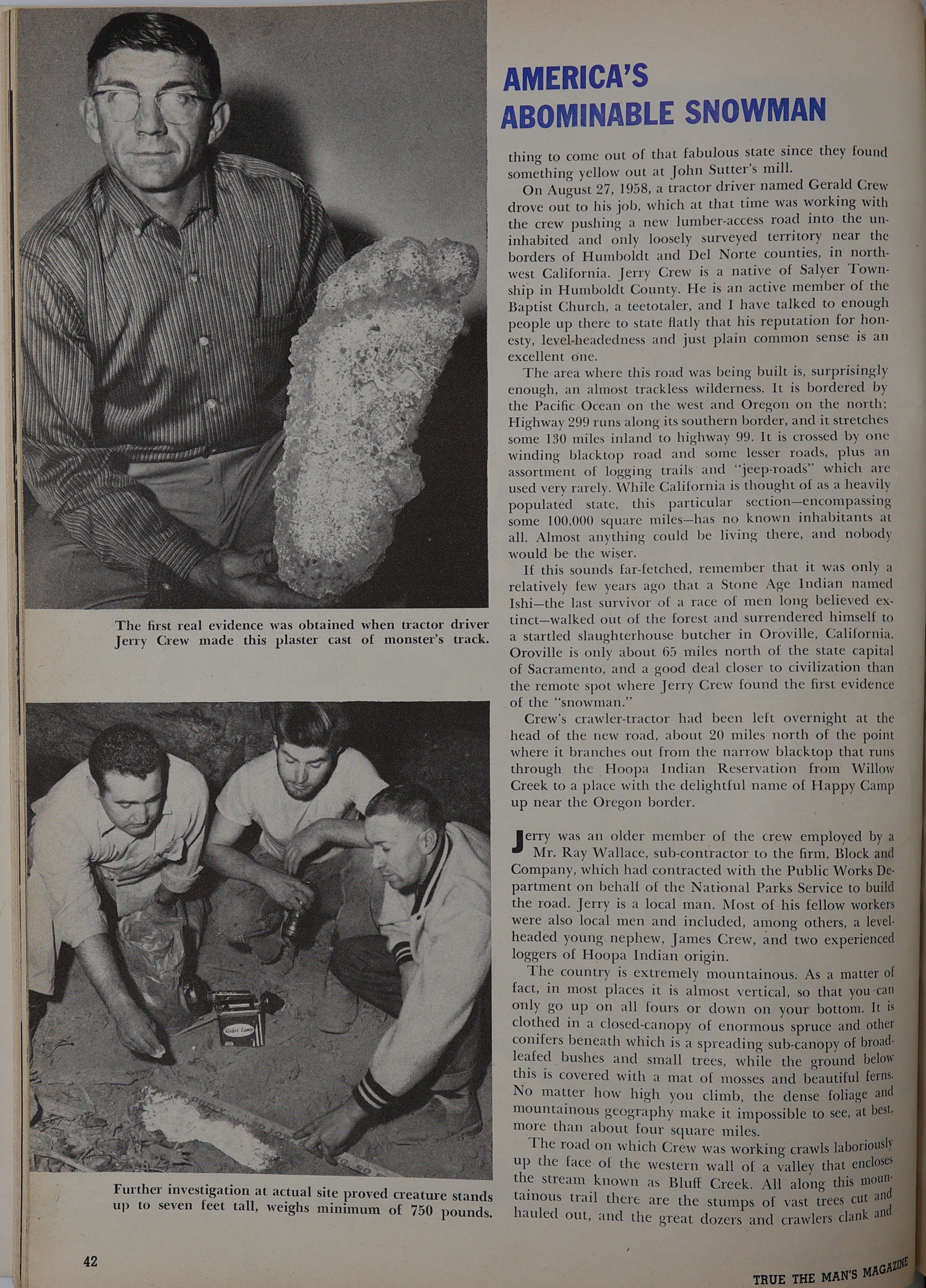
Published in what was at the time, the Humboldt Standard of Eureka (CA) on October 13, 1958. If Truth or Consequences aired an episode about the Crew track find, it may have suggested to Roger Patterson and others that there was money to be made in finding Bigfoot.
 1 point
 -
His assessment is spot on in that video footage doesn't mean much, but paired with hair and DNA, then suddenly it does add to the complete picture. If someone videos a sasquatch and videos collecting hair samples, DNA samples and videos footprints and the DNA and hair comes back positive, then the video takes on a whole new meaning. If I videoed a sasquatch, I would be happy just having the video, because it would prove it to me. I count him fortunate to have videoed something that isn't easy to explain away, that in all honesty, I think it may be what he was looking for. That is if he is indeed telling the truth.1 point
-
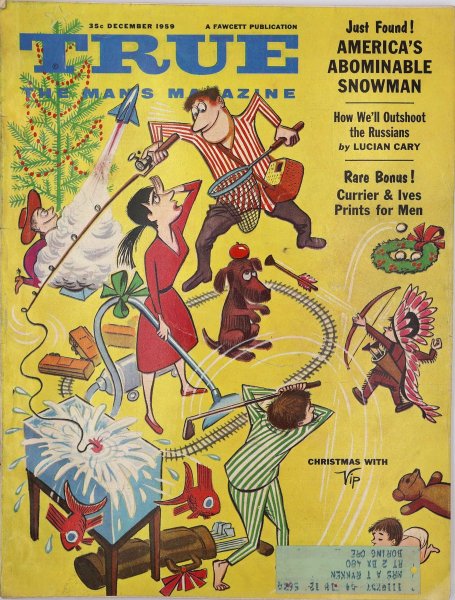
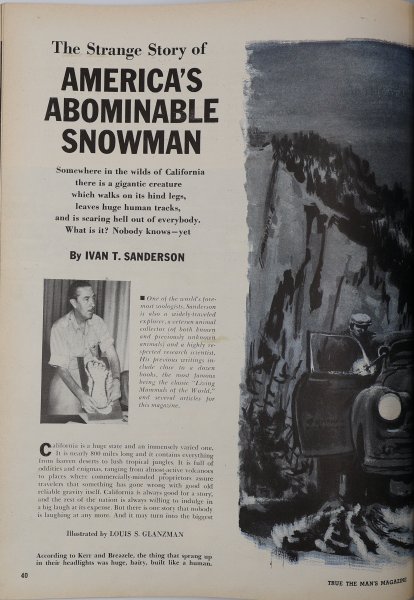
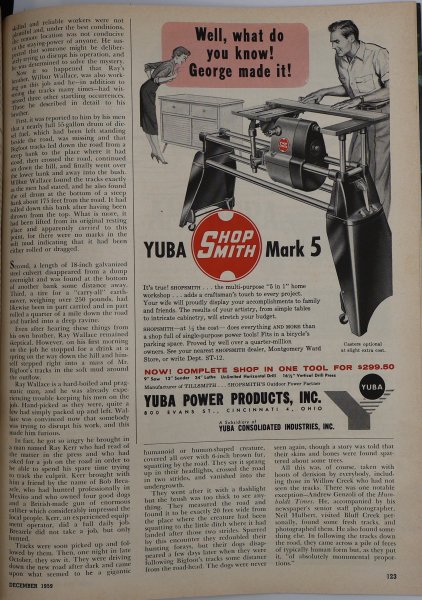
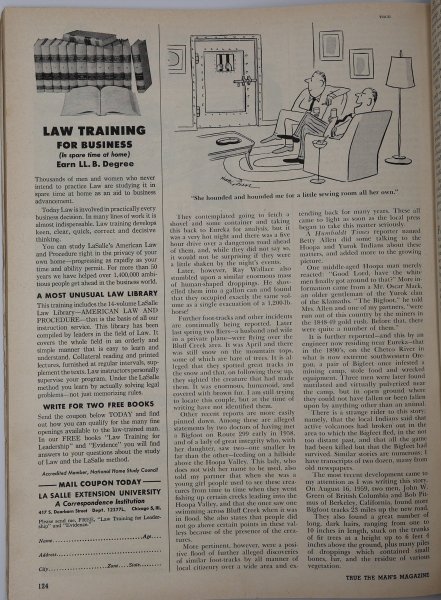
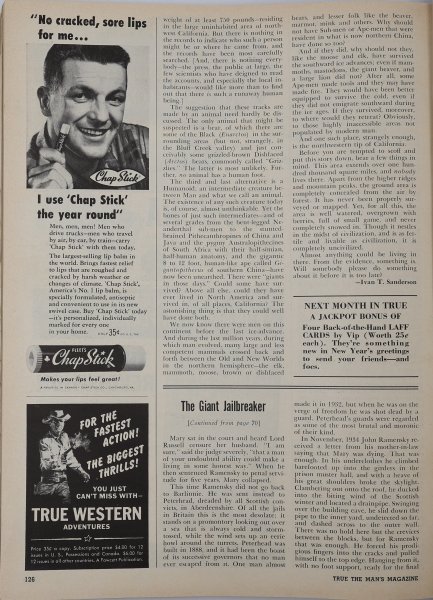
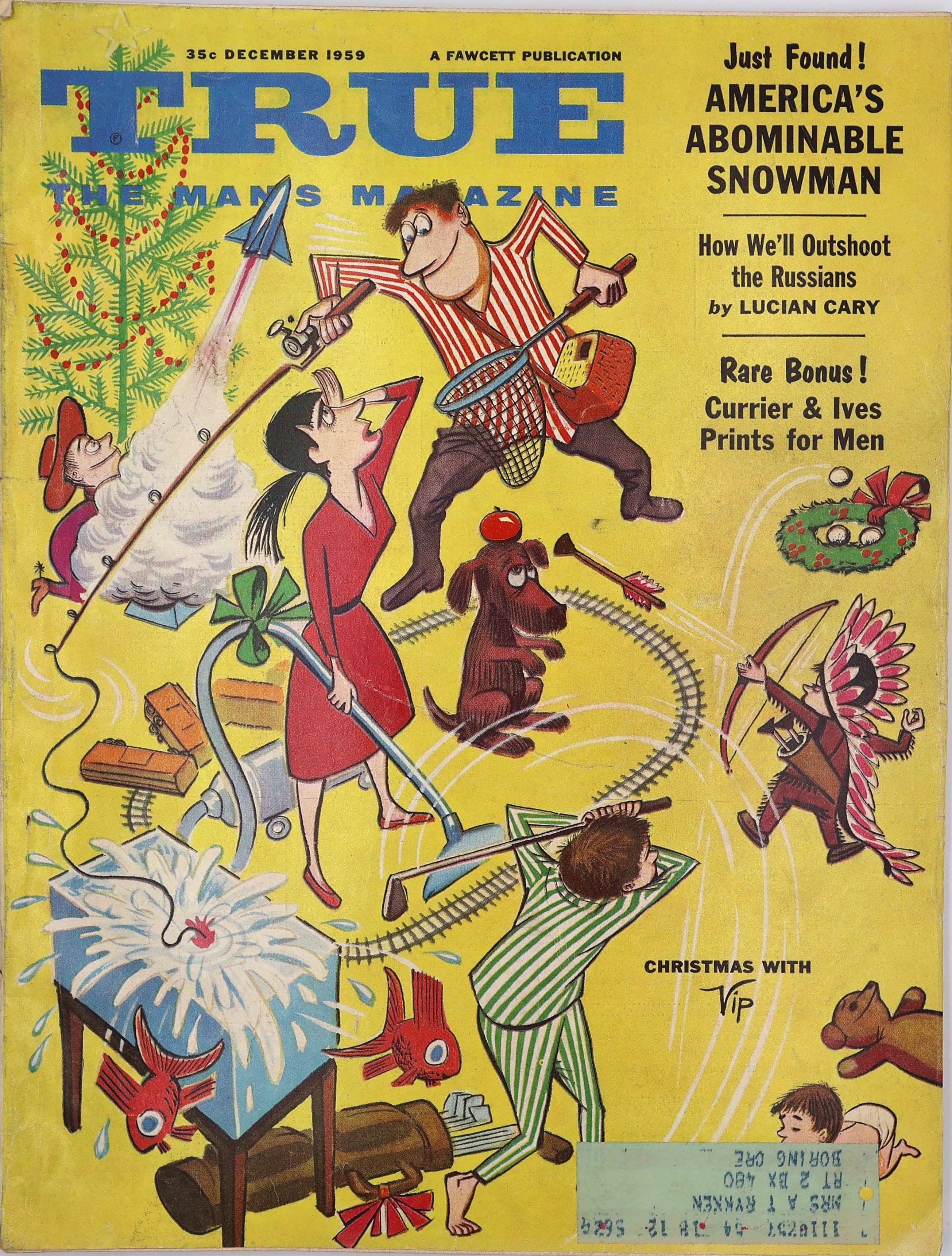
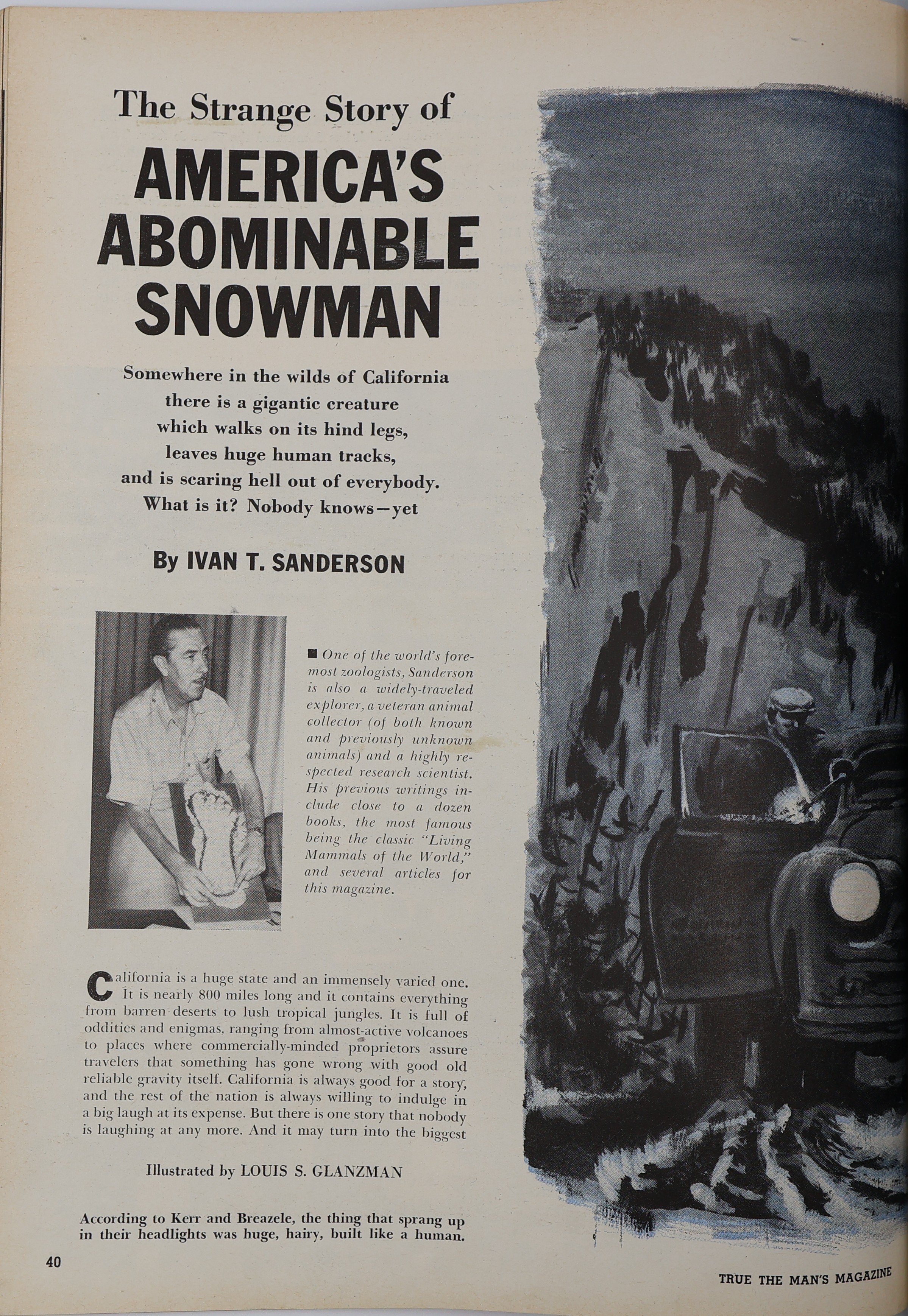
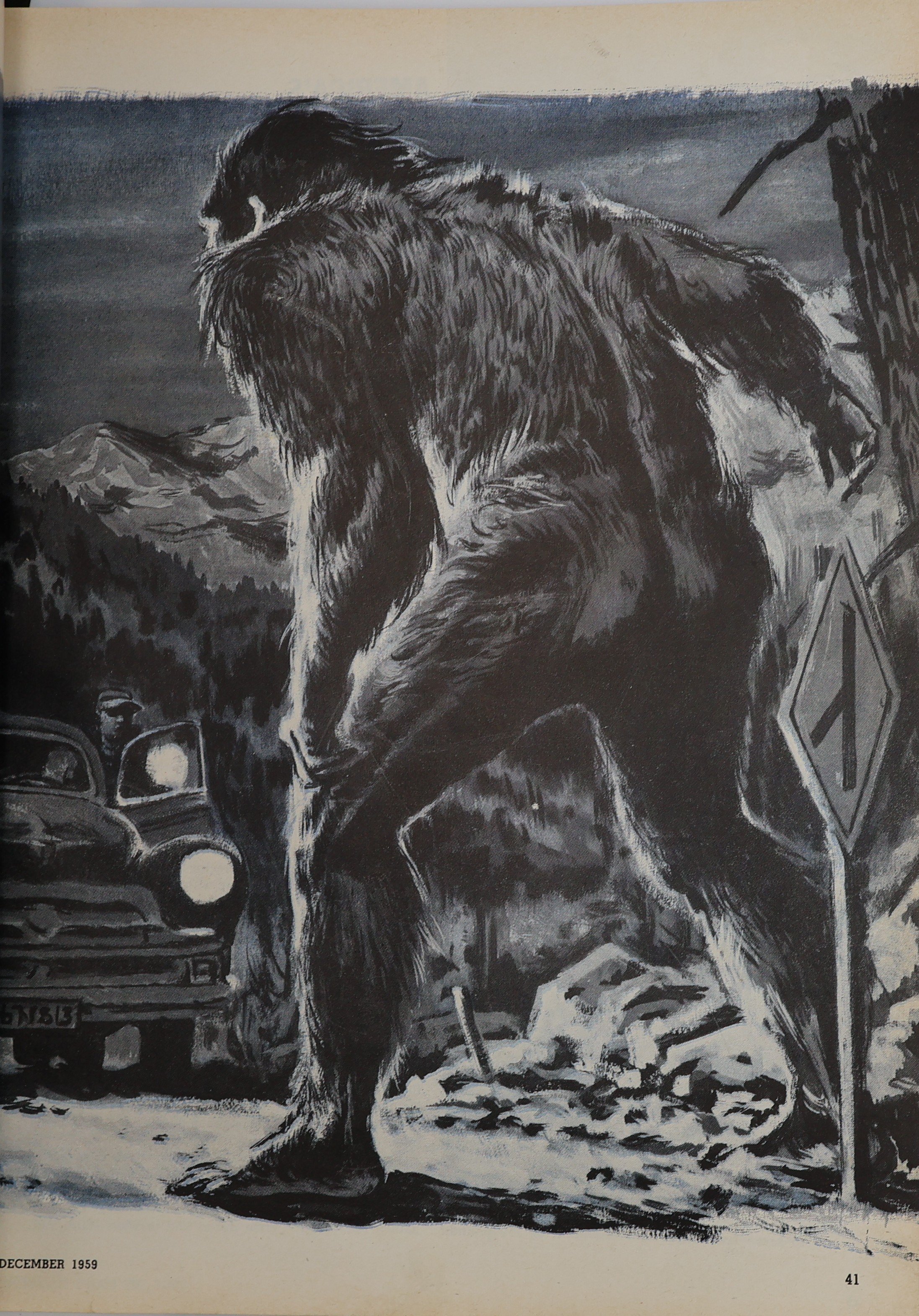
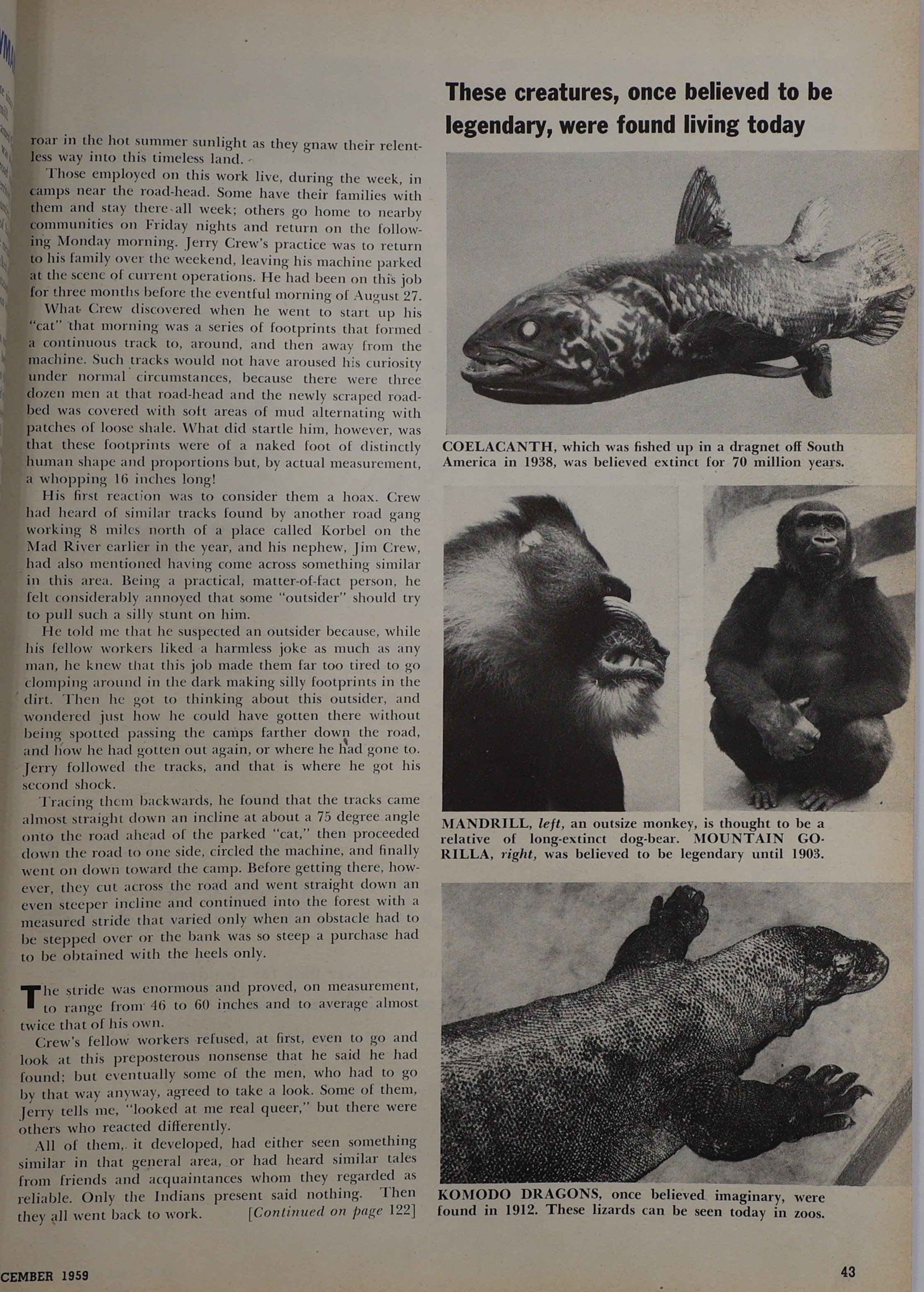
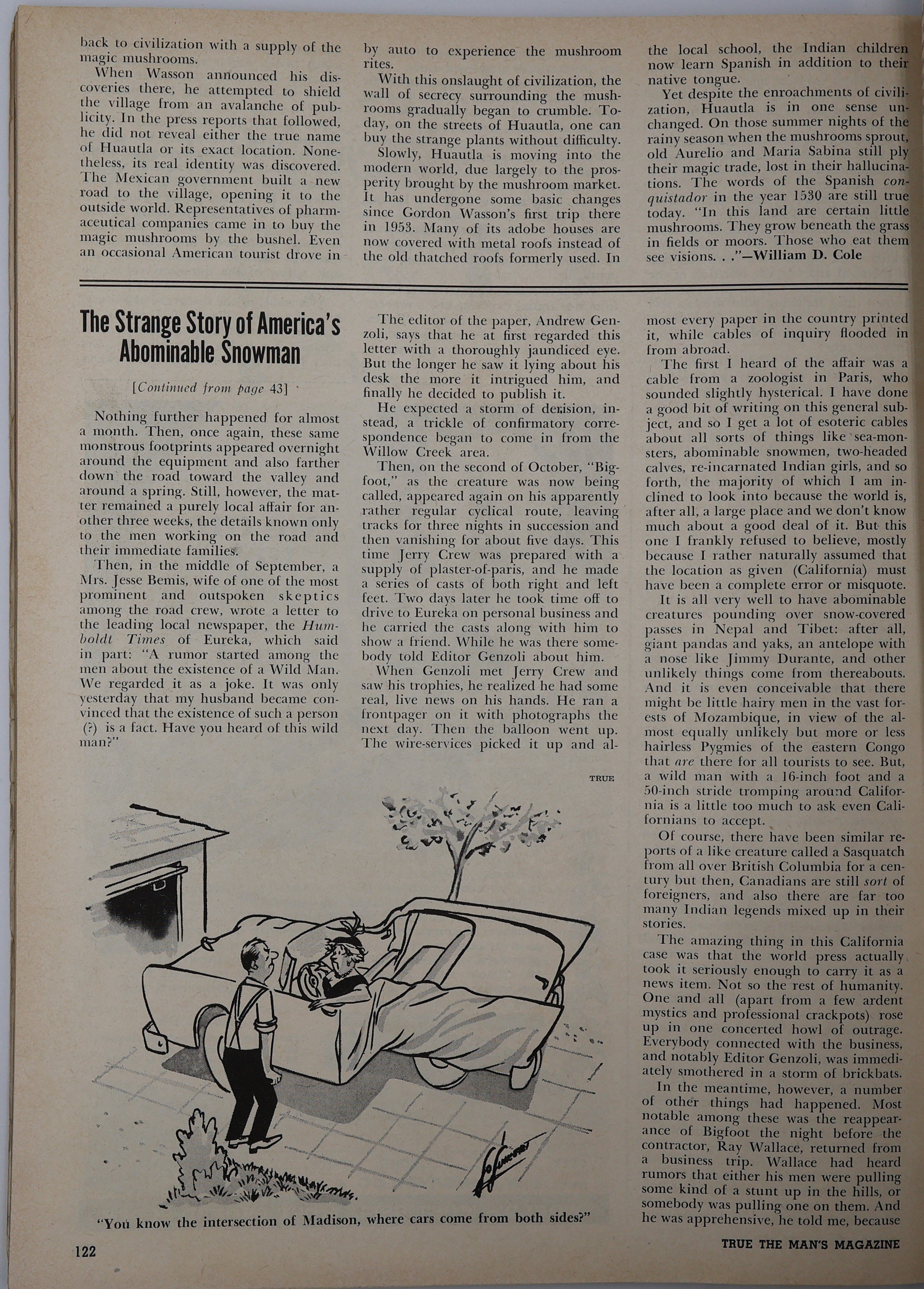
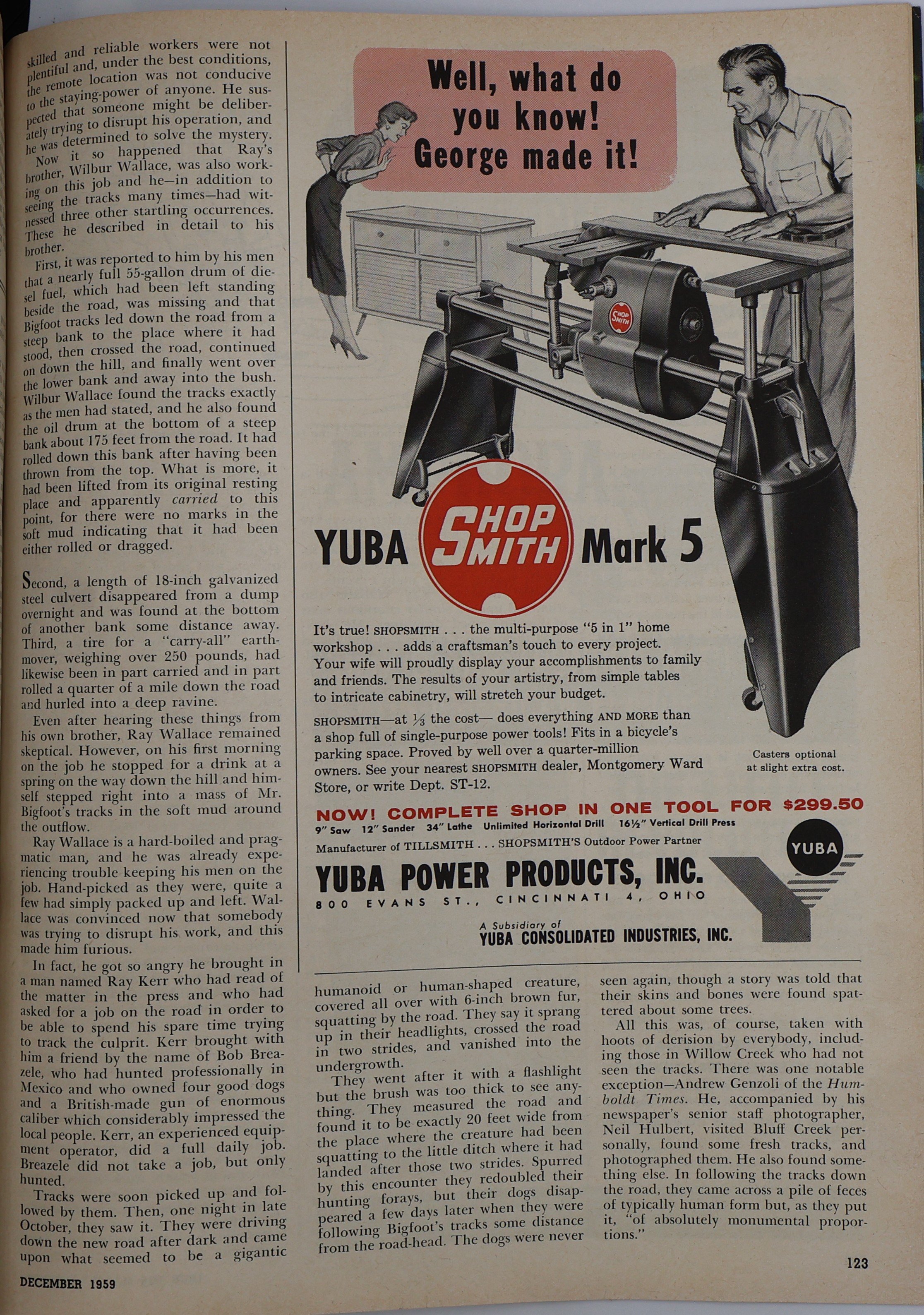
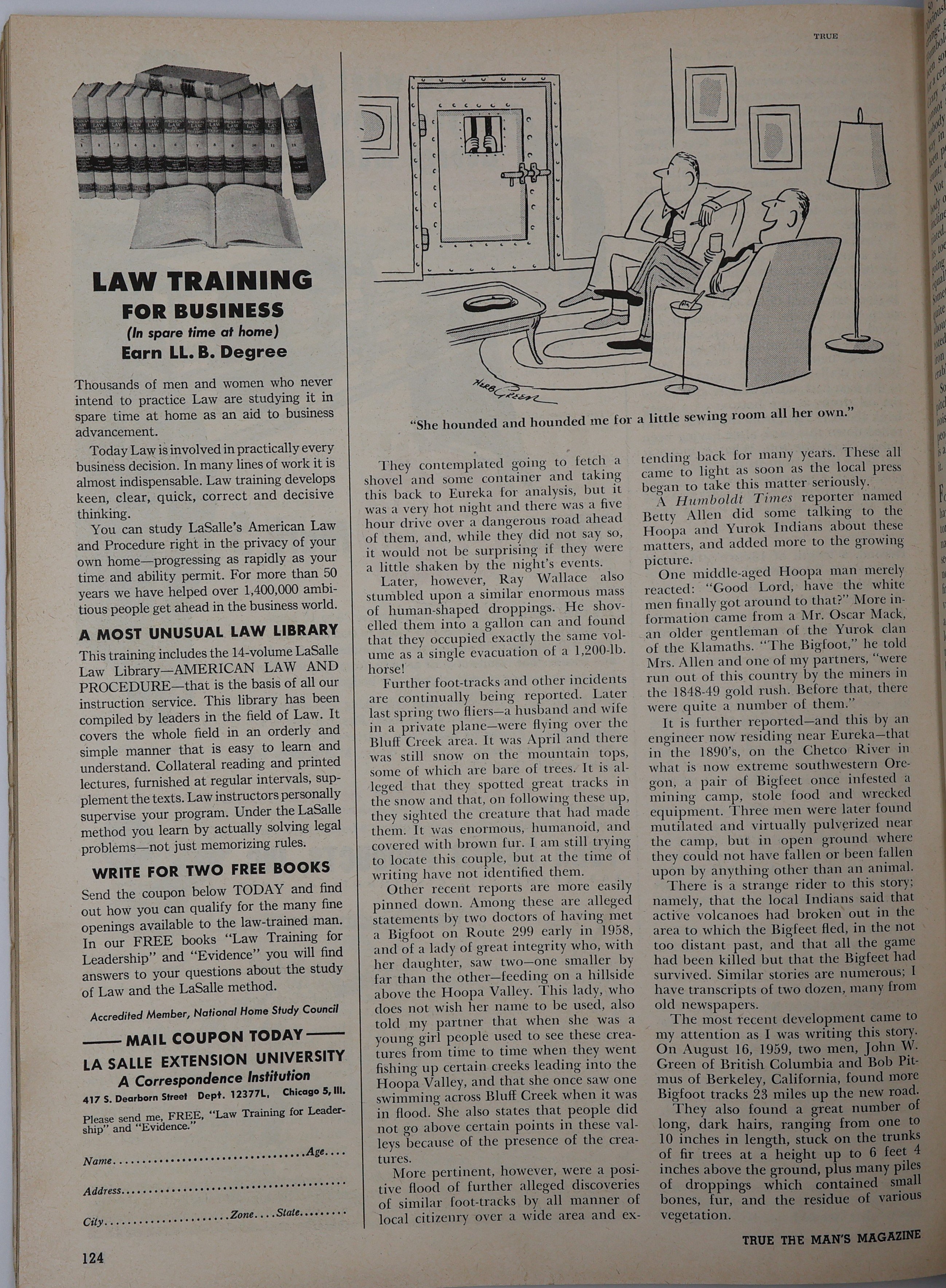
Here's the complete December 1959 True Magazine article:
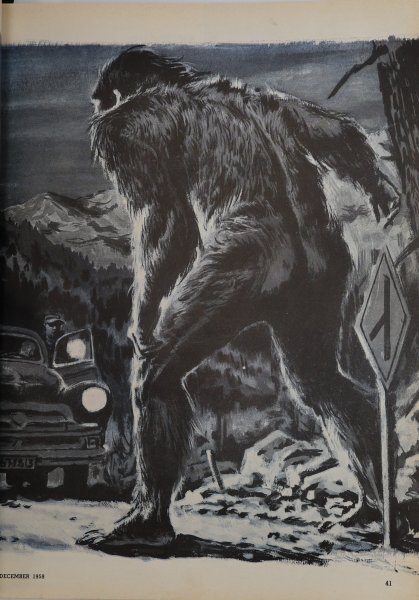
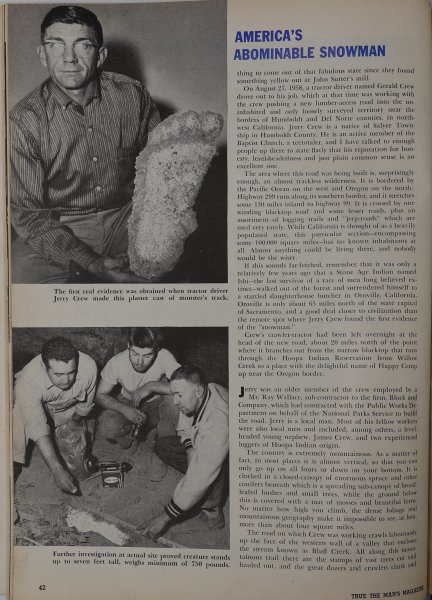
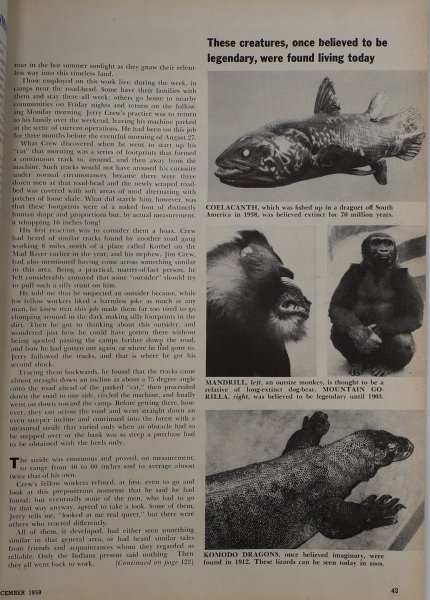
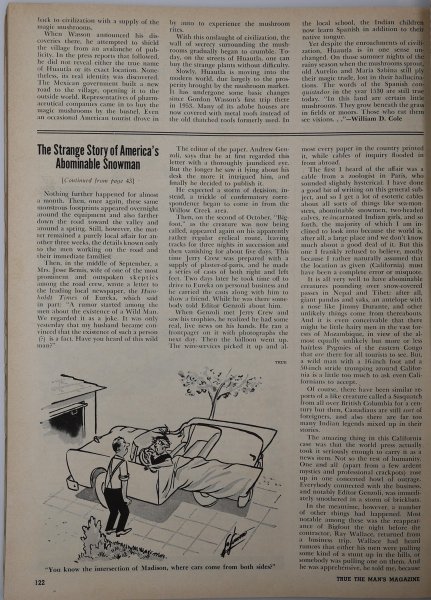

 1 point
 -
It's neither here nor there, but I'd like to again point out Heironomous claims he was to be paid $1000 for his supposed stroll in a bigfoot costume. That's a ridiculously high sum of money.
 1 point
 -
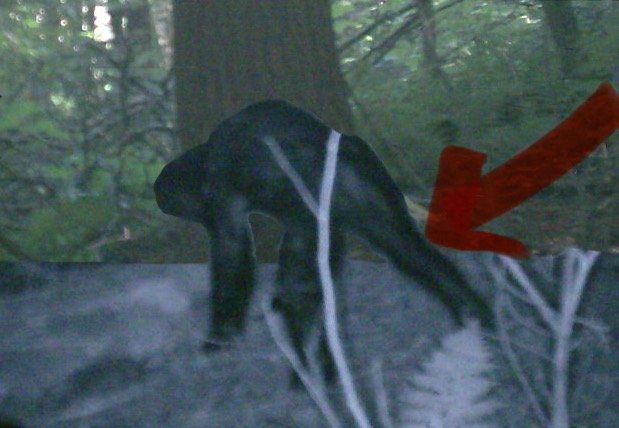
Is that not just after frame 352? That is the exact rock/stick formations from Bluff Creek, the 66 footage isn’t in Bluff Creek from what I’ve read. Just looks like a filter over the Patterson footage.1 point
-
I am not killing the messenger. You were cherry picking some “gotcha moment” Rogan video short against Meldrum. Which is a crock. It doesn’t even remotely represent what Meldrum said in the full interview let alone years of conferences and his BOOK!? Really? Have you read it? So hence forth I will be scrutinizing you based on this slanderous event you perpetrated on this forum. Sorry.1 point
-
Meldrum was just repeating Joe’s line where he explores what he thinks is a possibility. The only arguments presented here by skeptics are that people close to Patterson claim it’s a hoax. Meanwhile Patty herself has characteristics that aren’t repeatable with costumes.1 point
-
No. We have no body. Therefore we cannot rule out option A. No film includes a body for science to poke. You’re taking Meldrum out of context there. It’s cheap. A three second gotcha doesn’t erase his years of research on the subject. Or Bill Munns for that matter….. This might work on Reddit or some Facebook page. But it won’t work here. 🙄1 point
-
It’s the Philip Morris - Bob H. Recreation from 20 years ago. It’s an abomination. Again, it’s not that Roger was a con man. He was. It’s not that Bob G. gets dates wrong or facts wrong from 60 years ago. He does. The 800 lbs Gorilla in the room is Patty walking across that creek bed. Which 20 years ago they failed spectacularly to recreate.🤷♂️1 point
-
Thanks for the info. I haven't delved into it, but I have one question, if anyone knows an answer: Is Kitikaze (old BFF skeptic) involved with the latest attempt to disprove PGF?1 point
-
I should have been more specific, stand alone forums are dying out. Reddit kind of smashes all the crazies, niche interests and paranormal stuff all into one thing and so Reddit scrolling can pull good numbers across topics. I agree 100% on the woke stuff, I tried to interact on there a few times in the past but left with an icky feeling each time.1 point
-
I hate reddit and do not go there. It is toxic. If you aren't a part of the group think, they will crucify you at the altar of wokeness. However, they have enough sheeple to fill the barn.1 point
-
This type of behavior, common and rampant throughout society in every venue, doesn't happen at Reddit? I'm asking sincerely because I don't know. I don't utilize that website.1 point
-
You must be an old guy.1 point
-
I think we should be comparing apples to apples. The first Bigfoot forum I ever joined was the BFRO “blue room”. I was basically ran out of there for my pro kill stance, but whatever. It’s not the point. The point is that several years ago the BFRO shut down the blue room and opened up a Facebook page. They have 111 k members. Good for them. The hound hunting forum I belonged to? Gone. The jet boat forum called mean chicken…..gone. Along with the massive repository of knowledge. How does a very specific old school PHPBB board compete with Reddit or FB or the next great social platform? Good question.1 point
-
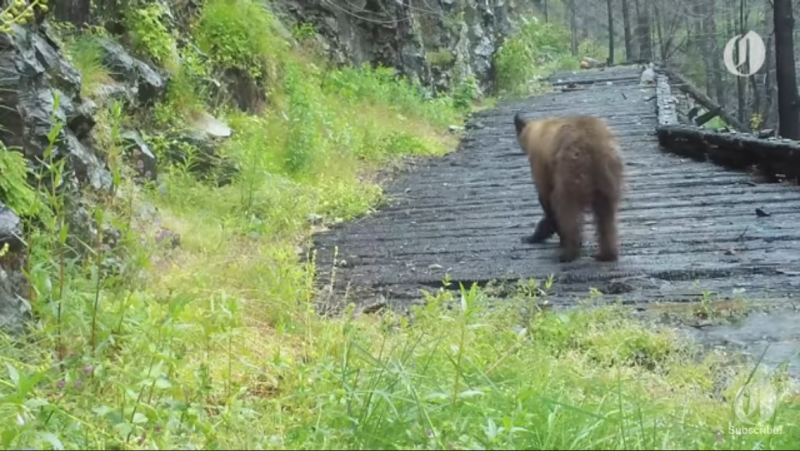
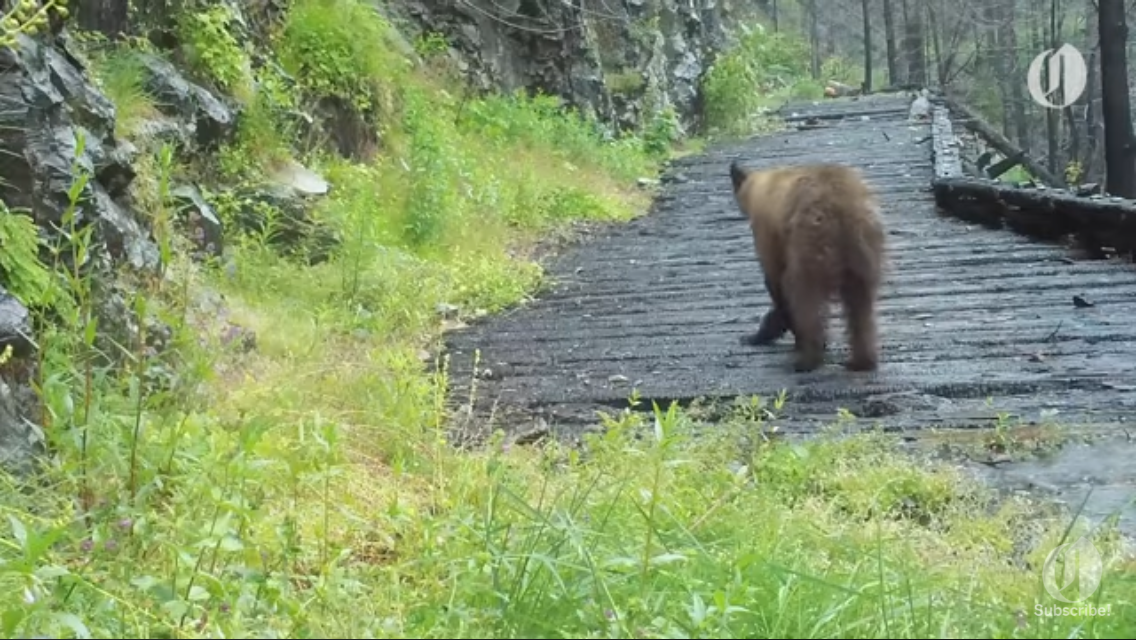
I would disagree because this is the left leg. Bear
 1 point
 -
Regardless there’s been many changing opinions hence the quest for a matching photo. All these years there has only been 1 found.1 point























This leaderboard is set to New York/GMT-04:00