
Leaderboard



Popular Content
Showing content with the highest reputation since 09/26/2026 in all areas
-
For a long time, my best places to go involved a secluded pond. Wood knocks, audible movement around the pond, and red eyeshine. They work for me because people are less likely to be there especially when it is not easy to get to. I've decided to get an ultralight canoe, or more properly called a packboat. Short and light enough to be portaged. Get out on the water in the dark and silently paddle then stop, drift, and listen. Use the thermal to scan the shoreline. It enables you to get to spots on the pond quickly that would not be possible if trekked by foot. Moreover, the flashlight and noise while walking would immediately give away your position. I'll order in the next month or so but won't get it until next year. Looking forward to it.4 points
-
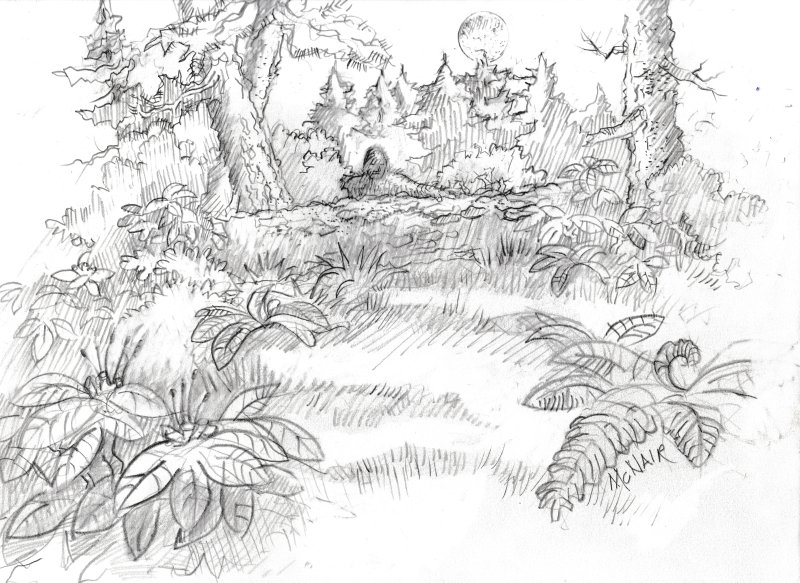
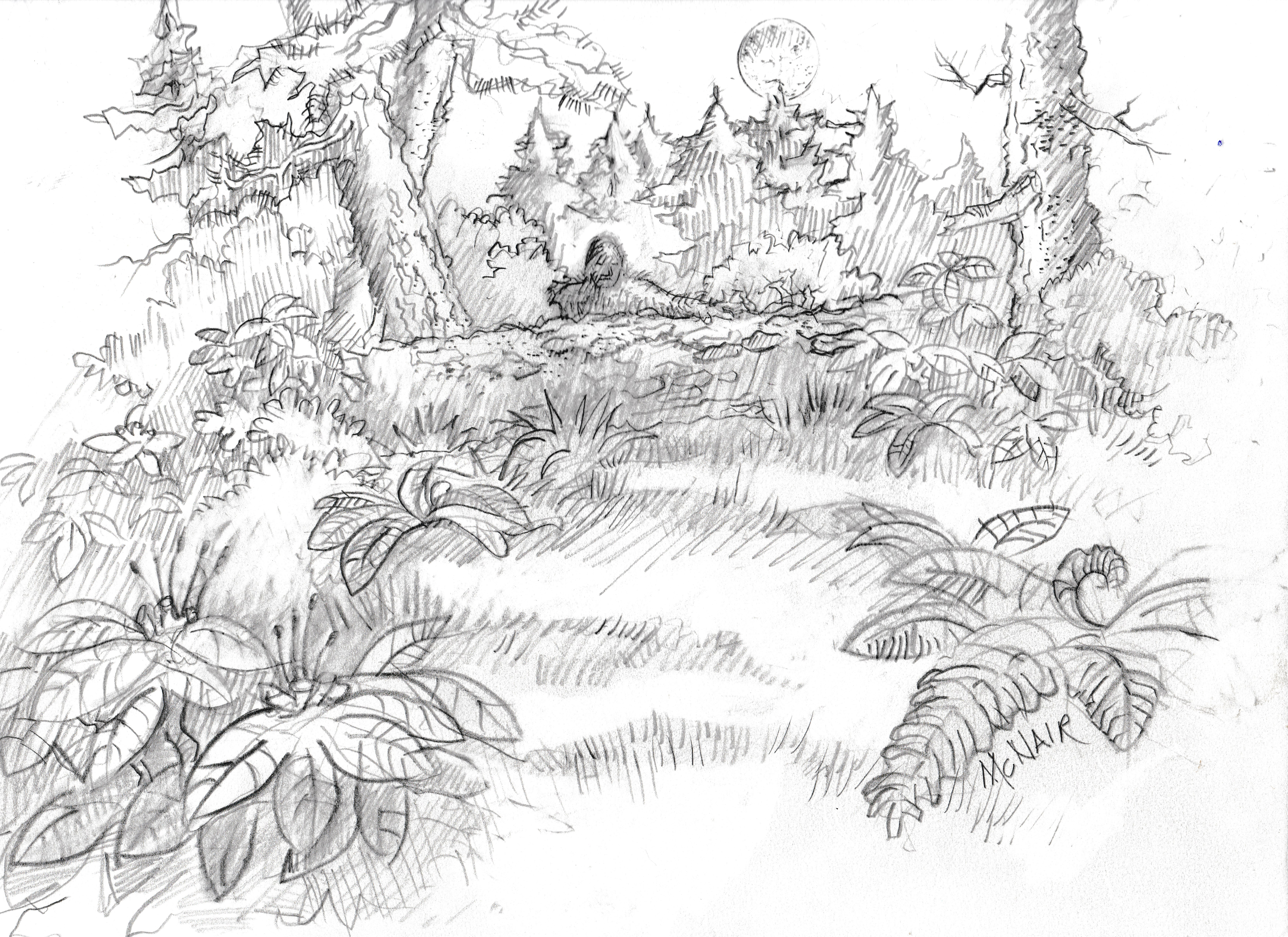
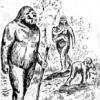
When I was younger, I had a dream Landscape Architect job with the Forest Service designing a large RV campground and a recreation park along the Applegate River in southern Oregon that took a year to do. I'm 79 now and want to be truthful about memories. After this was completed, my job became irritating and boring. No more parks were on the horizon, and my new job was to fool the public about logging! It was a clever plan that I've kept secret until now. My job was deception and to drive the main national forest highways and mark all the forest areas on a map that one can see from the road. I also marked forest areas behind mountains that were not seen. Can you guess where the plan for public deception is headed? The hillsides marked as unseen while driving the highway were going to be clear cut of all trees which upsets the public because Bamby the deer's forest was going to wiped out with logging and clear cutting. The refreshing forest seen from the highway were going to be preserved and all is good in nature land ................ so the public thinks. Needless to say, I became out raged, quit, and went to a different landscape architect job. My point is deception by the federal government that is also taking place with bigfoot. The forest service hires credentialed wildlife biologist and how many bigfoot reports have you read from one of these biologist? They spend hours driving remote forest roads, and hike on trails and a few of them must have seen bigfoot. Lots of people see them. I have two friends that saw one and I saw one too. See my eye witness sketch is below. Do some internet searches and find even one report by a forest service biologist that mentions or even focuses on bigfoot. One of the forest service's duties is to study and protect wildlife during logging operations. You as a taxpayer are still being kept in the dark when if comes to bigfoot? How do you feel about this dilemma? What is your opinion? Should I have quit the forest service? Are we being kept in the dark? My sighting is below.
 2 points
 -
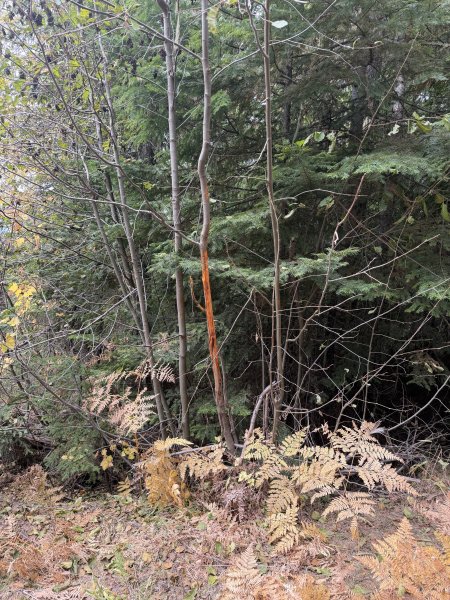
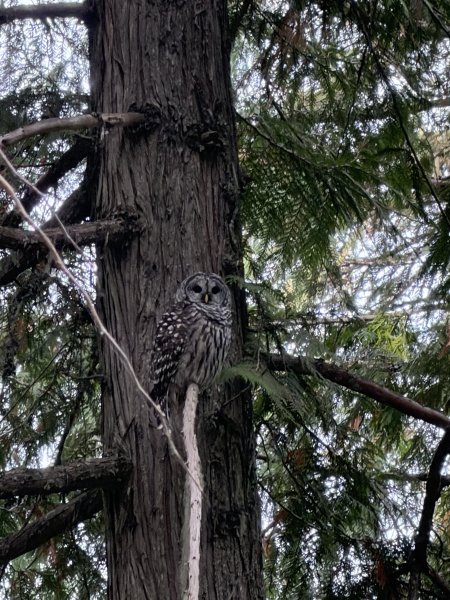
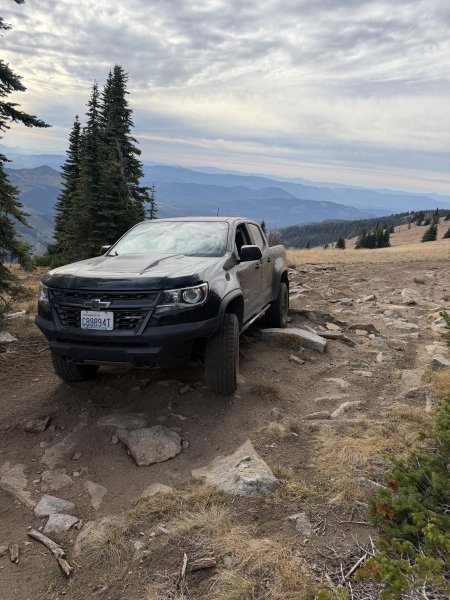
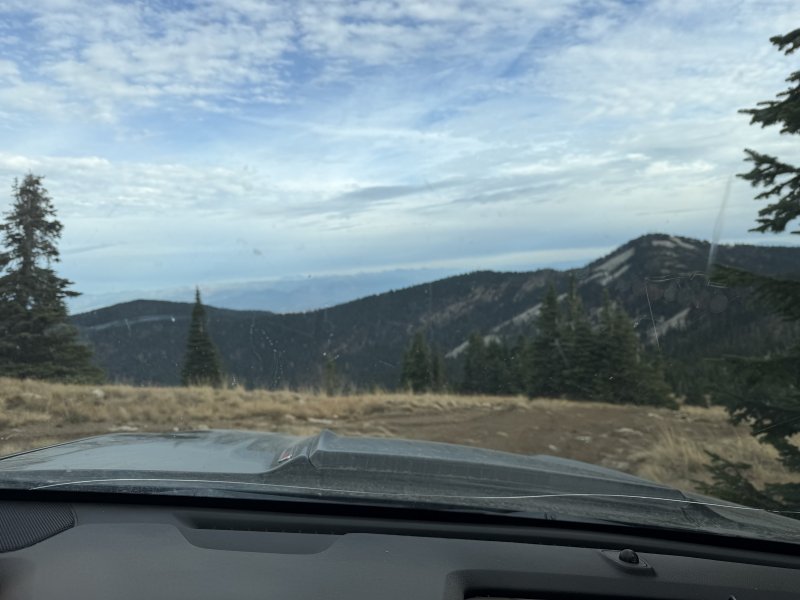
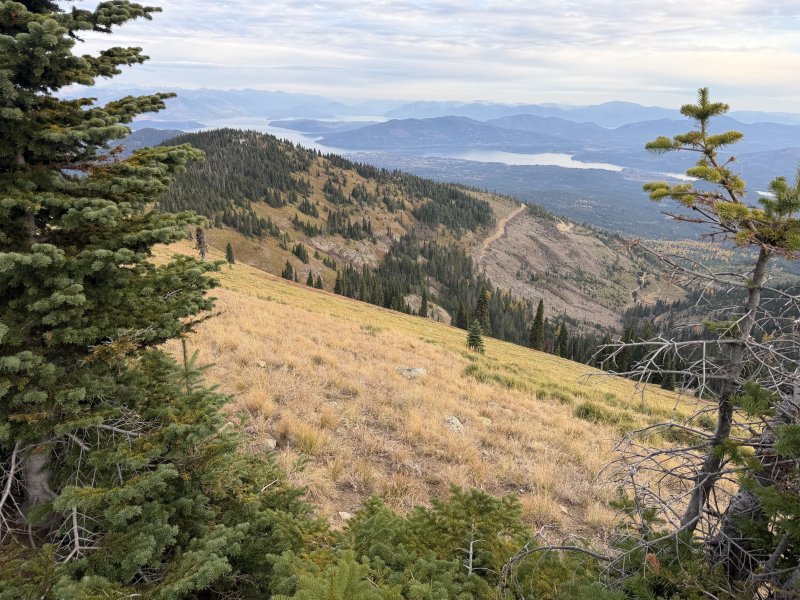
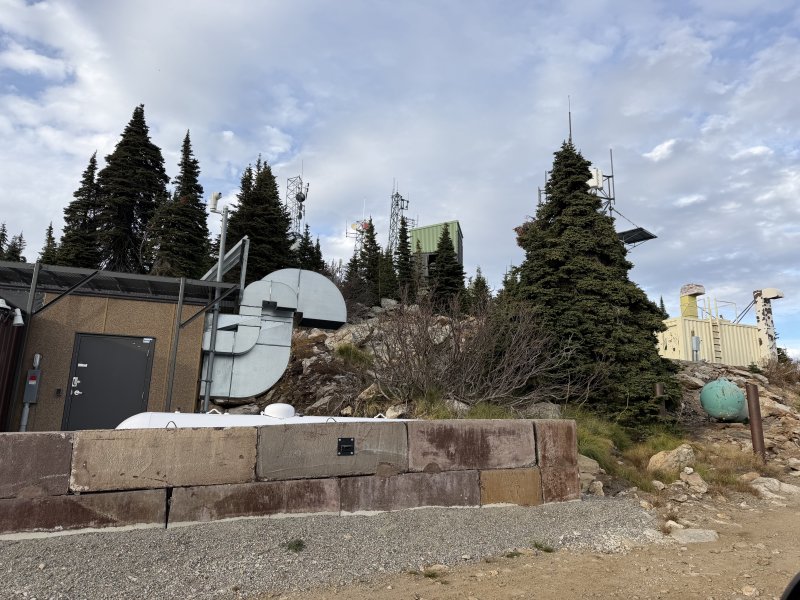
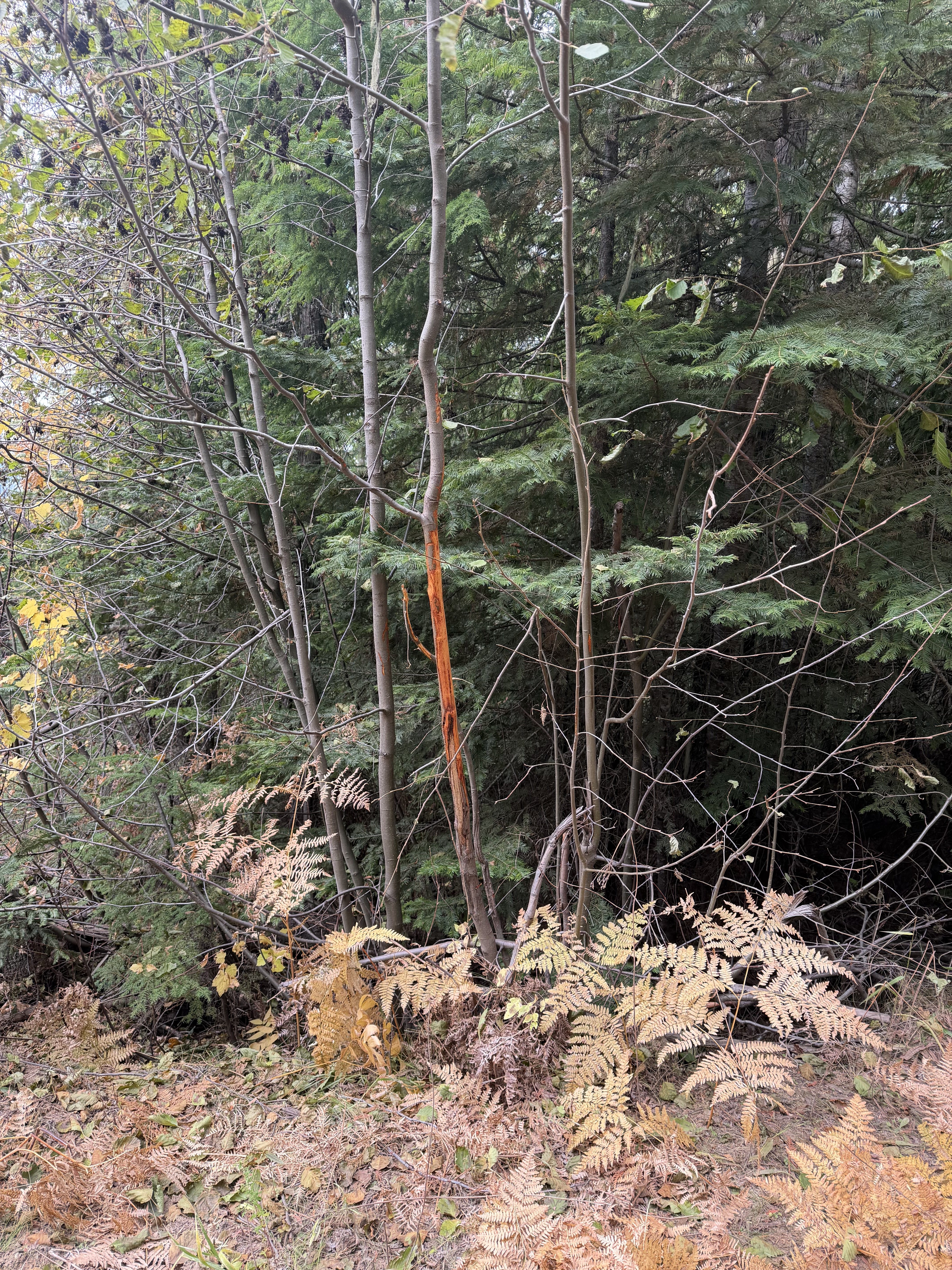
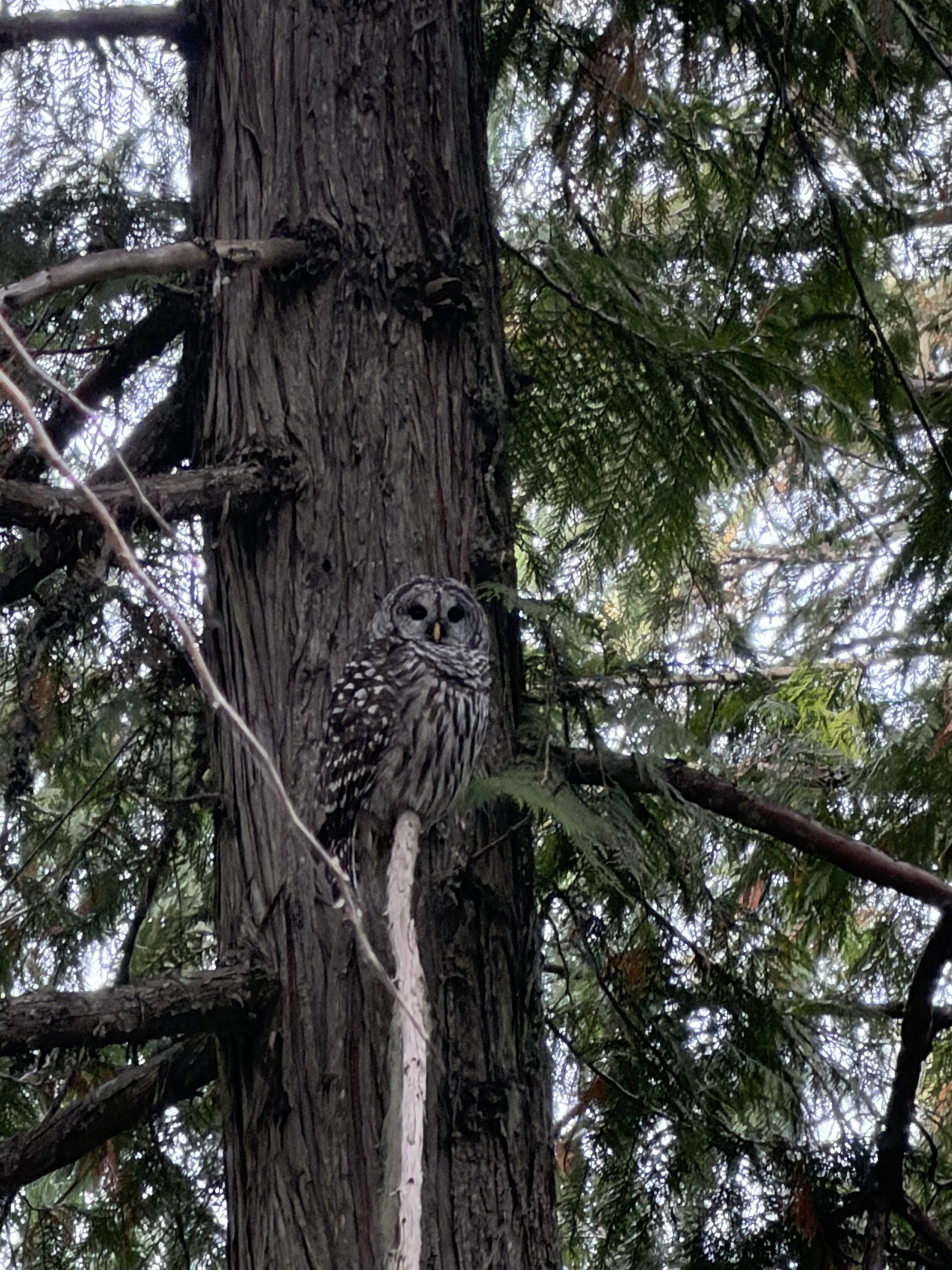
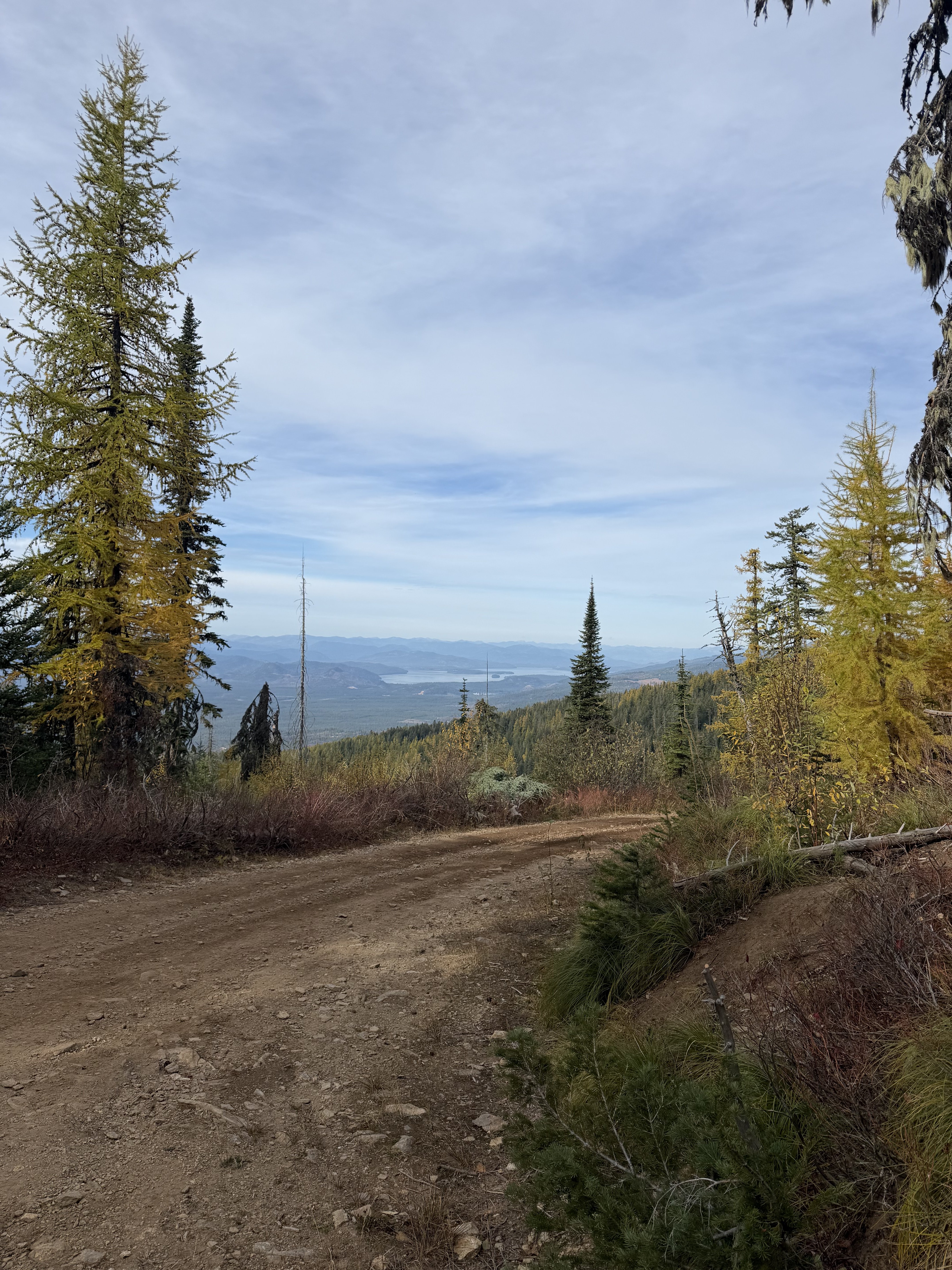
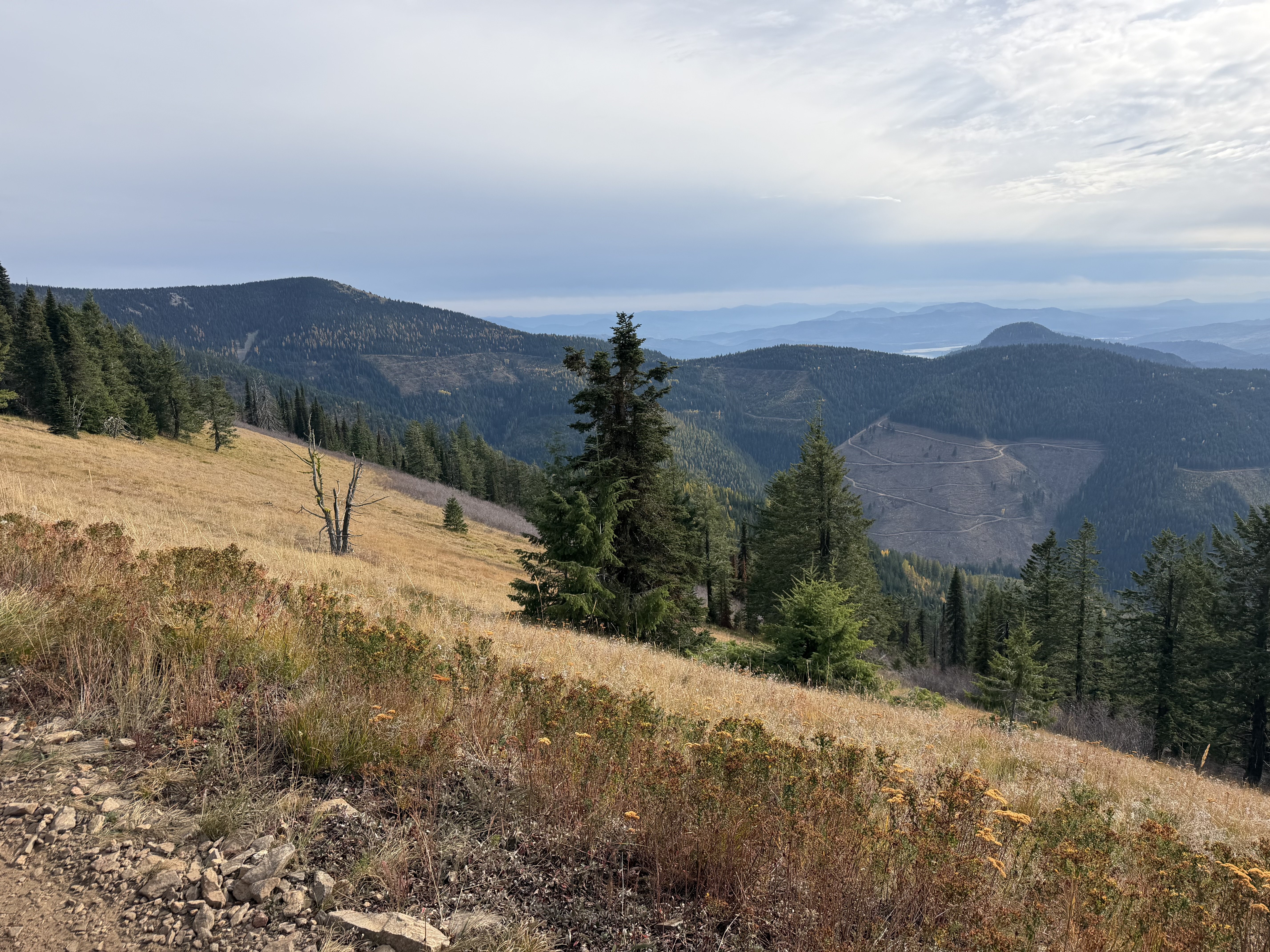
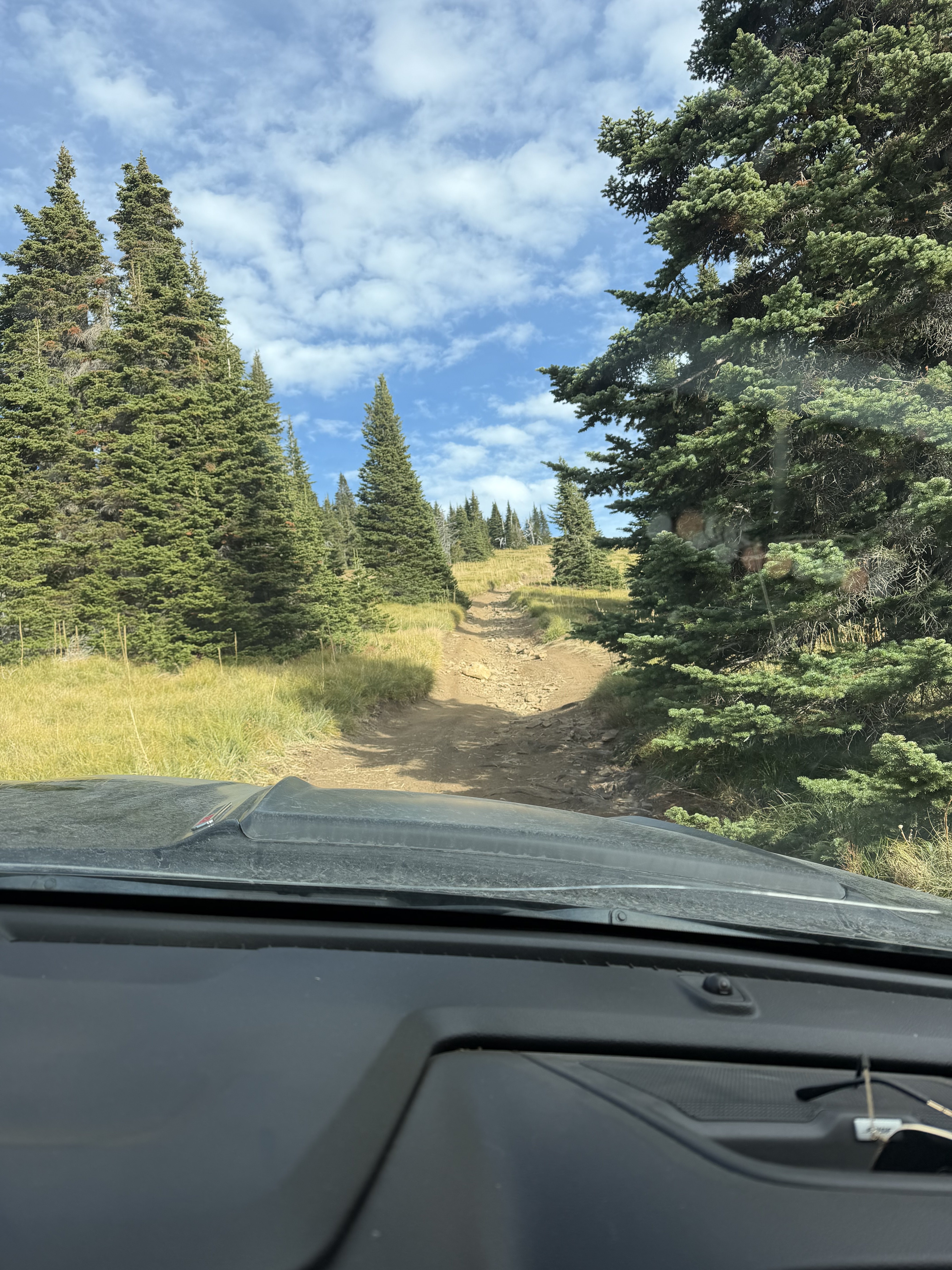
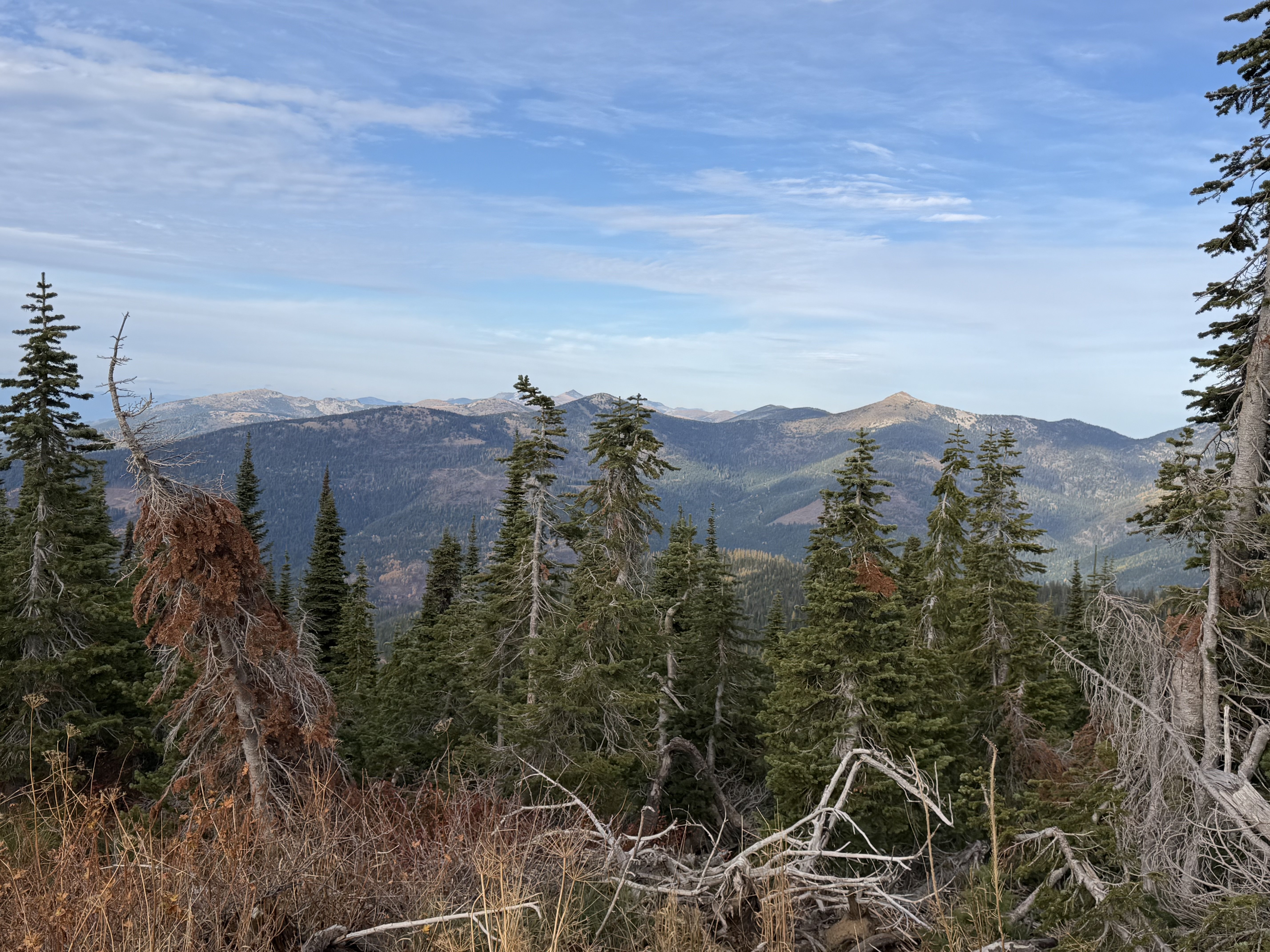
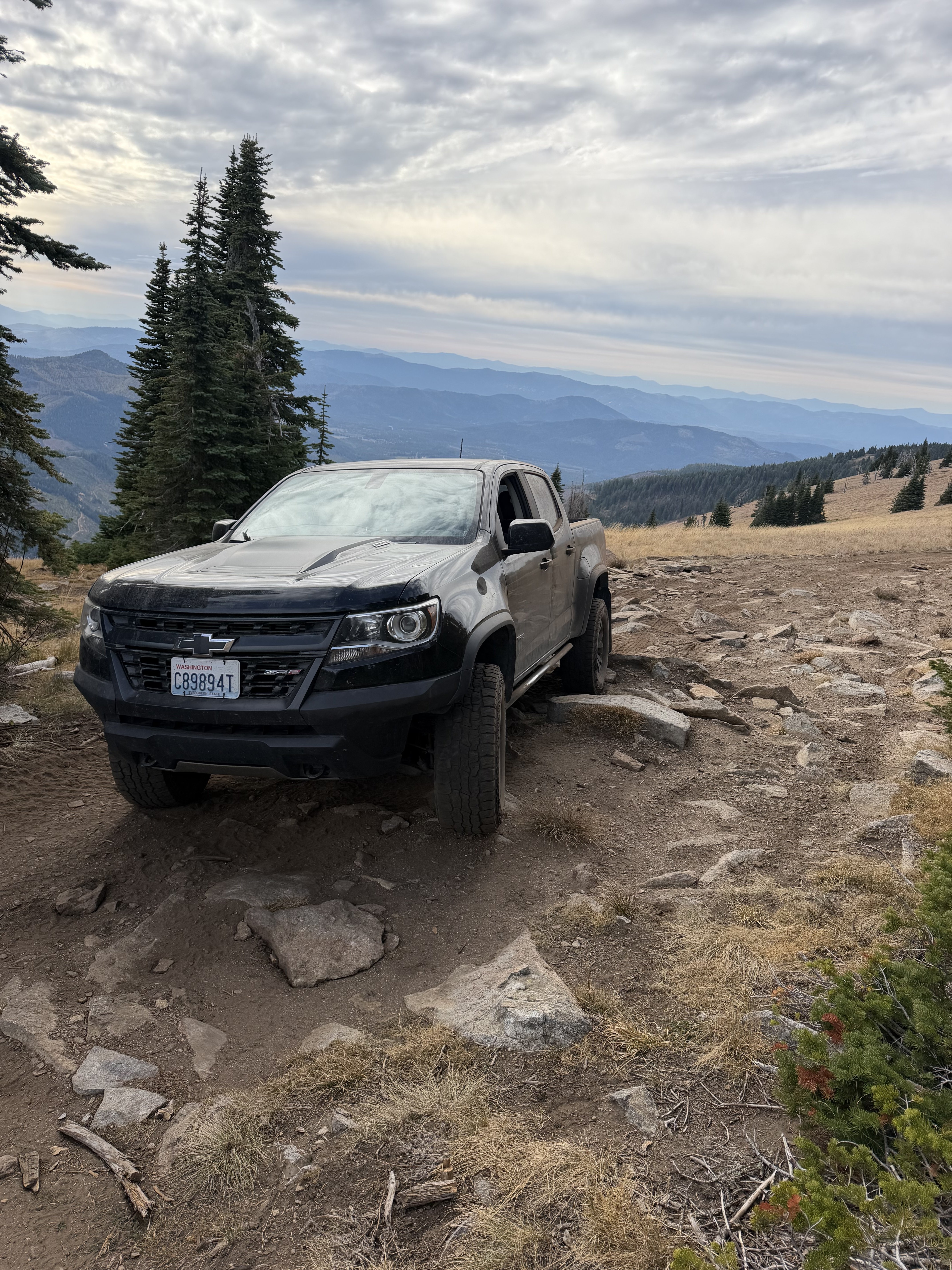
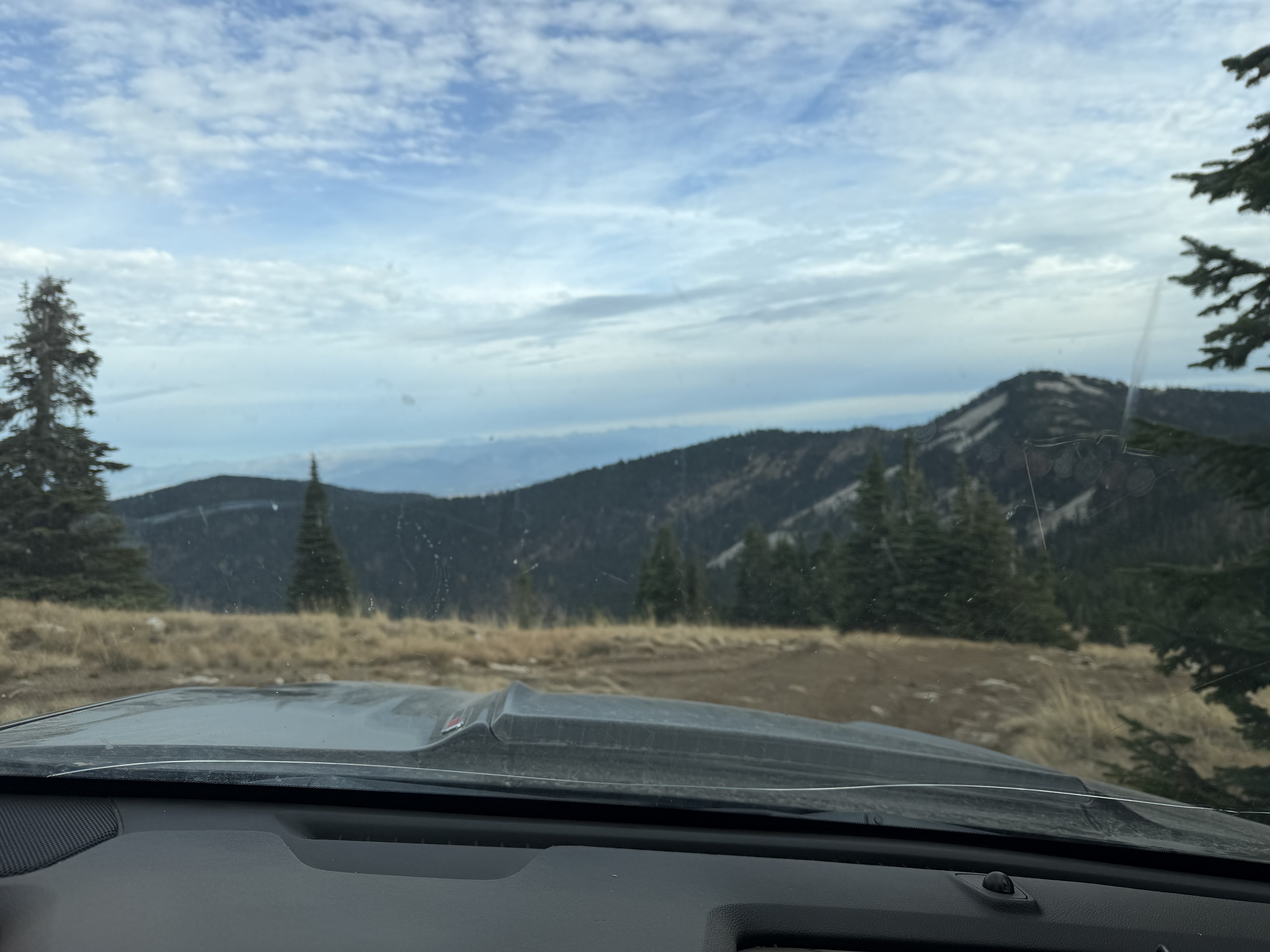
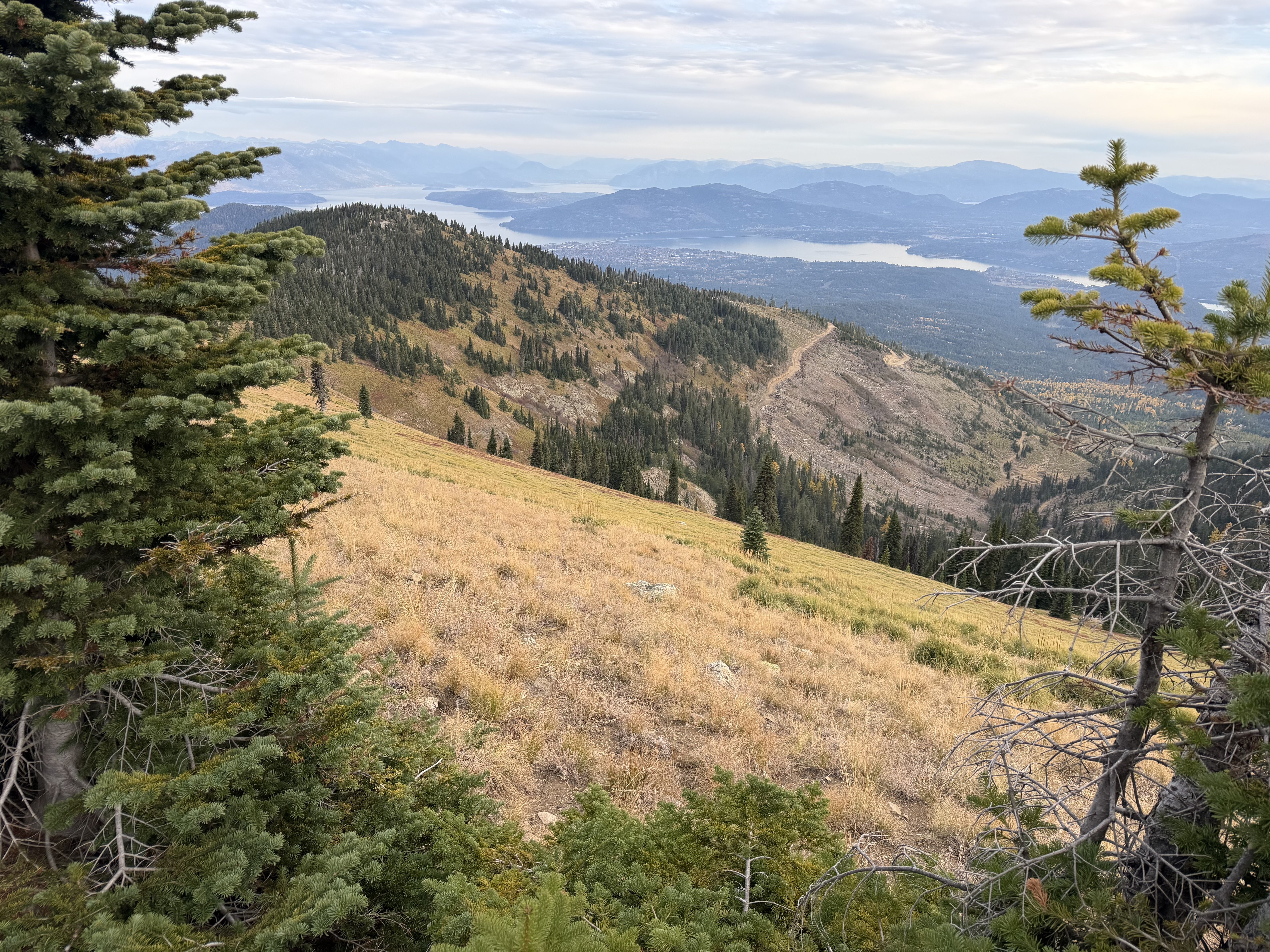
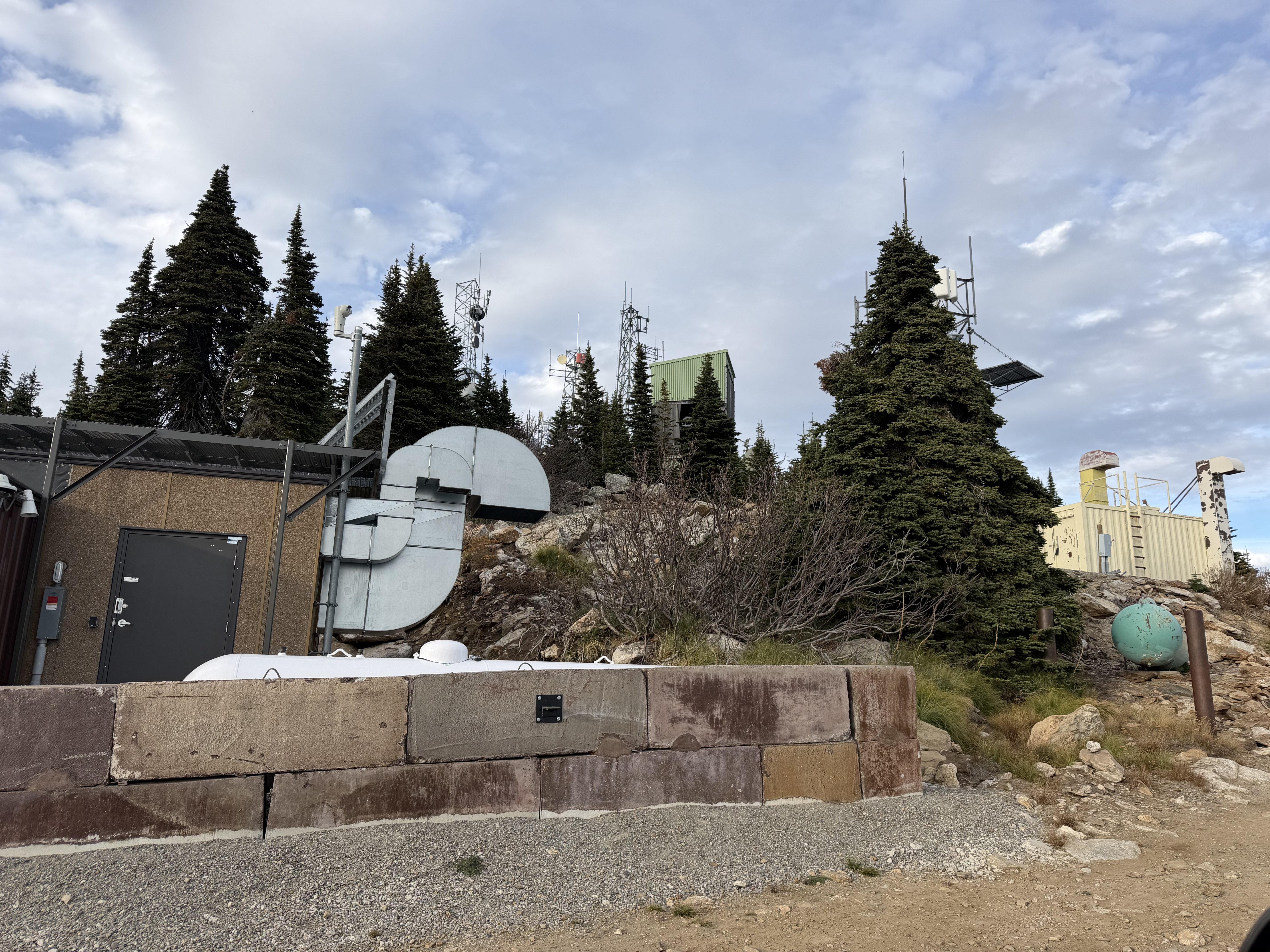
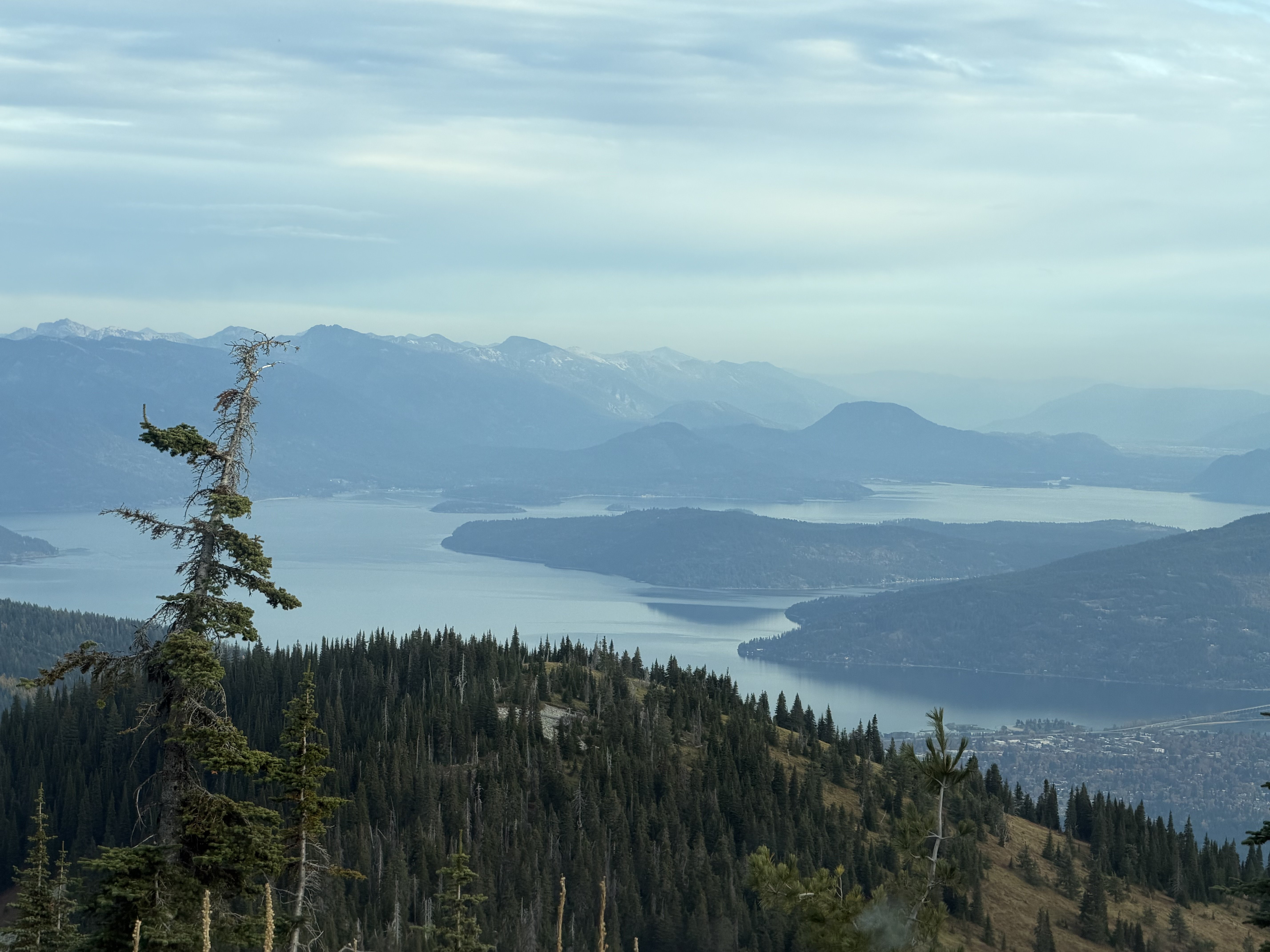
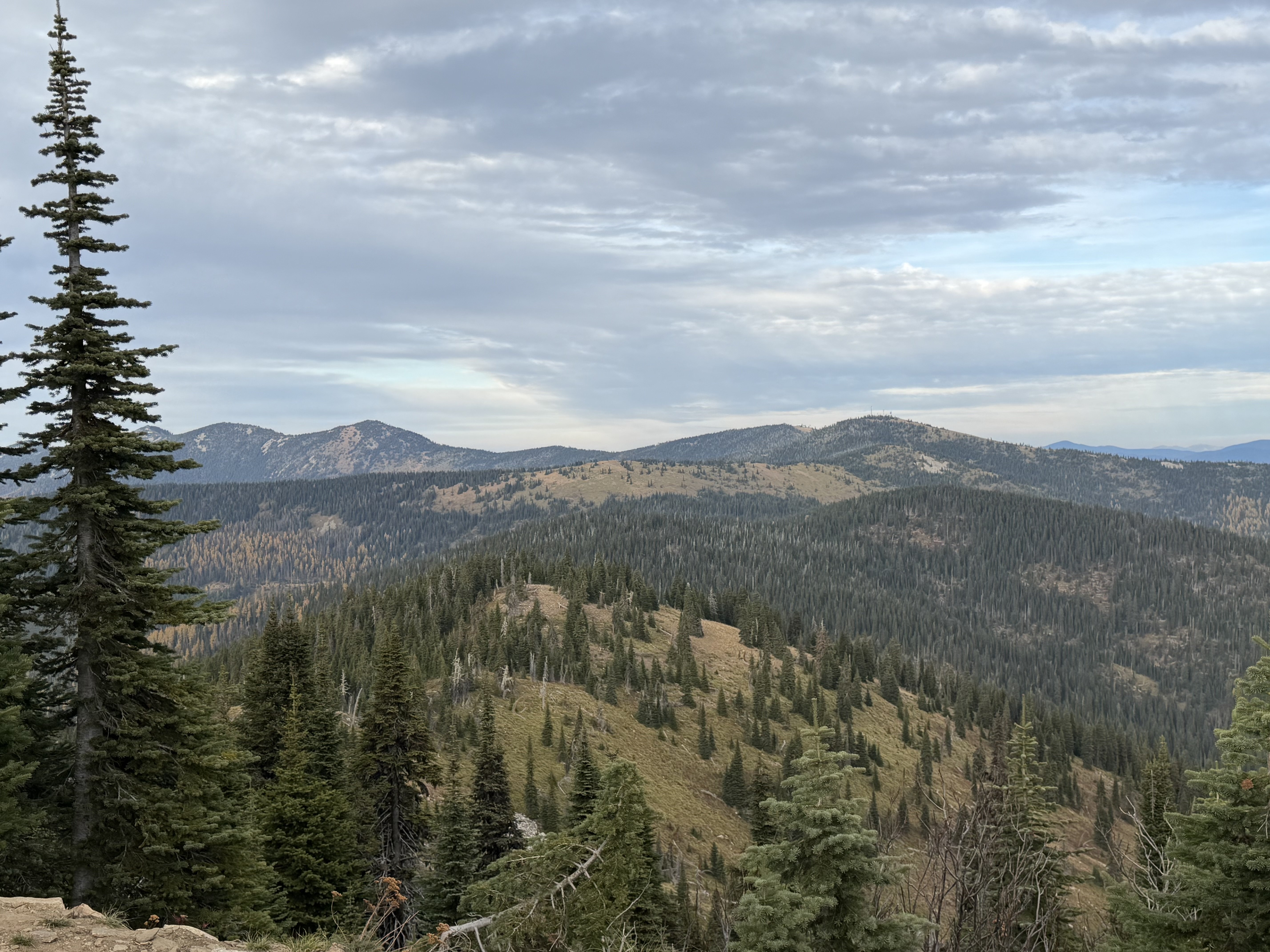
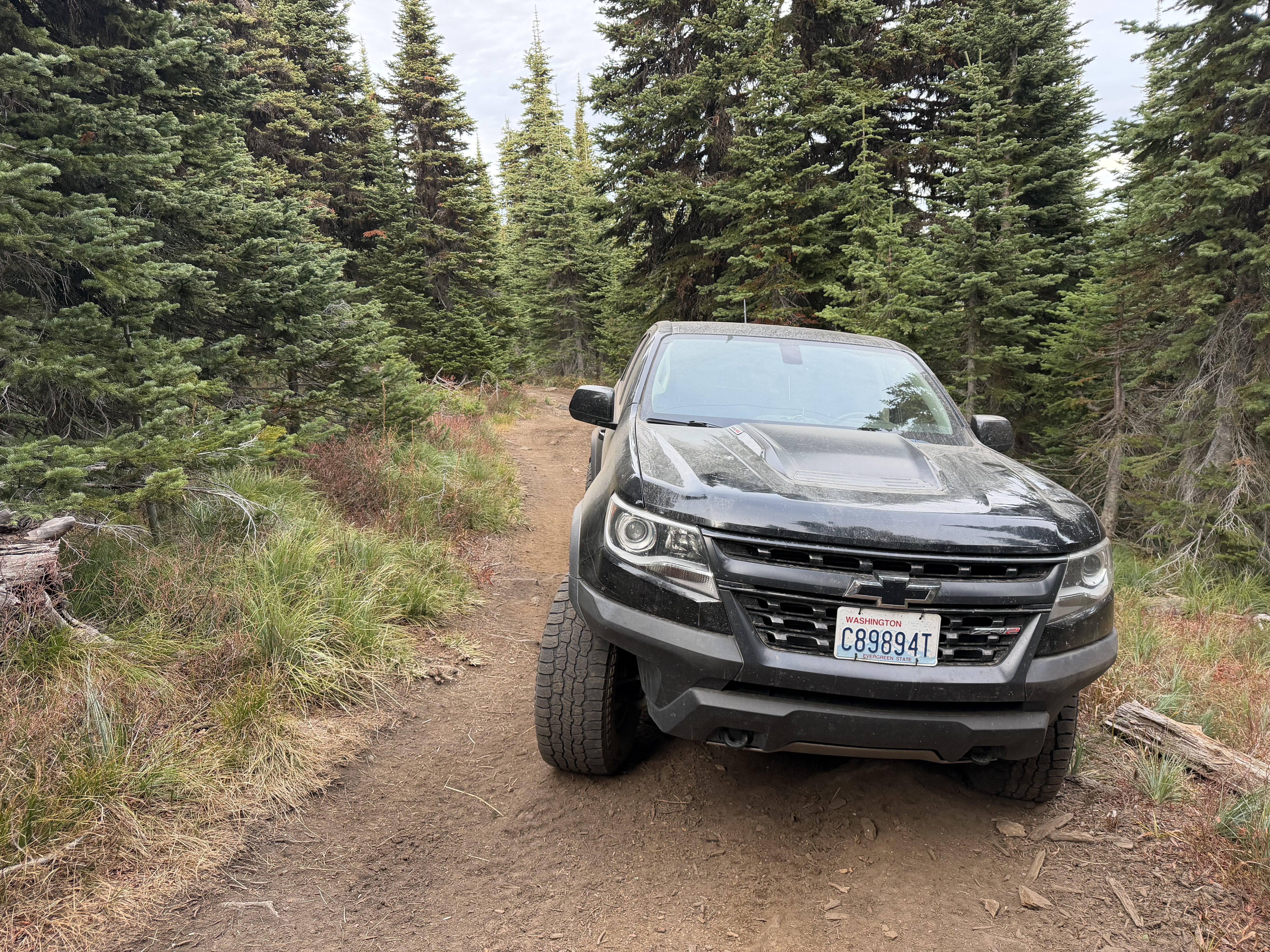
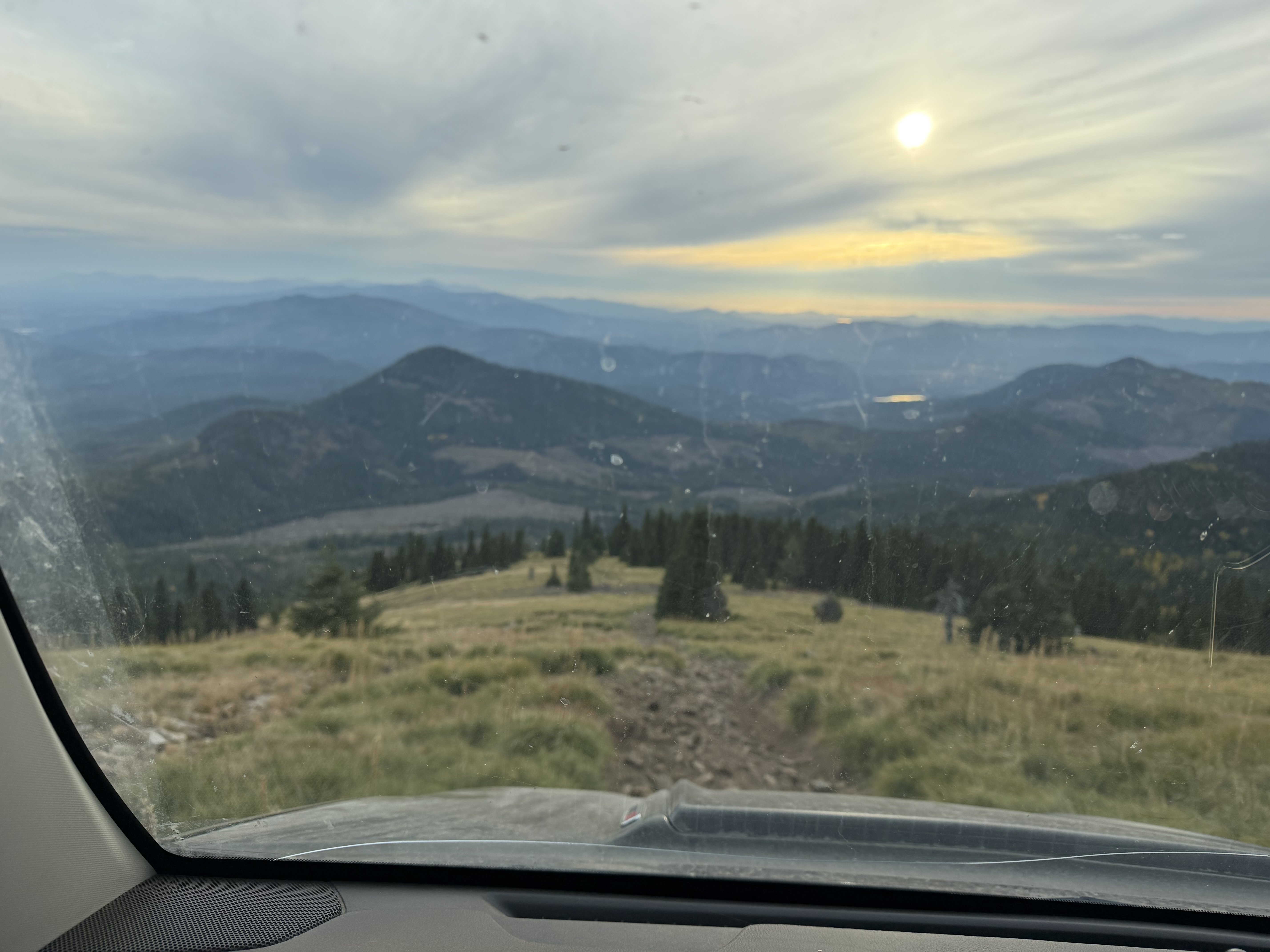
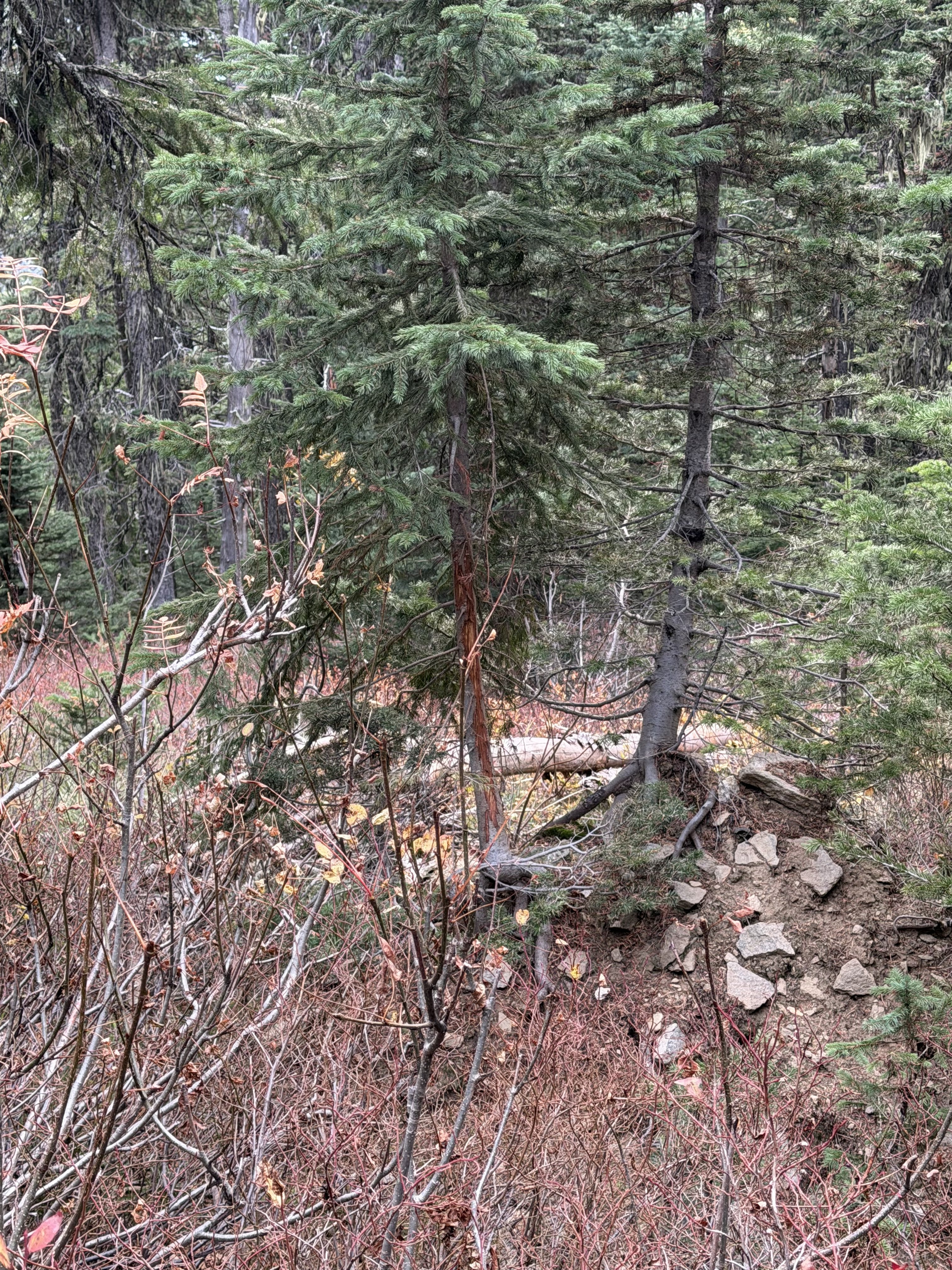
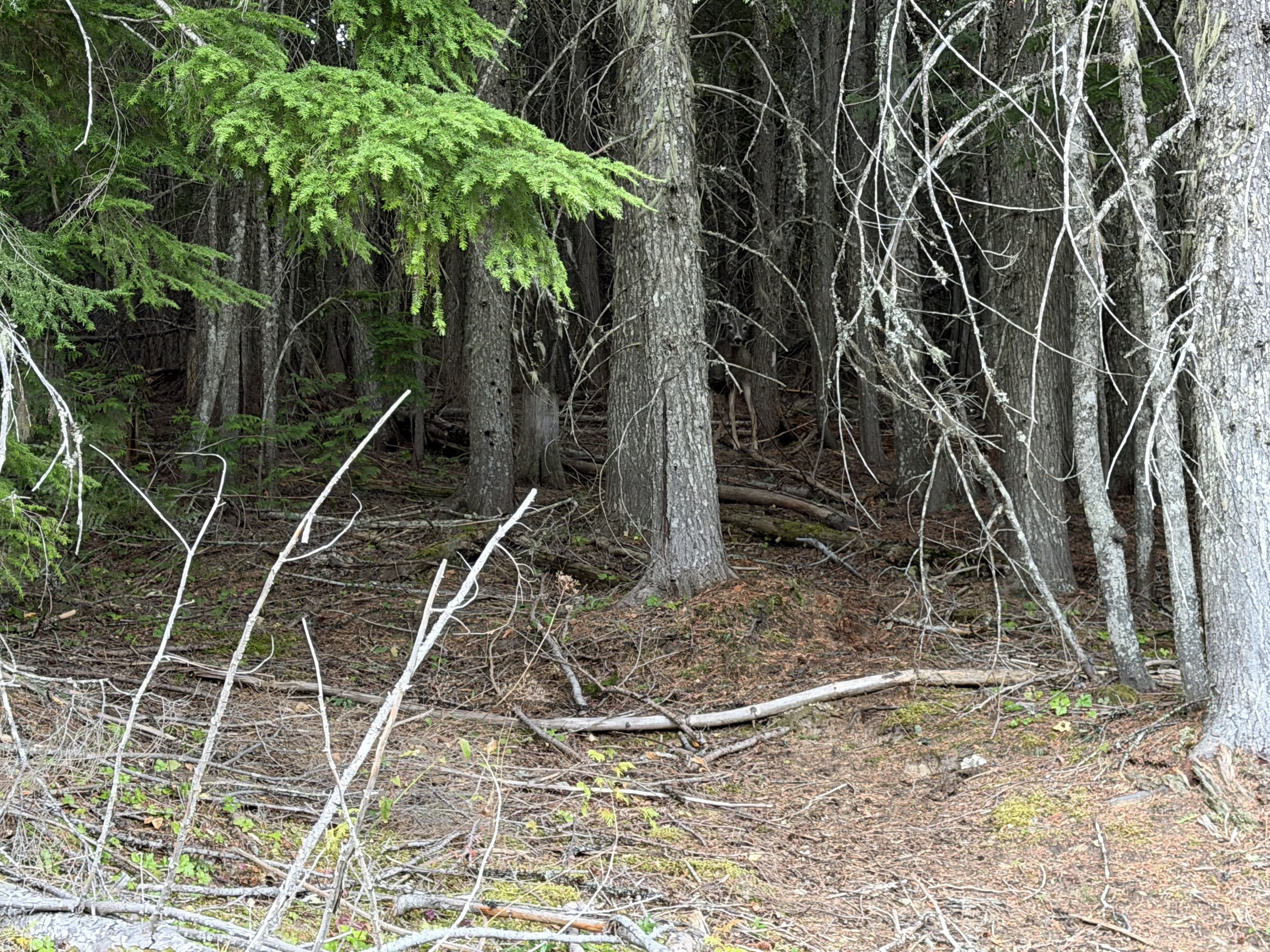
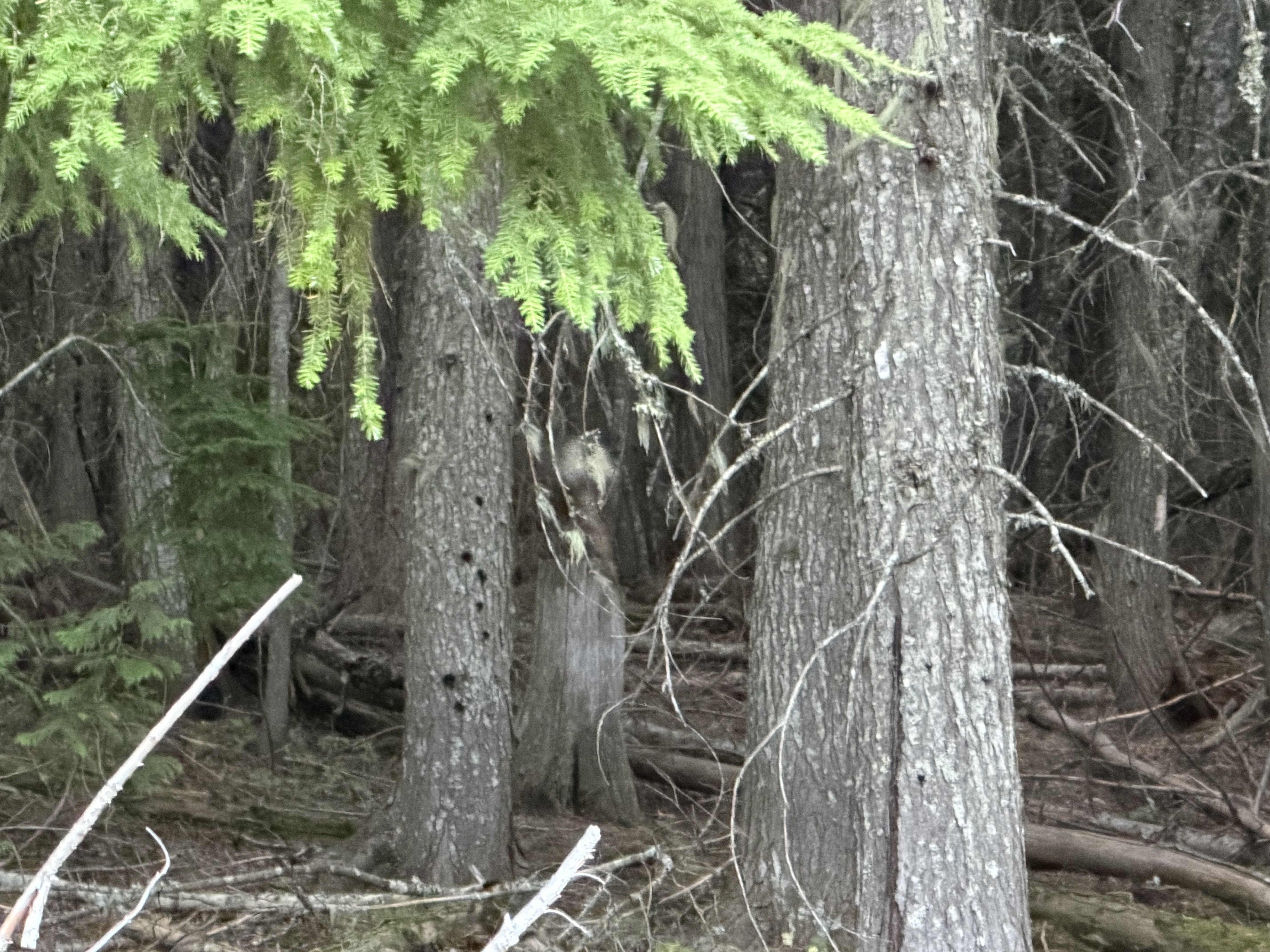
Up by Priest lake on a tight jeep trail for part of it. Bald Mountain area. Saw deer and rubs and a owl. Tamarack is all turning yellow.
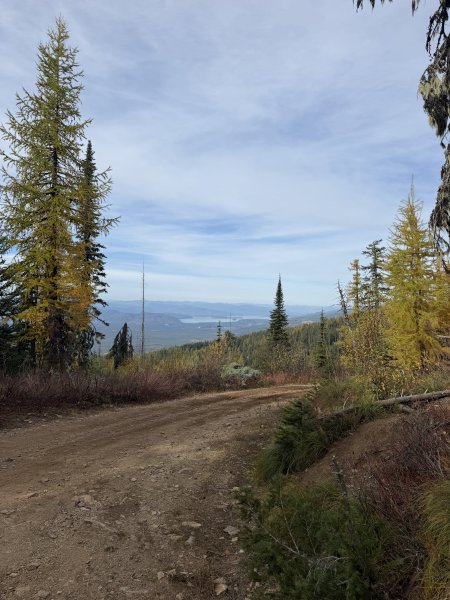
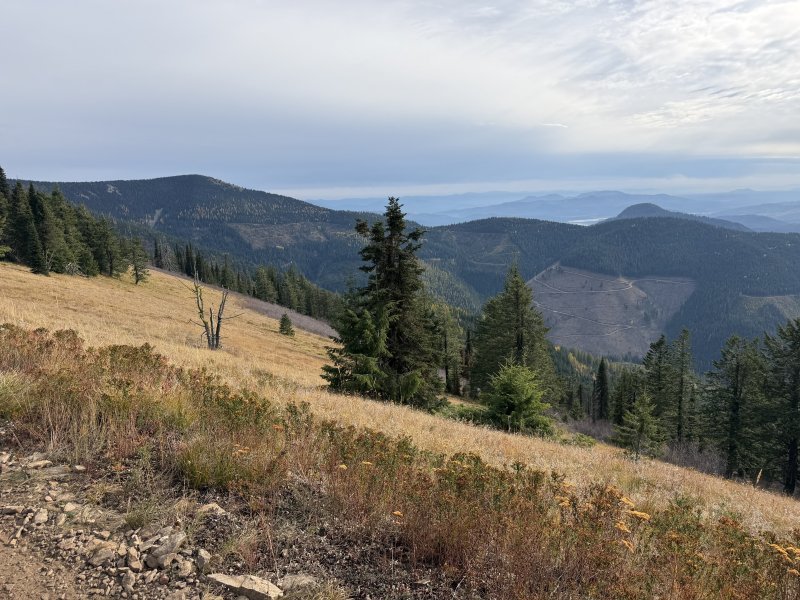
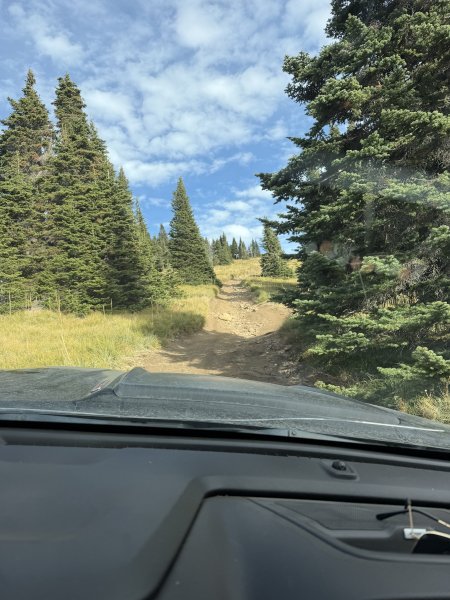
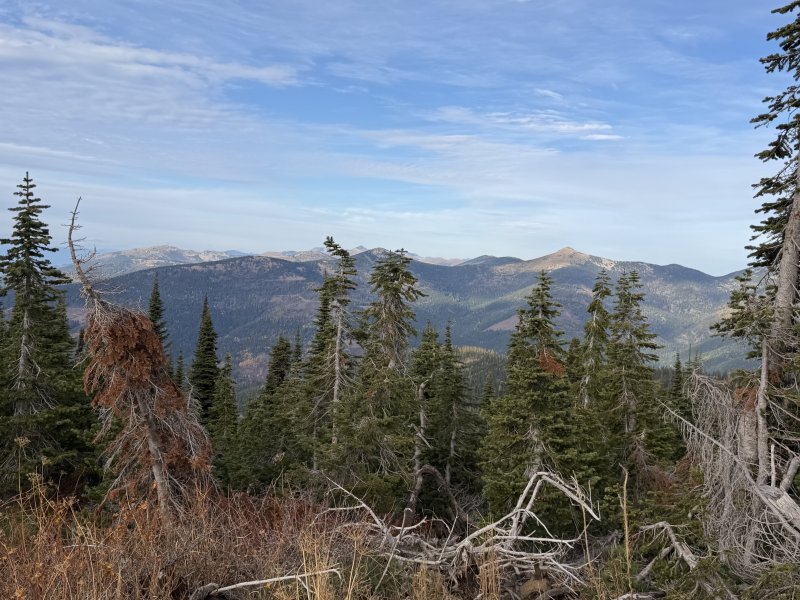
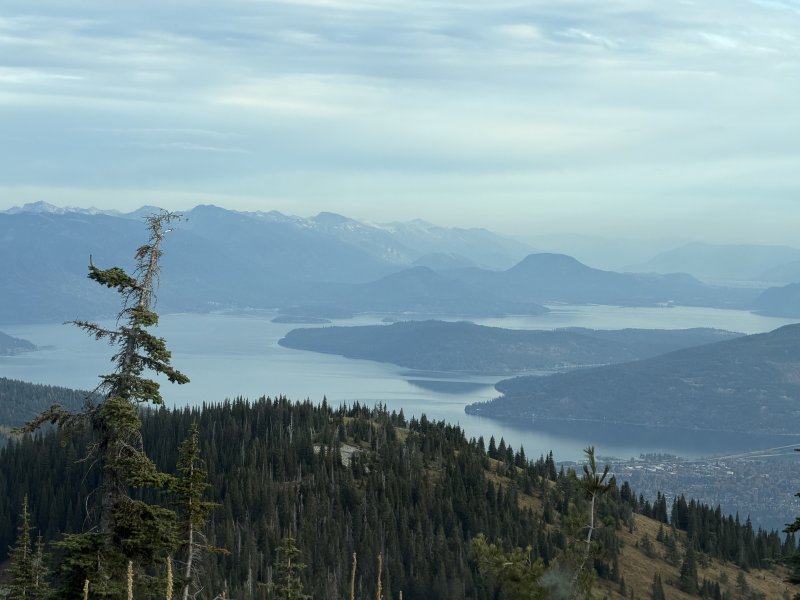
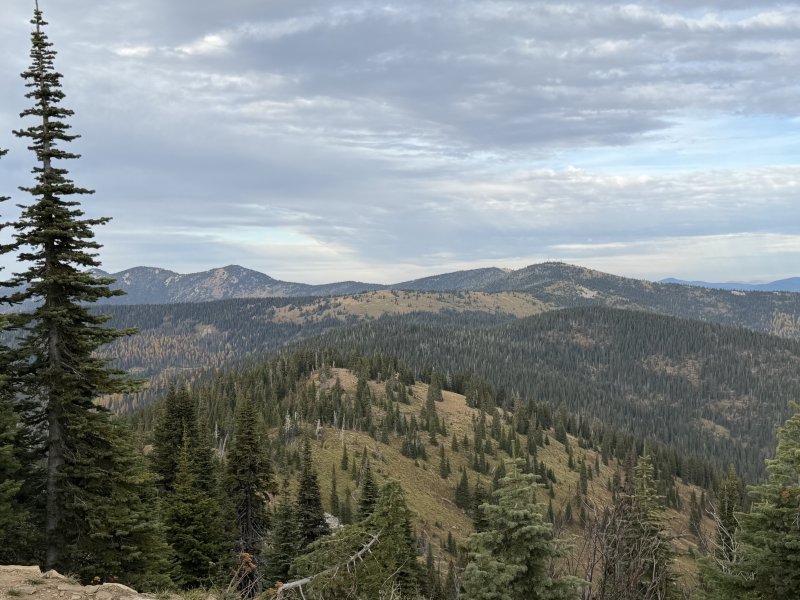
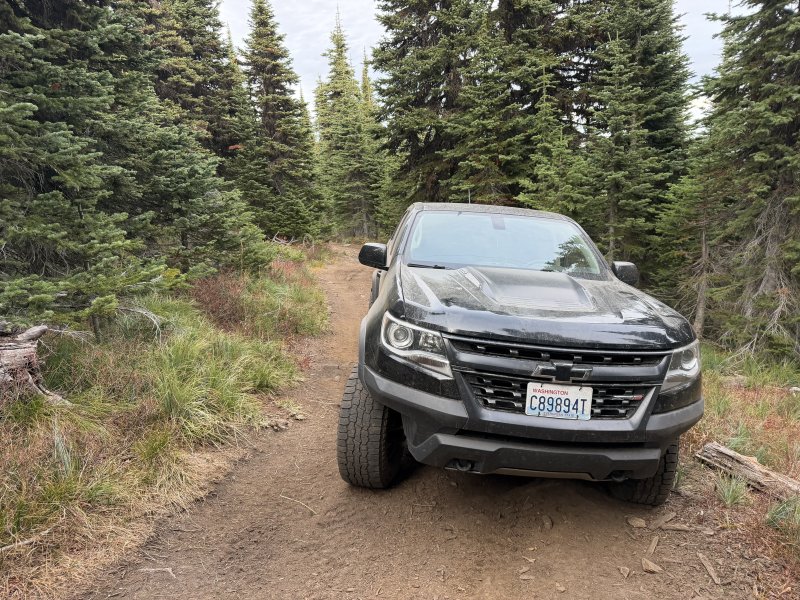
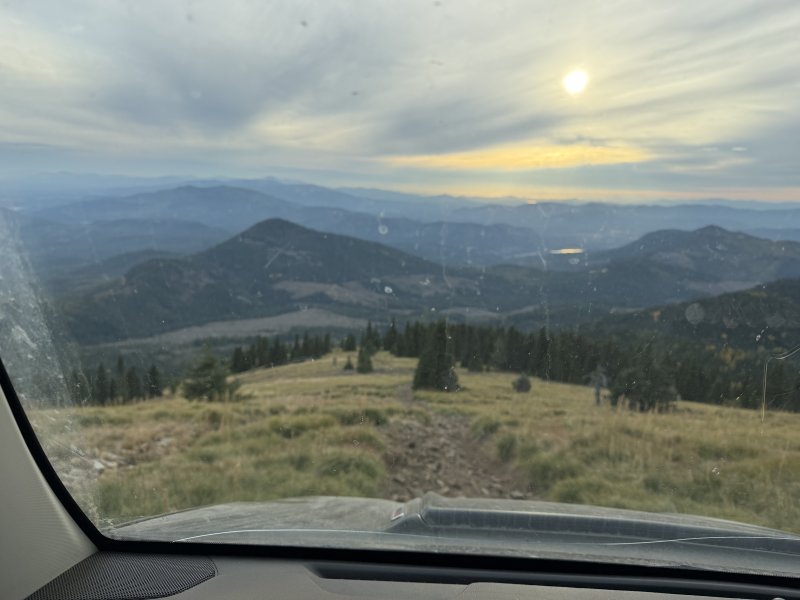
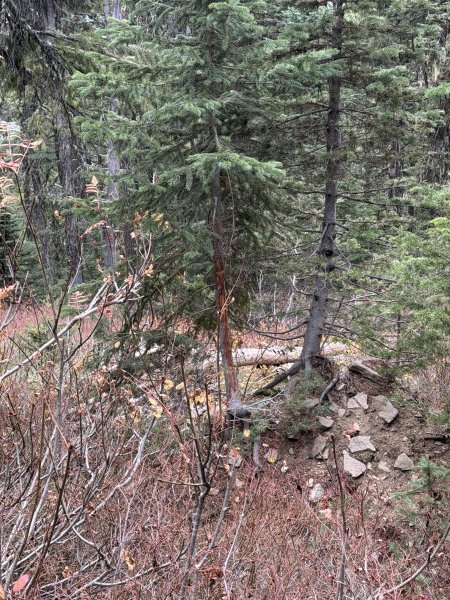
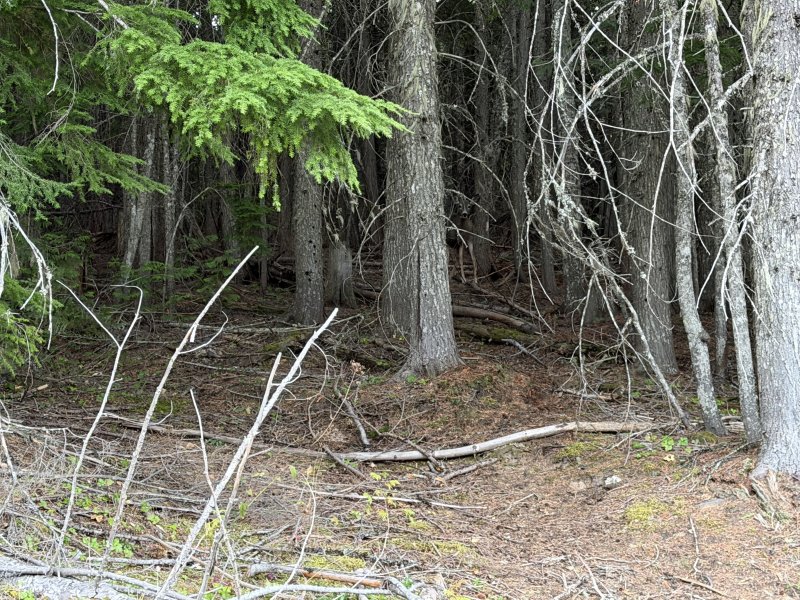
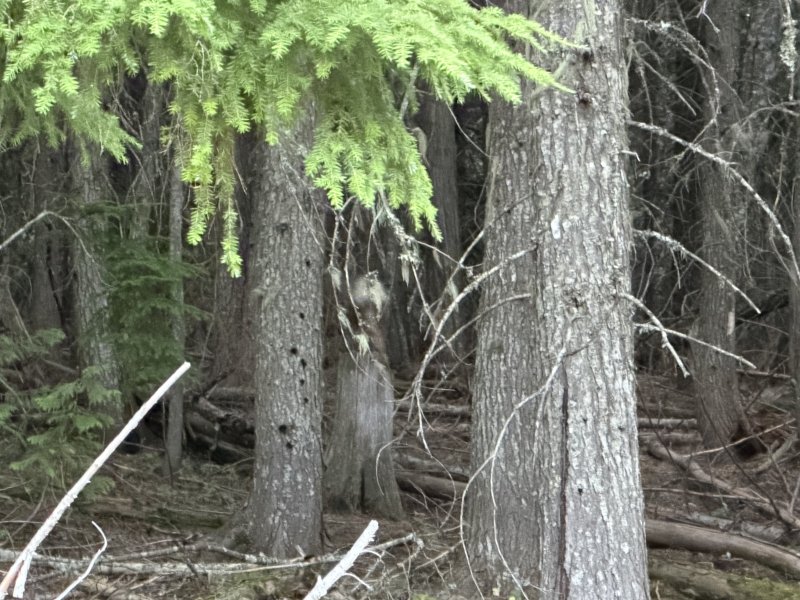 2 points
 -
When I worked for the Forest Service back in 1974 and 1975, I had no concept of what the agency's stance was on bigfoot. While on the job, if I had a sighting, I would have reported it to my boss who was higher up in the district office of the Rogue River National Forest of Medford, Oregon. He probably would have told me to not report it to the wildlife officer since this would put my job in jeopardy. My annual job performance review was coming so I would not have reported it to those higher up in the chain of command. Since my annual review was coming up, and if I reported the sighting to the wildlife officer, I probably would have been fired for disobeying my immediate boss. I would guess the Forest Service has not changed their stance presently, and they call bigfoot a mythical creature for a reason. This means they are not real, so they have no effect on Forest Service policy. Work someplace else if you don't understand the policy.2 points
-
^ This. ^ Moreover, even within certain agencies (like the Army), few have the odds of encountering these creatures. But some do. I've used the example of Ft. Lewis, Washington. It's right on ground that is surrounded with regular sightings, is actually on ground that looks like a migration/movement area, has plenty of recorded sightings itself, and has been an Army post for over a hundred years. If sasquatches exist, and if that area is as density rich as reports indicate, and with the Army being there for a century, there are people within the Army family who know about it. I was an Army soldier (engineer), and then an Army civilian on Ft. Richardson, Alaska, for 35 years. I worked for the engineering organization that literally owned the post. We signed off buildings and lands to commanding officers of various units, but we were ultimately responsible for them (and we held the tenants responsible for proper use and damages). I was an "outside" engineer. Roads, grounds, railroads, bridges, etc. We had an environmental branch which included a Natural Resources Officer, who was responsible for wildlife. He set the hunting regs on post in cooperation with the state fish and game agency. Ft. Lewis has/had the exact same organizational structure. If sasquatches exists, they exist there at least in movement through the place leaving sign and encounters with soldiers and Range Control. Eventually, the Natural Resources Officer is going to know and share that knowledge with the Public Works Director, who will then share it with the Commanding General's Chief of Staff. Where the knowledge goes from there is certain to vary. But my experience is that's how it looks at the lower, local end. I'm also pretty well versed in what we call "unofficial lines of communication". All of us civilians, unlike both the enlisted and commissioned active duty personnel, worked there for decades. We didn't come for a three year tour, and then rotated out. We owned the place. Literally. And we worked together for decades. We were like brothers and sisters. We still are. And we talk to each other. Some word gets around. Some is hush-hush. Depends on what it is, and who you trust. On Ft. Rich, we talked openly about the wildlife. Those of us in the exterior trades and activities had regular contact with the bears, wolves, and moose. Lots of it. And we shared those experiences with others. If I saw a sasquatch, would I have talked? Yup........to a few folks. Certainly not all.2 points
-
Based on my reading of hundreds if not 1000+ reports, I am a firm believer that the Federal Government as a whole fully understands BF and for reasons you can only guess feels it is best not to reveal them and even protect them where possible. For instance, what are the legal or even constitutional issues if they are some form of relic hominem? Even worse, what if they have an alien origin (which I do not believe but there are plenty of BF/UFO related reports). I have seen them and ran in to them multiple times over the last 30 years in NC and NJ (and may have a den/hunting blind build by them 100 yards from my back yard) and no longer care to get proof of their existence. I doubt I would reach for my camera or phone if one posed for me. Just leave them alone like they leave me alone when wandering through the woods.2 points
-
In terms of the impact of the arrival of europeans, you can't diminish the probable damage done by the foreign antigens, which may very well have killed off the the vast majority of sasquatch, at least those within close enough proximity to the natives as they became afflicted. The Europeans practice of laying blankets infected with yellow fever and the like across trails could have transmitted these diseases to the Bigfoot just as they did to the native americans. It may have taken longer to pass between them due to their more widespread distribution. There's estimates of 90% mortality rates amongst natives (even higher in south america) if this applied to the sasquatch, perhaps their rebound was slow, then as whites killed off the majority of upper level predators, and deer populations began expanding, eventually to the point of overabundance, then the sasquatch had plenty of prey, little predator competition, and more empty land to move into, reclaiming old turf, thus expanding their numbers once again.2 points
-
2 points
-
Well, I have two historical newspaper articles that were scheduled to come out later, but I just changed that to 1 minute after midnight. Apparently, once I set them for delayed publication, I can't change it back to "publish immediately." Be sure to check in first thing tomorrow (or later today for those in time zones further west) at https://bigfootforums.com/forum/203-more-historical-newspaper-archives/.2 points
-
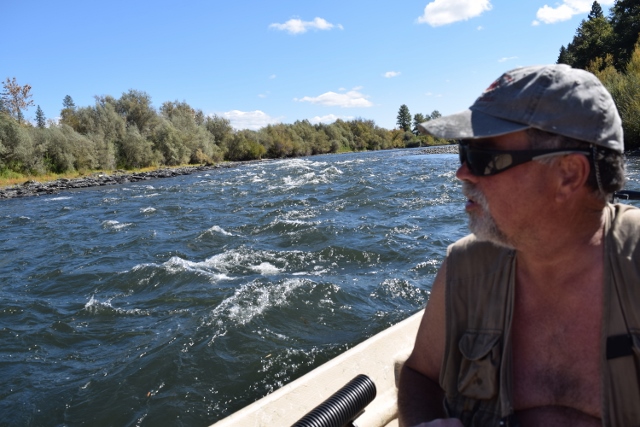
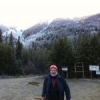
A few bigfoots in America are lucky since there is still plenty of undeveloped land such as many areas of Alaska and a few states below Canada. The bigfoots in these areas can avoid interacting with humans if they choose to do so and carry on their daily lives without seeing humans. The bigfoots in other states seem to depend on humans since there are reports of them taking cows, raiding chicken coops, or showing up at night on rural properties. Even though there is plenty of wilderness for them, some congregate on developed property which seems to attract some Sasquatches. Mavbe these Sasquatches have been pushed out of the wilderness by dominant Sasquatch families, and they depend on rural folks for their food and shelter. We just don't have the answers to these questions since we haven't allocated funds to do quality unintrusive studies of bigfoots. Maybe we should develop better ways to determine how we can help sustain bigfoot populations if needed. Many of us cringe when we see animal species going extinct and feel guilty for not doing more to protect a species. We just haven't developed adequate methods to study bigfoot populations so we can determine if their populations are stable or do we need special methods to ensure bigfoots can raise families and keep stable populations? The picture below shows me in my drift boat exploring bigfoot's habitat on the Rogue River of Oregon.
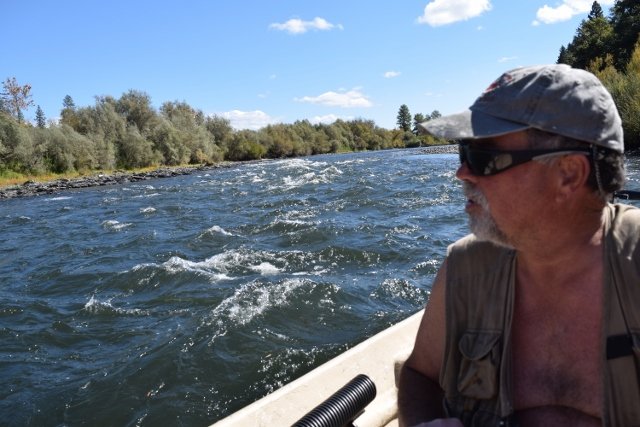 2 points
 -
The forest service designs and use to hide timber sales that helps remove fuels that build up in old growth forest and provides fuel for forest fires. Areas to be logged must be in proportion to the size of the drainage basin where the logging will occur. If a drainage basin is over logged then massive erosion will occur that floods creeks and rivers with brown sediment that can wipe out trout, salmon, and steelhead. Each drainage basin can have limited and planned logging which may need to be in public view, so fish are protected and wildfires are kept to a minimum. After a planned clearcut, grasses, brush, and small trees begin to grow back which supplies deer, and elk fresh leaves to brouse on. Bigfoots ability to raise a family and to find food is improved since deer and elk survive on the new growth springing up on clear cut land. However, during hunting season, Bigfoots ability to feed its family is reduced since bigfoots must evacuate prime hunting grounds to avoid regular hunters and hound hunters which forces bigfoot to hunt at night when hunters are absent from the woods. During hunting seasons bigfoots may need to hunt higher in the mountains where deer might be less prevalent and access roads are nonexistent. In general, the lives of bigfoots were probably more difficult during time when pioneers flooded lands throughout America. Bigfoots obvious desire to avoid humans has increased since the pioneer days which could have made them an endangered species that could go extinct. Since bigfoots are so difficult to find and to gather evidence on how they live, it becomes nearly impossible with present means to study them so they can become a documented and proven species. How we avoid killing a male and female bigfoot to prove their existence is a topic for another paper that could include hiring a massive forest workforce supplied with tranquilizer dart guns. Once proven, bigfoots and their habitat will probably receive national protection. Areas close to their nesting grounds will probably need laws to reduce hunting in these areas, build roads away from their homes, and supply food during winter months to prevent them from going extinct.2 points
-
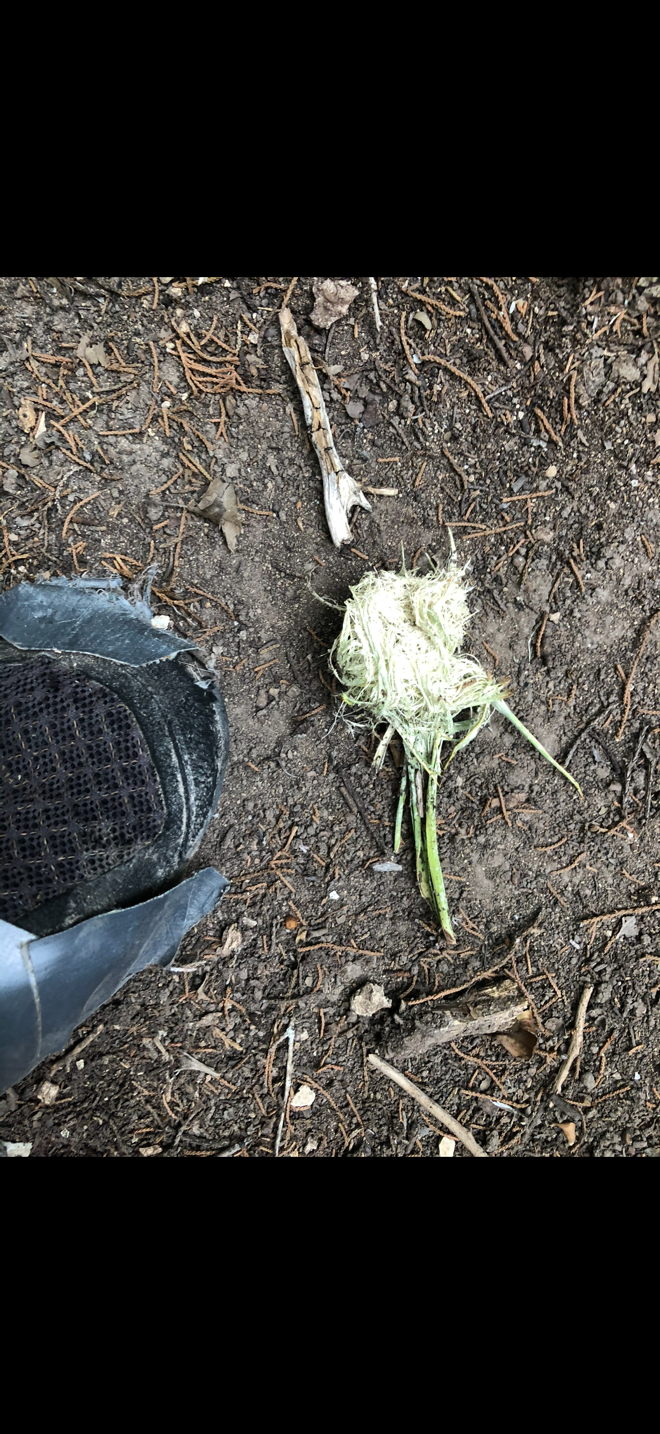
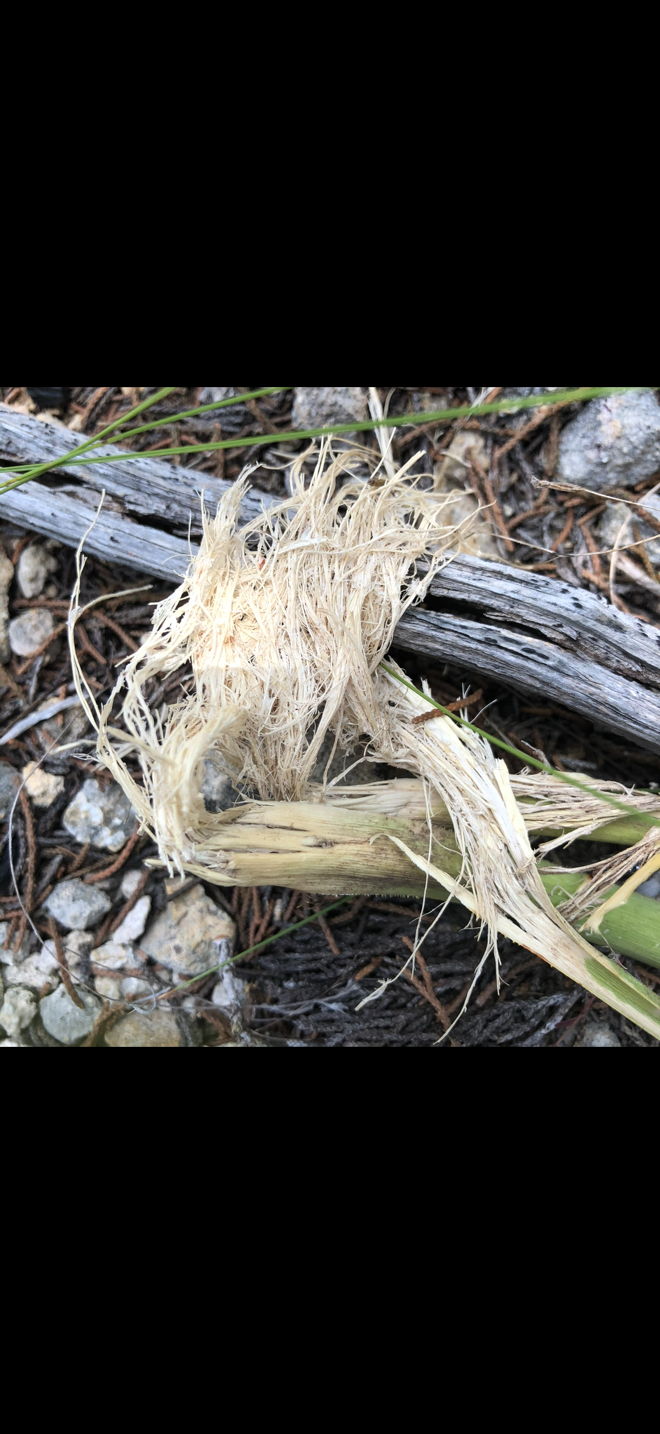
And here is a chew.....gotta have lots of DNA.
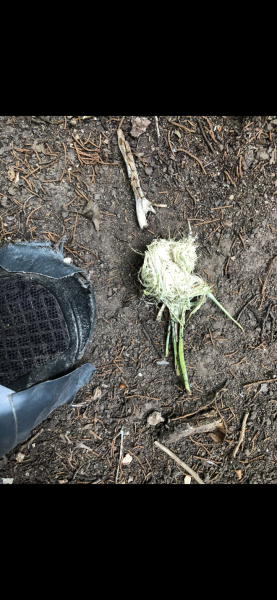
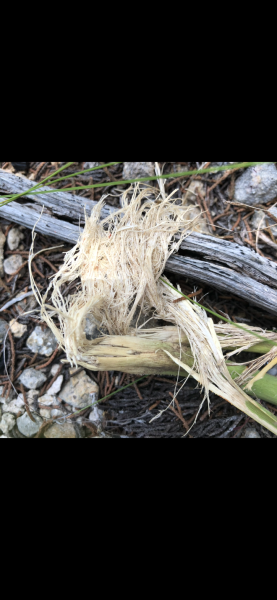 2 points
 -
1 point
-
Great looking country! I'll have to get busy and post some pics of my recent trip through BC, Yukon, and Northwest Territory. We saw a LOT of wildlife.1 point
-
Your plan is very imaginative, and it would be a great start to put into action. The end results would be a deceased or a live sasquatch depending on the encounter situation. Using BFRO is a great idea for focusing this Squatch One Team or SOT on active bigfoot sites. SOT would need to employ a travel supervisor who would arrange private jet flights to the designated American state and secure established camping parks that would accommodate 10 dogs and a 20 person crew including a film team of 2 . One major issue would be the funding. Funding would be partially through private money and TV documentaries. Movie/TV rights would fund the project after the team supervisor contracts with a film company who would broadcast a weekly TV series.1 point
-
Maybe I am a stubborn pot stirrer. But if I see one? I am putting it down. The chips can fall where they may. But truth is truth.1 point
-
Everything is a psyop. It is all purposefully designed to muddy the waters to such a degree that it is impossible to know who or what to trust.1 point
-
Bumping this old thread, just because, I am nostalgic, hahah1 point
-
Gotta laugh, sort of like USFS as a billboard proponent and sleuth fo the "beauty strip" script. I was doing some volunteer work yesterday and many different environmental agencies were involved. I was the only nongovernmental person present. I can tell you there are some very dedicated personnel out there doing important jobs that keep their head low now. My personal perspective is that Sasquatch and UAP and NHI are Siamese partners who swim in the same pool.1 point
-
A struggle for me is the close human association in terms of alleged DNA results. And yet the morphology and behavior are not so similar. Almost not inside the parameters of the Homo genus at all. I say almost because while Homo Erectus used fire and stone tools? We don't know often they were used. Or if groups lost the ability because of topography and resources as they moved. All great ideas to ponder.👍🏼1 point
-
Denisovan1 point
-
I tried to find a thread about early Homo sapiens, and this was the most appropriate find. I thought this YouTube video on Bear Cults was great! It fit so much of everything I've been taught or discovered about religion, anthropology, and bears, and was just a great video in general. Enjoy!1 point
-
I'm pretty confident that it would be absorbed, and I wouldn't hear squat about it again. Almost universally, sensitive information that I was involved in was absorbed by management, dealt with confidentially, and it remained quiet. And I remained quiet about it as well, and that confidentiality served me well with management.1 point
-
When I say Government, I mean the people who control it. Whom ever has the power to stigmatize a subject. Project Blue Book claiming a UFO is nothing more than swamp gas. People who make April Fools jokes on the official U.S. Forest Service website about Bigfoot. Etc. This isn’t the actions of low level people. This is an active decision by the people who run the show.1 point
-
They don't have to silence them. All they have to do is attach a stigma to it. Which they have done so. This was going on with Commercial Pilots who had witnessed UFOs reporting it to the FAA. It was a great way to get your medical pulled. Step out of line and things will get hard for you. We know this tactic from other fields. If your a witness your either mistaken, a liar, a drunk or you belong in a padded room. There is zero chance in 2026 that the government doesn’t know Sasquatch exists. Military, Border and LE surveillance has picked up anomalies 100 percent. 🤷🏻♂️ We have them on highway cameras and even a eagle cam. There is no doubt in my mind there is better footage archived somewhere. So why the pushback? Why the obfuscation?1 point
-
Hey Wolfjewel....I have found lots of these over the years but no lab, these real creatures are better off as cryptids IMO, acknowledgement will only take some of the fun away, plus the restrictions that follow, long live the Hairyman!1 point
-
The first fossil of a chimpanzee wasn't discovered until 2005 in the Rift Valley of Africa by Nina Jabloski and Sally McBrearty. This discovery only unearthed three teeth in spite of billions of chimpanzees having lived in Africa. If we all agree there are fewer sasquatches than chimpanzees, then the odds of finding sasquatch fossilized remains are likely one in many trillion. Better time spent doing other things, mathematically speaking.1 point
-
Cryptids don’t exist but they found 125,000 Gorillas……🤔 Great post! Thanks!1 point
-
If I was young and loaded with money.................... that would be a great adventure. I would hire some zoologist, a camp buckaroo, a medic and go for the discovery in East Africa! I think an Australopithecus is running around in the jungle there!1 point
-
So it looks like there were human living and killing Mastodons 130,000 years ago located in the California area which is astonishing.1 point
-
Sasquatch is an Ape and so are Homo Sapiens. And Apes are smart, very smart in the animal kingdom. Gorillas, Orangs and Chimps all can be taught and use sign language. They all exhibit some form of tool use. But as you say? Subtle differences in morphology and behavior lead to big differences over time. This species was so so close to us but didn’t make it. We out competed them. I think Sasquatch is still here because it didn’t choose to compete with us. It’s related to us but it’s a much more distant a cousin than say a Neanderthal. IMHO.1 point
-
I agree. It's like grizzly bears and wolves co-existing with large populations of humans. If we aren't willing to accept human and livestock losses, it won't be happening successfully.1 point
-
I think it’s never ending cycles of overlap. If they yield to us the “good ground”? I don’t think their numbers could be high coexisting with us. This may not have always been the case. The Cerutti mastodon find is pre Homo Sapiens in my opinion. They may have had full reign of the new world until we showed up. What we see now is pockets of survivors from the Homo Sapiens apocalypse? Just a thought. And it didn’t just happen here. It happened to many species in our genus in Africa, Asia and Europe. Homo Sapiens are the last man standing.1 point
-
Very possible. But also with how we treat each other? It may not make a lick of difference. https://www.nytimes.com/2019/07/27/world/americas/brazil-miners-amapa.html1 point
-
Does the forest service deal in delusions, myths, and magic, making bigfoot disappear in a cloud of smoke? After getting my bachelor's degree in park planning and Landscape Architecture from the U or Oregon, Bigfoot was never discussed. I worked in the main office of the Rogue River National Forest during 1974 and 1975 centered in Medford, Oregon. We never spoke about bigfoot even though it was filmed in 1967. Some of our workers who drove the back roads to manage timber sales probably saw bigfoot and it could have been a tabu subject. We had biologist in the main office, and they probably didn't see any bigfoots. I was born in Oregon and spent lots of time in the forest and never saw or spoke of bigfoot. We had suboffices all over about 30 to 60 miles out in the timbered lands. The Forest Service is divided into what they call Forest which are huge areas for logging and parks that are controlled from these locations. We were centered in Medford, Oregon and the next forest was about an hour's drive away in Grants Pass. It took me a year to design a major RV park and campground along the Applegate River then I got into helping design major logging clear cuts. I would drive the major highways of our forest in Oregon and mark large forested to be logged on the map. Again, didn't see a bigfoot. I marked large swaths of Forest Service timber for logging that tourist COULDN'T SEE from the highway. We called these UNSEEN AREAS. Can you see the big deception forming? The foresters would take this map and design clear cuts in these unseen areas that were not seen by tourist giving the illusion that the whole forest was timbered. This is the big delusion and keeping Oregon green was the motto. The big delusion now is bigfoot is a MYTH. Tourist could only see half of the mountains since the back side was out of view and clear cut down to the last tree. I was so disappointed and bumed out, that I quit after a few months of "seen area mapping." At that time, we never discussed bigfoot and the foresters never mentioned bigfoot. After 13 years went by, I finally saw a bigfoot and can't keep the critter off my mind. The forest service still calls it a myth and I don't know if they are still creating the delusion of "seen area mapping."1 point
-
They have "official" position. From AI: Two joke entries on their official page have been pulled. See my screenshot and try them yourself. I can tell you as a former Army official that had I posted a joke on an official Army webpage, I would have been fried in deep fat. I'll pass on talking with the Forest Service. They're either clueless or intentionally redirecting interest.
 1 point
 -
It's an interesting thought exercise to consider how the sasquatch species was affected by the arrival of non-indigenous people. First, native Americans lived in groups and villages that were mostly nomadic, and their weapons were close ranged. When Europeans arrived, the Homo sapiens population numbers exploded within a very short period, they established towns and cities that remain and some of which have grown into metropolises, and we now have the capability of shooting them from a quarter mile away. Sasquatches have shared this continent with native Americans for at least 12,000 years, but the past 200 years have changed everything. Indeed, we can even categorize the past 200 years: 1825-1925: Occasional contact with European explorers, trappers, and prospectors 1925-1955: Increasing contact, and the beginning of mass media exposure of the species to humanity 1955-today: An explosion of sasquatchery in the Homo sapiens consciousness, beginning with contact from people penetrating the Six Rivers National Forest timber sales and the modern media1 point
-
I believe these creatures are nomadic, and they utilize HUGE areas. This is part of why anti-discovery is desired by government. "Protecting" an entire region for a nomadic species would be traumatic to humanity. Many people already live in these areas. An example of such a species would be barren grounds caribou like the Nelchina or Fortymile caribou herds. These are huge areas, very few people live within these areas, and caribou are a hunted species, yet wildlife managers are still confronted with a myriad of challenges managing these herds. If we're talking about a non-game species that is at extremely low population density, it would be a huge, expensive, and intrusive management challenge. Better just to look the other way, and assist everybody else to look that way, too.......... One of the best examples of sasquatch "home" reports came from the Albert Ostman story. He claimed that the sasquatch family (his word) that held him hostage lived in a several acre area surrounded by steep cliffs and a single, narrow opening that had a spring or small brook and overhanging rock projections under which they built their sleeping nests for protection from rain. The species appears to reproduce like Homo sapiens, so that rearing their few young takes years, which is supported by their species low density and slow growing (or even declining) situation. Most public lands in North America already have significant access restrictions. It's not like the pre-automobile era when access by horseback allowed reaching even in near impossible corners of the wilderness. Motor vehicle access is limited to established roadways, and even then, government utilizes gates to restrict access for myriad reasons. Even access by foot or horseback requires permits. Access restrictions offer solitude for sasquatches.1 point
-
If your right? That was pretty ballsy behavior. Bob Gimlin pulled a .30-06 rifle from his scabbard. And most Cowboys would have dumped her where she stood in 1967. Bob certainly could have if he had wanted to. And I am not trying to throw shade on anyone’s experience. But I don't think it’s a either or question. I think they are curious and I think they are masters of the woods. But I also do not think they are infallible either. Just my .02 cents.1 point
-
Or, instead of hiding, Patty waited for them: more interest in the horses than humans / do a 'lead away maneuver' for any observing offspring to demonstrate human behavior. We will never know. Sasquatch found me.1 point
-
First Axiom of Sasquatch: Sasquatch find you, you do not find Sasquatch. For example, campsite activity instead of running around a watershed or two. A fixed campsite uses less gas. Motor vehicles are an attractive curiosity. You must be a normal Human ( well, there goes that approach ). Smoke from the fire, the smell of food during cooking are good olfactory signals compared to urine from four legged species. Fooling them does not work. Other members of your animal inventory may show up. Most importantly, you must be on good terms with Ravens.1 point
-
There is another possible angle to that which goes back to what I was trying to say about "animal vs person" ... essentially self-aware and planning vs just reacting to natural conditions. That angle is willful deception .. deliberate actions meant to direct our attention somewhere they are not and at something they are not so that we are chasing what we imagine bigfoot to be rather than what bigfoot is. As long as we are looking for the wrong thing in the wrong place we're not going to be too successful finding it. And, since we are exactly not too successful finding it, I think we should consider deliberate misdirection more seriously. Just. My. Opinion. (Of course.) I don't think we should stop following whatever leads we get but I think we should consider, as we do that, whether we've been "had" yet again.1 point
-
Well, yes, but I also have "but but but" perspectives on these .. as you'd expect. I remember something Thom Powell wrote .. he said thing guerilla, not gorilla. I talked to him about that at the Richland conference more than a decade ago. His notion is there's a difference between a merely shy animal and something that goes to great, planned, deliberate ends to avoid us. That lemur is an animal, not a kind of person. In that context, comparing the two situations is not really apples to apples. Regarding coverup .. again, I haven't seen any signs of it despite a lot of interaction with both government officials and working in academia myself. So far as academic suicide, 'tis true the faculty at Idaho State tried to take Meldrum's tenur .. that's basically attempting to take away his retirement as well as his professional standing, so it is a real thing, but it is academia itself, not government, and it isn't being done under threat, it is done because his peers perceived his actions as making them look foolish by association with him. Mass delusion ... is a thing I've considered. The question is .. as I frame it .. is it possible there is something genetically broken in every human that causes us to have the same hallucination? It has to be something every single one of us has, genetically, not just an occasional twitch, because it manifests essentially identically in every person that has it happen. It crosses cultures, it crosses centuries, it crosses oceans .. yet the symptoms, the "hallucination" itself, remains essentially fixed. This can only be genetic wiring if it is mass hallucination. That also doesn't account for tracks, for audio recordings, etc. Plaster does not hallucinate. Audio equipment does not hallucinate. So .. possible but not very probable.1 point
-
No. I work alone. The trade that I worked in is not exactly one for scientific discovery. My BS meter is finely tuned.1 point
-
Not correct. The trap was made by Ron Olson, a bigfoot researcher of decades past. He was a member of a research group out of Eugene, not a "local." It is not made of logs, it is made of sawed timbers with a sliding trap door. Here's a link to a newspaper article in case you wish to read up on it. (I've been to the trap and drive by the parking for it a few times a year. It's a nice walk if you are in the area.) The trap's door has since been rendered inoperable / open. Interesting (to me) stuff about the location ... the trap was built prior to the construction of Applegate Dam / reservoir. Since construction was completed in 1980 the location of bigfoot activity nearby has shifted. My personal best guess reviewing the terrain is that the trap was built on a ridge which was part of a route they'd use through the area. The lake now cuts off that path. Though BF can swim, getting to the water's edge requires exposing themselves to view. I have investigated one report from the upstream end of the lake which seems potentially credible. Beyond the lake is the OR/CA state line; the headwaters of the Applegate are on the California side. It is incredibly rugged country. Just a little west, also in the headwaters, is Red Buttes Wilderness, and beyond, connected, you'll get into the Oregon Caves country. All of this is in fairly close proximity, and mostly with cover, with Bluff Creek and the G.O. Road of PGF fame, Willow Creek, etc. If a person wanted to put some "sweat" into figuring out something useful, they could try to figure out how the BF's are getting from the Siskiyous west of I-5 to the Cascades east of I-5 .. there are essentially NO reports but they have to be getting across that freeway somehow / somewhere without being seen. I've pondered use of railroad overpasses, I've pondered underpasses where roads go under the freeway. These are on private land. No reports. Question .. unanswered .. is someone helping them by deliberately providing a covered crossing point? Sorry .. rambling. This area is personally fascinating, I spent over 20 years living adjacent to it trying to puzzle it out (unsuccessfully) and it remains a bit of an obsession.1 point
-
I don't think it’s magic. I think it’s evolution. They stay away from their cousins that organize into large groups and kill and chop up all prey and haul back to the cave. Like a Army Ant colony. We are the opposite of inept. We are ruthlessly efficient. So they hide. But now us the tool man has walked on the moon, has thermal drones and surveillance cameras everywhere. They are running out of places to hide.1 point
-
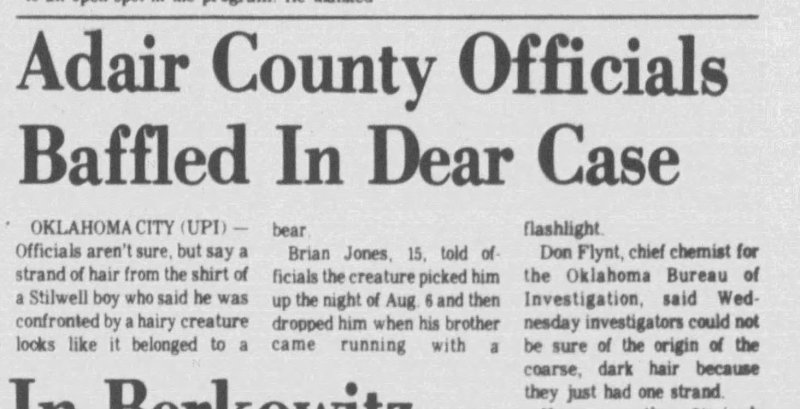
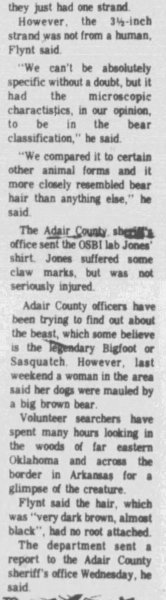
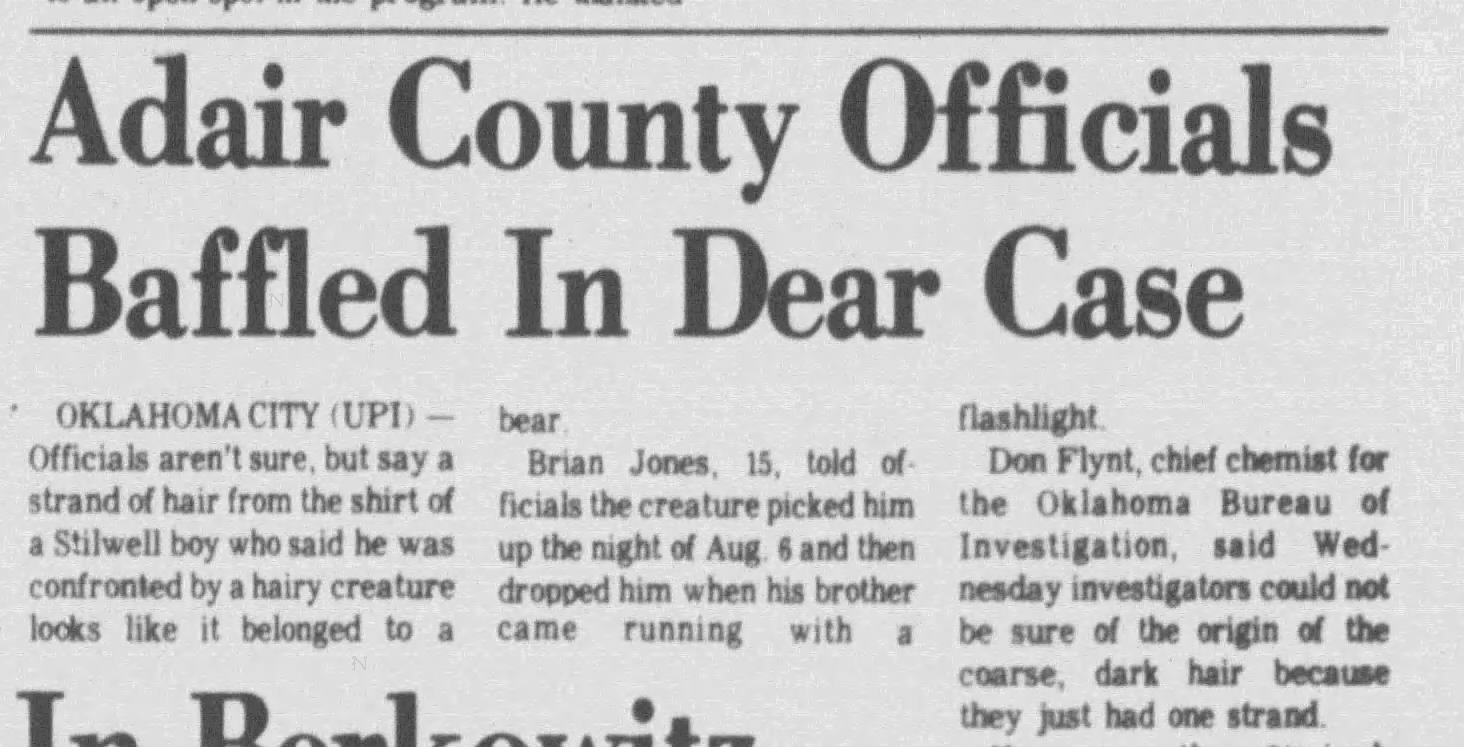
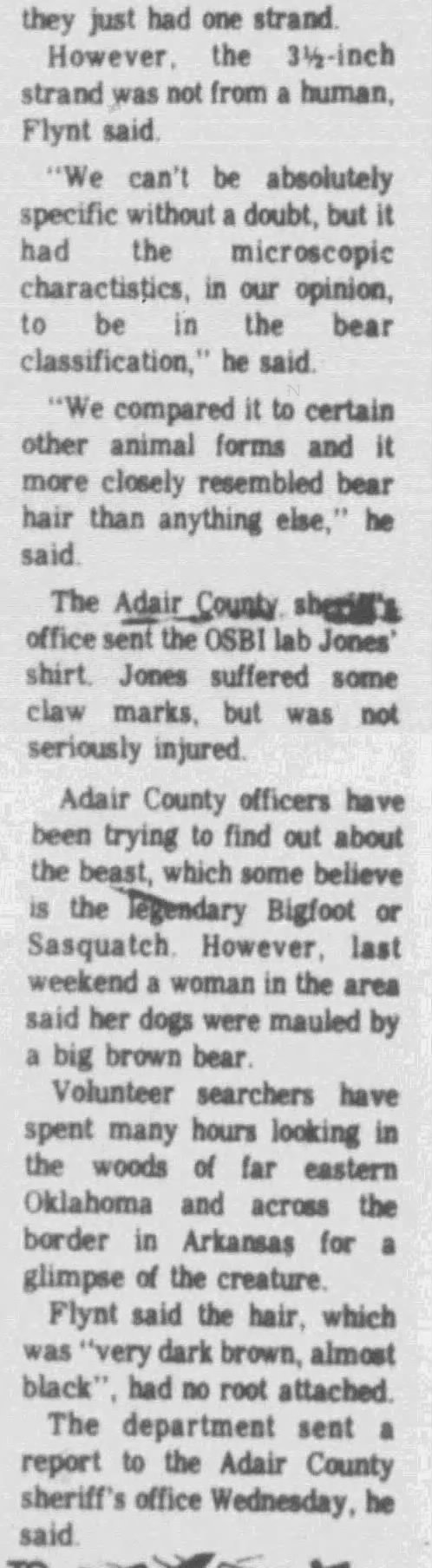
Published in the Henryetta (OK) Daily Free-Lance on August 18, 1977; this fills out some more of the stories found by former Forums member Tirademan (RIP) and posted elsewhere by Forums member Gigantor. The headline was probably meant to read "Bear" rather than "Dear."
 1 point
 -
The threats against whistleblowers and even the outbreak of missing and assumed deceased scientists is grist for the mill about how national security will continue to be used to cover up black box programs and funds, we can only hope the gold bars at Ft Knox haven't flown the coop already. Family of potential whistle blowers are now threatened and false charges used to wreck careers so the stories about BF researchers having home invasions and computers snatched in the past is totally believable. Mr. Gold's comments on the paranormal are as normal as remote viewing now.1 point
-
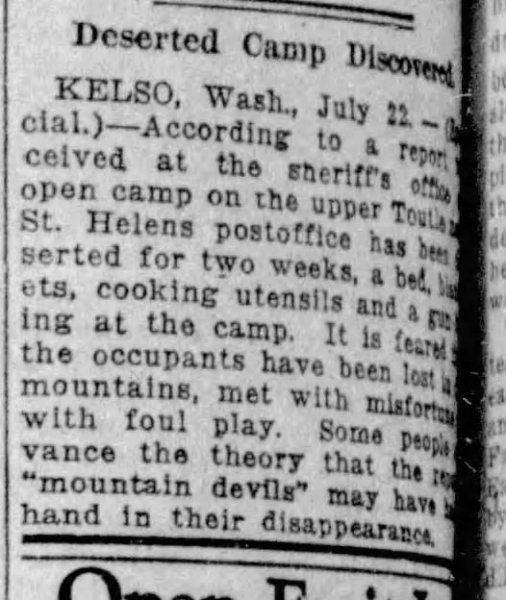
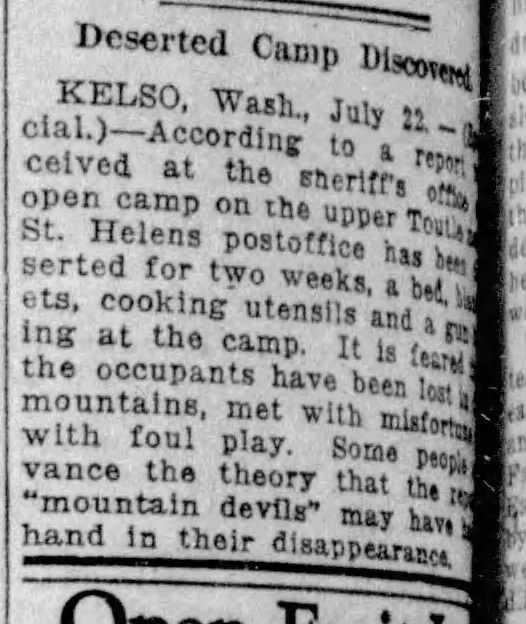
From The Oregonian, Portland (OR) on July 23, 1924.
 1 point





This leaderboard is set to New York/GMT-04:00