
Leaderboard



Popular Content
Showing content with the highest reputation since 11/21/2026 in Posts
-
Responsible logging is perfectly compatible with healthy wildlife populations and a healthy environment.3 points
-
This is not correct. Probably taken out of context. Lets steal from Google (and by saying that, cite the source :)) See below!! But first .. There is something else to be understood here. What we're talking about here is fundamentally rooted in the Milankovitch Cycles and there is a change partway through of which of the 3 cycles is dominant. "Cycle 1" is eccentricity which is really 2 parts, about 100K years and about 405K years, "cycle 2" is obliquity which operates on a roughly 41K year cycle, and precession which operates on a roughly 23K to 26K year cycle. During the period of about 700K to 1.25 MYA, the cycle for glaciation transitioned from being mostly driven by obliquity to mostly driven by eccentricity. The earlier cycles were shorter and less intense, later cycles longer and more intense. (Note that this is from both ice core samples and from marine sediment samples, in other words, not theory but rather repeatable science.) ++++++ Now, the "below" --> Across the entire Pleistocene epoch (2.58 million to 11,700 years ago), the Bering Strait cycled between a flooded seaway and an exposed land bridge more than a dozen times as global ice sheets grew and shrank. [1, 2, 3] Because the Bering Strait sill is roughly 50 meters (164 feet) deep, geologists reconstruct its opening and closing across the full 2.58-million-year epoch using Marine Isotope Stages (MIS)—even-numbered stages represent cold glacials (land bridge exposed) and odd-numbered stages represent warm interglacials (strait flooded). [1, 2] 1. Early & Middle Pleistocene (2.58 Million – 130,000 Years Ago) Rather than having single continuous dates, the corridor alternated on two major orbital rhythms: 2.58 Million – ~900,000 Years Ago (41,000-Year Cycles): During the Early Pleistocene, glacial cycles were shorter and shallower. The land bridge emerged briefly during cold peaks (such as MIS 22 around ~900,000 years ago, when major North American ice sheets expanded) and flooded every ~41,000 years during warmer interglacials. ~900,000 – 130,000 Years Ago (100,000-Year Cycles): Following the Mid-Pleistocene Transition, ice ages grew much longer and deeper, exposing a wider land bridge for tens of thousands of years at a time during major glacials, separated by flooded seaways during interglacials: [1, 2] Interval Type Marine Isotope Stage Approximate Dates (Years Ago) Bering Strait Status Glacial MIS 16 ~676,000 – 621,000 Land Bridge (Major glaciation) Interglacial MIS 15 ~621,000 – 563,000 Flooded Seaway Glacial MIS 12 ~478,000 – 424,000 Land Bridge (Anglian / Elsterian glacial) Interglacial MIS 11 ~424,000 – 374,000 Flooded Seaway (Long warm period) Glacial MIS 10 ~374,000 – 337,000 Land Bridge Interglacial MIS 9 ~337,000 – 300,000 Flooded Seaway Glacial MIS 8 ~300,000 – 243,000 Land Bridge Interglacial MIS 7 ~243,000 – 191,000 Flooded Seaway Glacial MIS 6 (Illinoian) ~191,000 – 130,000 Land Bridge (Extensive exposure) 2. Late Pleistocene (130,000 – 11,700 Years Ago) The final 130,000 years are the most precisely dated using ocean sediment cores, paleogenomics, and sea-level records: ~130,000 – 115,000 Years Ago (MIS 5e / Last Interglacial): Flooded Seaway. Global sea levels were higher than today, completely submerging the strait. [1] ~115,000 – 35,700 Years Ago (MIS 5d–MIS 3): Mostly Flooded / Intermittent. Older models assumed the land bridge formed around 70,000 years ago (MIS 4), but recent Arctic Ocean nitrogen-isotope reconstructions show the strait remained flooded through most of this period until ~35,700 years ago, with at most brief, shallow exposures during cold stadials. [1, 2, 3] ~35,700 – 13,000/11,000 Years Ago (Late MIS 3 – MIS 2): Land Bridge. Rapid ice-sheet growth dropped sea levels enough to connect Siberia and Alaska continuously through the Last Glacial Maximum (26,500–19,000 years ago). [1, 2] ~13,000 – 11,000 Years Ago (End of Pleistocene): Flooded Seaway. Meltwater from retreating ice sheets breached the sill around 13,000–11,500 years ago, permanently reopening the Bering Strait just as the Pleistocene ended at 11,700 years ago. [1, 2, 3] ++++++++++++++++ Then, finally, my own stuff kinda playing the clock representing rate of mutation which seems to be pretty constant, I came up with the notion that we're looking for a latest common ancestor between us and sasquatch to support the level of compatibility / incompatibility suggested by the Nor Cal tribal lore at about 800K years ago. At the time I said Homo erectus but we have a bit more information to work with now. Since scientists are at least tentatively linking "Dragon Man" (Homo longi) which has been dated to 1MYA to about 51KYA to Denisovan, then Denisovans do have to be considered. Remember that there may be others we have not discovered or timelines that have to be adjusted: we should be focusing on asking the right question, not jumping ahead to try to force a wrong/premature answer! I guess that's probably enough outa me for a bit ..3 points
-
We live in the North-Central area, NOT super-close to any coast. There are still a few affordable areas left in Florida, but they going fast! What amazes me is how MUCH forested area and wildlife there still is in Florida. Just to the south of our neighborhood, there's a very large tract of land that has quite a few black bears. They wander into our neighborhood occasionally. We see MANY wild turkeys and there's wild-hog activity everywhere we hike regularly. One night driving home, what looked like some kind of large badger waddled across the road in my headlights. There's technically not supposed to be badgers in Florida, but that's what it looked like to me.2 points
-
The United States government monitors everything on Earth to one extent or another. I find it incredibly interesting that, after over a century of poo-pooing and ridiculing sasquatch reports, a single agency office decides to "publish" its "files" (consisting of three reports) not even in their district during an era of "disclosures" of investigations into the sexual crimes of an obvious multi-national intelligence asset and the spacecraft that they've been actively denying existed for the past 80 years.2 points
-
Okay, I just skimmed this thread and I don't see this breaking news mentioned. If it was, someone can just dope-slap me around a bit for being redundant. The U.S. Forest Service released their Bigfoot files on October 15, 2026. They can be found at https://www.fs.usda.gov/about-agency/foia/reading-room. (You may have to turn off any VPN, if you use one.) The first document was from 1982 and is a report from the Umatilla National Forest regarding a reported find of Bigfoot tracks in the Low Creek drainage. The second was a newspaper article concerning reported Bigfoot tracks in Sanders County, Montana. The third was a 1980 write-up about Petty Creek near Alberton, west of Missoula, Montana. While primarily historical, it apparently includes some possible Bigfoot references. I've attached all three articles for downloading should anyone want to read them in full. June 18 1982 Bigfoot Tracks Investigation Umatilla NF.pdf Clark Fork Valley Press Article JAN 13 2003.pdf Kinney_whatdoyouknow_MT.pdf2 points
-
Huntster, once again I concur! As a former zookeeper I will state monkeys are a pain in the backside and have a family wide schtank like few other mammal groups!1 point
-
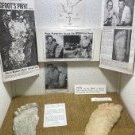
Hey Kool. Be sure to look us up at the museum here in Willow Creek. Just make contact through the museum. I give private tours of our collection (Bob Titmus collection) which was dedicated in 2000 by John Green and Dr Meldrum. I can point you to roads and areas to explore and fill you in on very recent contemporary investigations that have produced current print casts and encounters. Lots of info to share. Eric.1 point
-
Yes Hunster, that's exactly what I was thinking where 1/70th of the trees are cut each year and you let the logged area grow for 70 years then they harvest again. Bigfoot will have plenty of privacy and can hide out all it wants. The forest service needs to stop pretending bigfoot doesn't exist.1 point
-
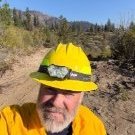
Hi Hunster and yes the era of disclosure is a real flop. I sometimes wonder if the Forest Service doesn't monitor Bigfoot Forum so they can judge public opinion in regard to Bigfoot. I figure that the government monitors what we talk about on the forum because they know Bigfoot is a potential giant Spotted Owl issue that could blow up anytime like it did in California, Oregon and Washington. Do you remember the issue? It's too bad they just don't go proactive and openly study bigfoot and reassure the public that bigfoot and logging are compatible. Do think this is true or is logging driving bigfoot towards extinction? This is a picture of my wife and I here in Coos Bay, Oregon. She is not a fan of Bigfoot but tolerates me on the bigfoot forum.
 1 point
-
The Forest Service, Bureau of Land Management and the US Fish and Wildlife Service, that we will call the Big Three, are most likely monitoring Bigfoot forums since this is a national and worldwide website that encourages people to discuss Sasquatch commonly known as Bigfoot. The Bigfoot Forum has been in existence for many years, and people from all across the nation including Canada have been discussing their knowledge of Bigfoot. The federal government's Big Three are probably keeping track of public opinion when it comes to Bigfoot. We also don't know what kind of research the federal government and state government is putting into the study of Bigfoot since they publish very little information about the creature. Now before we get into this too much more, the Big Three public agencies are concerned about public opinion in regard to the management of Bigfoot and the necessity to manage our timber production at the same time. For many years now the Forest Service has been managing lumber production and Sasquatch thrives in areas where trees have been cut down in my opinion. In these areas brush has grown up to take the place of the open forest where trees once existed. Now in order to survive, Bigfoot depends on deer and elk that flourish in areas where timber has been removed and brush vegetation grows back which is food for deer so forest can support more deer under these conditions. In my opinion if the correct information is provided to the public that the public will agree that timber production and Sasquatches are a compatible pair. The Forest Service, BLM, and the U.S. Fish and Wildlife Service or the Big Three are aware of the Pacific Northwest's problems that revolve around spotted owl decline. The decline is not due to timber harvesting as originally thought but due to a habitat invader, the barred owl. The worry that timber harvest would adversely impact the habitat of the Spotted Owl was finally proved false. During the time when the spotted owl controversy was raging, the Big Three were on high alert. The public was afraid that logging would ruin the habitat of the spotted owl which was proved to be incorrect because it was being replaced by the barred owl. I believe the same situation could occur because of Bigfoot when the public realizes Bigfoot lives in practically every state especially where logging occurs. To keep this situation from occurring, the Forest Service jokes about bigfoot being a mythical creature while the US Fish and Wildlife Service and the BLM simply hope the issue will blow over and they don't publish any information on the creature. How about a public campaign that shows Bigfoot and moderate logging are compatible that involves the policy of 'sustained yield' where timber trees are allowed to grow for 70 years and 1/70 th of the trees are cut each year. Bigfoot is very seldom seen and is known to make simple nest in the forest with branches woven together as shown by the scientist of the Olympic Project. If one area becomes difficult for them to remain hidden due to lumber harvest, they simply move to an area where mature brush and trees provide concealment. Sasquatches are very adaptable and can live in a variety of forest conditions, so we don't need to worry about harming sasquatches In areas where timber production is important. If the Forest Service, BLM and US Fish & Wildlife Service would publish studies showing that Sasquatches live and thrive in many forest where timber is produced throughout the United States then the public would begin to understand that logging is not harming Sasquatches ability to hunt, reproduce, forage and build nests.1 point
-
I'm all FOR outdoorsy-dress and I think the dress in Alaska is just fine! My wife and I are avid hikers and campers and that's the way WE dress. We're in Florida though, so our clothing is likely a little less heavy! My one funny Alaska story: I'm a retired college professor and the main college I taught at had a large number of international students (and students from all 50 states). In one class I had, we were going around the room, and the students were telling their names and where they were from. There were students from small, exotic Asian countries and Eastern European countries that few had even heard of. NOBODY in the class reacted to any location. THEN this one kid tells the class he's from "Alaska" and the room erupts into "oohs" and "aahhs" and "wow's!" The class reacted like this kid was from another planet! I had to remind them that Alaska is just another part of America!1 point
-
Do you have any specific dates for this story? This report came from the video that I posted about the fire watch tower observer who watched a family of three bigfoots. I believe the video is posted on this thread.1 point
-
Hilarious! Yes, since this is A.I., we know it has to be true. Okay, I'm convinced, Neanderthals wore clothing! And apparently they did "business casual" very well!1 point
-
I totally agree that they could have worn something. But it's far from proven that they wore clothing anything like early Homo Sapiens did. As your A.I. says above, the evidence is "indirect." There's no "direct" evidence, as in clothing OR specialized tools to make clothing (as with Homo Sapiens). They apparently did work hides that they could have theoretically draped and/or just used for many other purposes. We can't assume more than that. This debate actually illustrates a bigger point. Have you ever noticed how archaeologists, paleontologists, and anthropologists (and similar fields) often make broad claims based on a little bit of evidence and many assumptions? And in numerous cases, when better evidence comes to light, their assumptions are proven totally wrong. I see stories like this every day. My point is that we're just seeing the tip of the iceberg when it comes to early hominims. Adding assumptions makes for a better for a book, article, or research paper, but I like to keep an open mind until we have clear, direct, and irrefutable evidence. As in the title of the article I linked-to above, the science of Neanderthal clothing is "murky." I agree.1 point
-
For reference, : !) The oldest known human fossils or artifacts of humans outside of Africa were found in Dmanisi in Georgia and dated to 1.8 million years ago. 2) The oldest widely accepted human-made artifacts in Siberia come from Diring Yuriakh on the Lena River (at least 260,000 years old, with estimates ranging up to 270,000–370,000 years ago, and disputed claims pushing much further back), while the oldest securely dated physical human fossils are ~200,000-year-old Denisovan remains from Denisova Cave. There are no verified wild ape fossils in Siberia's fossil record—fossil apes during the Miocene lived in regions like Europe, Anatolia, Africa, and warmer parts of South and East Asia 3) China's oldest known human (hominin) fossils and stone artifacts date back roughly 1.7 to 2.25 million years, while its oldest known primate fossil—Archicebus achilles—dates to 55 million years ago 4) The oldest known human fossils or artifacts of humans in the New World are the fossilized footprints at White Sands National Park in New Mexico, dated to roughly 21,000 to 23,000 years ago There is an interesting spread of time between human traces between China and Siberia, and Siberia and the New World.1 point
-
I think we tend to make WAY too big an evolutionary deal about the supposed morphological differences between reported Bigfoot descriptions and our perceptions of other hominim species. Sure, Patty would drastically stick out walking down main street, but her differences may not be that far off from some hominim of 300k years ago. Those differences MAY be more superficial than we assume. It's rare, but humans can grow to well over 7 feet (without medical gigantism) and can weigh over 500 pounds. I recall reading about a Scottish guy who was 7'5", was healthy and freakishly strong. Imagine if Shaquille O'Neal bulked-up to his maximum. He could easily weigh over 400 lbs (he may be in that vicinity anyway!). I've always believed that MOST Bigfoot likely top-out in the vicinity of 8 feet and that the reports of being bigger could easily just be fear and exaggeration. As far as being hairy, I've read that humans have just as many hair follicles as chimps do. The difference is that chimp hair tends to be longer and thicker. We don't know know for sure when/why humans became less hairy. We have even less knowledge about how hairy other hominim species were. There may be a genetic "switch" that can turn hairyness on or off within just a few generations if that. Also, we know for certain that certain races of modern humans are better morphologically adapted to surviving in harsher, colder environments. We also know that Neanderthals were physically better adapted to colder weather as well. Just FYI, we have no evidence if Neanderthals wore clothing or not or how hairy they were. We assume that they did, but have no direct evidence. Hopefully you see my point here. We have so little information about Denisovans or any other early human-types. The reported descriptions of Bigfoot may be well-within the potential adaptations of known hominims. Remember, ALL dog breeds are the exact same species even though their "morphology" differs drastically. Perhaps some hominims just self-selectively bred and adapted.1 point
-
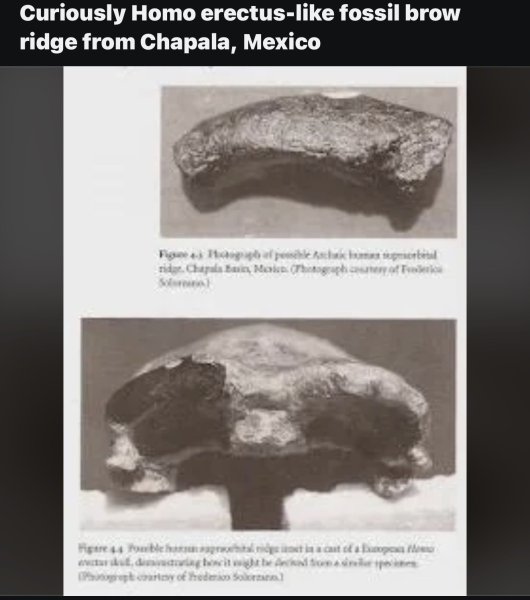
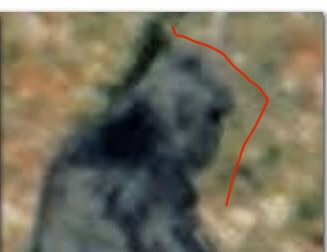
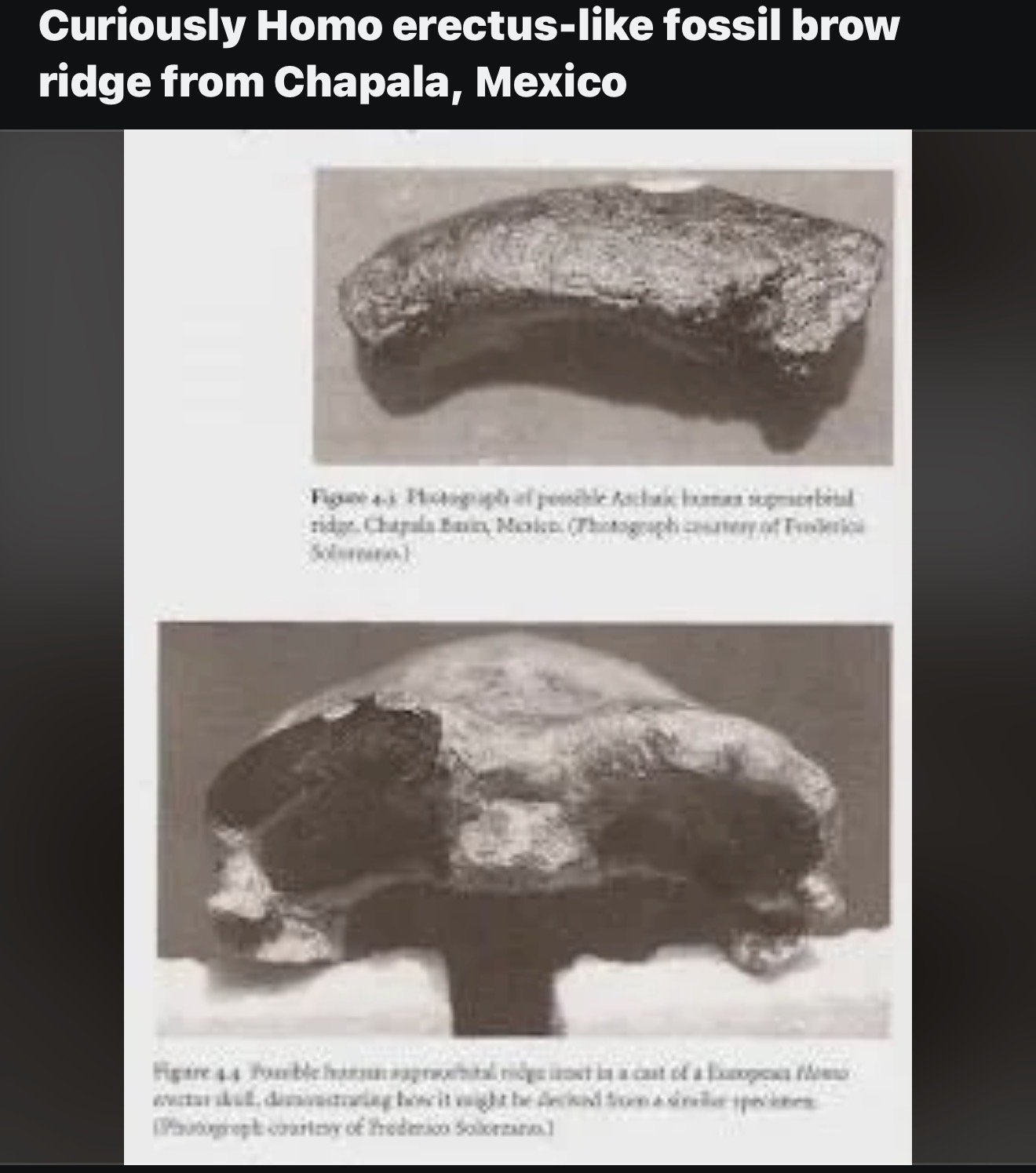
In my humble opinion? Denisovans are much too recent and much too much like us to be a prime candidate for Sasquatch. I do think there is ample evidence of something being in the Americas before us. Despite push back from the clovis first crowd. And I think the prime candidate is the first human species to leave Africa widespread. And that is IF Sasquatch is in our genus. Homo Erectus https://www.latimes.com/archives/la-xpm-2004-oct-03-adfg-bones3-story.html Its entirely possible that Homo Erectus may have made it to North America but is in no way related closely to Sasquatch. For those of us that feel Patty is still a real creature? She has almost nothing above her brow ridge. It’s very very low. Certainly not anything resembling a Denisovan. As far as some special pleading as to why Denisovans would regress technologically once reaching the new world? I don't think you have to do that. There are other candidates in east Asia that are much more archaic and just as easily could have walked to the Americas.
 1 point
-
Gorgeous!1 point
-
That is stunning!!!1 point
-
Here is an AI summary of the transcript: Opening and framing The speaker, a professional wildlife filmmaker, naturalist and conservationist, says he is risking his career and reputation by disclosing that twelve years ago, in the southern Appalachians, he saw a large, hair-covered, bipedal being in the forest at night. The experience upended his view of reality and sent him on more than ten years of mostly secret research around the world. He says he is not trying to prove such beings exist; he wants to understand what they are, and what that implies about humans. He stresses that he is not an anthropologist, that he may be wrong, and that he invites criticism. He argues that academia ignores the subject and that modern science is compartmentalized across geography, biology, paleoanthropology, archaeology and even consciousness studies, so a full picture requires combining them. The global legend argument He calls "Bigfoot" a laughable name for a phenomenon found on every habitable continent, described consistently across cultures and millennia as bipedal, hair-covered, humanoid beings of varying size. The most common translation of the many names is "wild man": not an animal, but another kind of person. He cites appearances from the Epic of Gilgamesh to the Sistine Chapel, and oral histories of trading and warring with such beings. In his filming travels he asked locals and Indigenous people about wild man legends and heard ancient legends and modern sightings in South and Central America, North America, Australia and Southeast Asia. Two regions stood out. Africa, the birthplace of hominins, has surprisingly few such legends. The Solomon Islands in Oceania have detailed ones, with hair-covered giants and little people, island-specific names and descriptions, and specific caves said to hold living wild men. The data analysis He compiled over 600 records from local newspapers, books, scientific literature and ethnographies, then filtered them to pre-1950 to exclude the influence of the word "Bigfoot" and of jet-age travel spreading stories. A density heat map of the legends shows a stronghold in Oceania and Southeast Asia. He then borrows the logic of human genetic diversity: Africa is the most genetically diverse region because it is the origin, and it holds both the world's shortest and tallest peoples (the Mbuti and the Dinka). Reported wild man sizes range from about 3 feet to over 8 feet, so he mapped height diversity of the legends and found it also peaks in Southeast Asia and Oceania, matching the density map. He concludes the phenomenon likely originated there. The Denisovan connection He frames this within the current "golden age" of paleoanthropology: for most of our history Homo sapiens shared the planet with Neanderthals, Denisovans and other human types, humans have been alone for less than 10% of our existence, interbreeding was widespread, and species boundaries are blurry. Neanderthal admixture was only confirmed in 2010. Reasoning that the most likely candidate for hair-covered bipeds is an extinct hominin, and that the last one to live alongside us was the Denisovans, he overlays his legend maps on a map of Denisovan DNA percentages in modern populations (up to about 6%) and calls it a near-exact match. He says every new fossil and genetic finding has strengthened rather than undermined this idea. Denisovan fossil evidence Denisova Cave (Siberia): a baby molar found in 1984, an unusually large tooth (about 50% bigger than a human's) in 2000, and a finger bone in 2008 that yielded DNA proving a distinct group. The Xiahe mandible from Tibet, found in 1980 and identified in 2019 by proteins, showing massive molars and a robust jaw. The Penghu jaw from Taiwan, identified by paleoproteomics, extending the range to the Chinese coast. The Harbin cranium ("Dragon Man," Homo longhi), with a murky discovery story, confirmed as Denisovan in 2025 through molecular evidence. It is very large and long, with a brain of about 1,420 cc, a heavy brow ridge, deep-set square eye sockets, a flat face, a wide nose, thick facial bones and a wide occipital region for neck muscles. He adds that a skull fragment announced in October 2026 suggests an even larger individual with an estimated 1,800 cc brain, and argues that the one near-complete skull is unlikely to be the largest of the species. Newly announced Penghu leg bones (a femur and a tibia): the largest hominin leg bones ever found, with one individual estimated at about 6'3", a foot taller than other regional humans of the time. He notes they may be male or female, with no genetics to confirm. They were found in tropical latitudes, contrary to Bergmann's rule. Isotope analysis suggests meat consumption at the level of large carnivores, and the researchers proposed that these hominins relied on body size and ability rather than technology for hunting. He compares the skull features to witness descriptions of Sasquatch: a sloping head, heavy brow, wide-set large eyes (most sightings are at night, and he speculates the large orbits may mean night vision), a flat wide face and nose, no visible neck, and large block-like teeth. Genetic legacy and Beringia He explains that Denisovan DNA gave modern humans useful traits. EPAS1 allows high-altitude survival in Tibet and has been called a "super-athlete gene," improving power and sprint performance in some athletes. TBX15 affects fat distribution and metabolism and appears in roughly 65% of Siberians, 89% of Native Americans and nearly 100% of Greenland Inuit, suggesting it helped humans cross Beringia. Other variants affect pathogen immunity, UV protection, hair growth, smell sensitivity and visual contrast. He notes that humans repeatedly failed to leave Africa for 140,000 years, then about 70,000 years ago spread rapidly into Denisovan territory, to Australia within 5,000 to 10,000 years, and into the Americas. If Denisovans had access to the Bering Land Bridge for ten times longer than humans and could survive such environments, he asks why they would not have crossed it. His legend density map, he says, follows a plausible Denisovan dispersal route into North and then South America. He argues that the absence of Denisovan fossils is the same problem as the absence of wild man bones, that isolation from humans would leave no genetic traces, and that reliance on bodies over tools would leave no tool evidence. The hypothesis (explicitly marked as his own) He states that everything up to this point is based on published research, but the way he connects it is his hypothesis. Other archaic humans were displaced and absorbed through competition and interbreeding. The only way a Denisovan lineage could have survived is complete avoidance: total separation from humans and hiding in the wilderness. He suggests they may have foreseen what technology would do to our species and chosen not to participate. To support the contrast, he discusses: Cognitive offloading and the "Google effect." Plato's warning about writing. GPS and declining navigation skills. Digital amnesia, such as people not remembering their children's phone numbers. Human brain size shrinking by up to 10% since the Pleistocene. The fragility of modern society to a power grid failure. He suggests we may have lost abilities with each technological step, perhaps even ones that sound impossible, such as seeing in the dark or exceptional speed. He proposes that Denisovans who avoided technology kept selecting for awareness, memory, movement and senses, so their natural abilities kept sharpening, and he briefly mentions consciousness and parapsychology (remote viewing, telepathy) as a separate frontier not required for the hypothesis. He compares the idea to historical scientific heresies such as Copernicus, Einstein and Wegener, and argues that mainstream science makes some ideas taboo. Conclusion He believes a surviving lineage of Denisovans or Denisovan hybrids, completely isolated from modern humans, may be behind the wild man phenomenon worldwide, and that Sasquatch, Yeren, Almas, the Yeti and other wild men are "another version of us," in some ways more advanced, a branch of humanity that evolved without technology and kept its connection to nature. The hypothesis, he says, does not rule out the view that these are undiscovered primates or paranormal. He raises a scientific problem: standard DNA tests for animal identification examine a small section of DNA, and Denisovan-type samples would be so close to human that they would likely be read as human or contaminated, so past samples may have been discarded and deeper genetic analysis is needed. He says he is convinced thousands of people have had unexplained wilderness experiences and stayed silent, that he cited his research papers in the film and will list them in the description, and that he made the video to encourage others to share their experiences and academics to keep an open mind.1 point
-
^^^ To be clearer, I'm not suggesting she didn't exist. The historical record is too strong. I think we are misinterpreting the descriptions. Further, I think the descriptions were deliberately misleading .. a sick rationalization of systemic rape of a captive woman. I do not think she was nearly as "dumb" nor as hairy as we have been told. There's a difference between "more hair than normal" and "hairy as an ape." I have seen the darker side of human rationalization, of our ability / tendency to dehumanize others to try to make otherwise truly gross behavior somehow acceptable. This has that feel.1 point
-
Hunster said: If people choose not to camp for fear of sasquatches, bears, snakes, ticks, etc., that's fine with me. My problem begins with government telling me that I can't recreate there because of somebody else’s fear that I might harm sasquatches, bears, ticks, etc. georgem said: I understand your viewpoint, but my comment was the overall big picture that requires a large population of campers to use the campground and pay the fee so the forest service can justify doing park maintenance and keeping the park open. If campers tune into rumors that the park is in the middle of bigfoot's habitat, maybe campers would stop coming to the park and it would need to be shut down after spending loads of money to develop the park. The forest service could be sued for negligence for not studying the dangerous animals situation that may be a danger to campers. Campers should be informed with a brochure or informative sign while they are registering to camp. This gets the forest service off the hook incase some animal such as a bear, cougar, rattle snake, wasp, scorpion, or bigfoot accosts a camper. Another words 'camp at your own risk' and don't sue the forest service.0 points
-
"I'm not sure what they were trying to accomplish with three obscure reports like that. I wonder if they were aware of the events of October 20, 1967 in Six Rivers National Forest (after 12 years of well publicized events).", Hunster said. The forest service managers certainly know about bigfoot and they fail to inform the public that bigfoot roams all of the national forest and it's not appear to be a danger. It's their job to study bigfoot and find out if it is a danger to the public and report back to the public. The forest service should investigate every lost hiker that is never found and find out if its possible the hiker was accosted by a wild animal then report back to the public.0 points





This leaderboard is set to New York/GMT-05:00