
Leaderboard




Popular Content
Showing content with the highest reputation on 11/21/2026 in all areas
-
This is not correct. Probably taken out of context. Lets steal from Google (and by saying that, cite the source :)) See below!! But first .. There is something else to be understood here. What we're talking about here is fundamentally rooted in the Milankovitch Cycles and there is a change partway through of which of the 3 cycles is dominant. "Cycle 1" is eccentricity which is really 2 parts, about 100K years and about 405K years, "cycle 2" is obliquity which operates on a roughly 41K year cycle, and precession which operates on a roughly 23K to 26K year cycle. During the period of about 700K to 1.25 MYA, the cycle for glaciation transitioned from being mostly driven by obliquity to mostly driven by eccentricity. The earlier cycles were shorter and less intense, later cycles longer and more intense. (Note that this is from both ice core samples and from marine sediment samples, in other words, not theory but rather repeatable science.) ++++++ Now, the "below" --> Across the entire Pleistocene epoch (2.58 million to 11,700 years ago), the Bering Strait cycled between a flooded seaway and an exposed land bridge more than a dozen times as global ice sheets grew and shrank. [1, 2, 3] Because the Bering Strait sill is roughly 50 meters (164 feet) deep, geologists reconstruct its opening and closing across the full 2.58-million-year epoch using Marine Isotope Stages (MIS)—even-numbered stages represent cold glacials (land bridge exposed) and odd-numbered stages represent warm interglacials (strait flooded). [1, 2] 1. Early & Middle Pleistocene (2.58 Million – 130,000 Years Ago) Rather than having single continuous dates, the corridor alternated on two major orbital rhythms: 2.58 Million – ~900,000 Years Ago (41,000-Year Cycles): During the Early Pleistocene, glacial cycles were shorter and shallower. The land bridge emerged briefly during cold peaks (such as MIS 22 around ~900,000 years ago, when major North American ice sheets expanded) and flooded every ~41,000 years during warmer interglacials. ~900,000 – 130,000 Years Ago (100,000-Year Cycles): Following the Mid-Pleistocene Transition, ice ages grew much longer and deeper, exposing a wider land bridge for tens of thousands of years at a time during major glacials, separated by flooded seaways during interglacials: [1, 2] Interval Type Marine Isotope Stage Approximate Dates (Years Ago) Bering Strait Status Glacial MIS 16 ~676,000 – 621,000 Land Bridge (Major glaciation) Interglacial MIS 15 ~621,000 – 563,000 Flooded Seaway Glacial MIS 12 ~478,000 – 424,000 Land Bridge (Anglian / Elsterian glacial) Interglacial MIS 11 ~424,000 – 374,000 Flooded Seaway (Long warm period) Glacial MIS 10 ~374,000 – 337,000 Land Bridge Interglacial MIS 9 ~337,000 – 300,000 Flooded Seaway Glacial MIS 8 ~300,000 – 243,000 Land Bridge Interglacial MIS 7 ~243,000 – 191,000 Flooded Seaway Glacial MIS 6 (Illinoian) ~191,000 – 130,000 Land Bridge (Extensive exposure) 2. Late Pleistocene (130,000 – 11,700 Years Ago) The final 130,000 years are the most precisely dated using ocean sediment cores, paleogenomics, and sea-level records: ~130,000 – 115,000 Years Ago (MIS 5e / Last Interglacial): Flooded Seaway. Global sea levels were higher than today, completely submerging the strait. [1] ~115,000 – 35,700 Years Ago (MIS 5d–MIS 3): Mostly Flooded / Intermittent. Older models assumed the land bridge formed around 70,000 years ago (MIS 4), but recent Arctic Ocean nitrogen-isotope reconstructions show the strait remained flooded through most of this period until ~35,700 years ago, with at most brief, shallow exposures during cold stadials. [1, 2, 3] ~35,700 – 13,000/11,000 Years Ago (Late MIS 3 – MIS 2): Land Bridge. Rapid ice-sheet growth dropped sea levels enough to connect Siberia and Alaska continuously through the Last Glacial Maximum (26,500–19,000 years ago). [1, 2] ~13,000 – 11,000 Years Ago (End of Pleistocene): Flooded Seaway. Meltwater from retreating ice sheets breached the sill around 13,000–11,500 years ago, permanently reopening the Bering Strait just as the Pleistocene ended at 11,700 years ago. [1, 2, 3] ++++++++++++++++ Then, finally, my own stuff kinda playing the clock representing rate of mutation which seems to be pretty constant, I came up with the notion that we're looking for a latest common ancestor between us and sasquatch to support the level of compatibility / incompatibility suggested by the Nor Cal tribal lore at about 800K years ago. At the time I said Homo erectus but we have a bit more information to work with now. Since scientists are at least tentatively linking "Dragon Man" (Homo longi) which has been dated to 1MYA to about 51KYA to Denisovan, then Denisovans do have to be considered. Remember that there may be others we have not discovered or timelines that have to be adjusted: we should be focusing on asking the right question, not jumping ahead to try to force a wrong/premature answer! I guess that's probably enough outa me for a bit ..3 points
-
I totally agree that they could have worn something. But it's far from proven that they wore clothing anything like early Homo Sapiens did. As your A.I. says above, the evidence is "indirect." There's no "direct" evidence, as in clothing OR specialized tools to make clothing (as with Homo Sapiens). They apparently did work hides that they could have theoretically draped and/or just used for many other purposes. We can't assume more than that. This debate actually illustrates a bigger point. Have you ever noticed how archaeologists, paleontologists, and anthropologists (and similar fields) often make broad claims based on a little bit of evidence and many assumptions? And in numerous cases, when better evidence comes to light, their assumptions are proven totally wrong. I see stories like this every day. My point is that we're just seeing the tip of the iceberg when it comes to early hominims. Adding assumptions makes for a better for a book, article, or research paper, but I like to keep an open mind until we have clear, direct, and irrefutable evidence. As in the title of the article I linked-to above, the science of Neanderthal clothing is "murky." I agree.1 point
-
For reference, : !) The oldest known human fossils or artifacts of humans outside of Africa were found in Dmanisi in Georgia and dated to 1.8 million years ago. 2) The oldest widely accepted human-made artifacts in Siberia come from Diring Yuriakh on the Lena River (at least 260,000 years old, with estimates ranging up to 270,000–370,000 years ago, and disputed claims pushing much further back), while the oldest securely dated physical human fossils are ~200,000-year-old Denisovan remains from Denisova Cave. There are no verified wild ape fossils in Siberia's fossil record—fossil apes during the Miocene lived in regions like Europe, Anatolia, Africa, and warmer parts of South and East Asia 3) China's oldest known human (hominin) fossils and stone artifacts date back roughly 1.7 to 2.25 million years, while its oldest known primate fossil—Archicebus achilles—dates to 55 million years ago 4) The oldest known human fossils or artifacts of humans in the New World are the fossilized footprints at White Sands National Park in New Mexico, dated to roughly 21,000 to 23,000 years ago There is an interesting spread of time between human traces between China and Siberia, and Siberia and the New World.1 point
-
I think we tend to make WAY too big an evolutionary deal about the supposed morphological differences between reported Bigfoot descriptions and our perceptions of other hominim species. Sure, Patty would drastically stick out walking down main street, but her differences may not be that far off from some hominim of 300k years ago. Those differences MAY be more superficial than we assume. It's rare, but humans can grow to well over 7 feet (without medical gigantism) and can weigh over 500 pounds. I recall reading about a Scottish guy who was 7'5", was healthy and freakishly strong. Imagine if Shaquille O'Neal bulked-up to his maximum. He could easily weigh over 400 lbs (he may be in that vicinity anyway!). I've always believed that MOST Bigfoot likely top-out in the vicinity of 8 feet and that the reports of being bigger could easily just be fear and exaggeration. As far as being hairy, I've read that humans have just as many hair follicles as chimps do. The difference is that chimp hair tends to be longer and thicker. We don't know know for sure when/why humans became less hairy. We have even less knowledge about how hairy other hominim species were. There may be a genetic "switch" that can turn hairyness on or off within just a few generations if that. Also, we know for certain that certain races of modern humans are better morphologically adapted to surviving in harsher, colder environments. We also know that Neanderthals were physically better adapted to colder weather as well. Just FYI, we have no evidence if Neanderthals wore clothing or not or how hairy they were. We assume that they did, but have no direct evidence. Hopefully you see my point here. We have so little information about Denisovans or any other early human-types. The reported descriptions of Bigfoot may be well-within the potential adaptations of known hominims. Remember, ALL dog breeds are the exact same species even though their "morphology" differs drastically. Perhaps some hominims just self-selectively bred and adapted.1 point
-
In my humble opinion? Denisovans are much too recent and much too much like us to be a prime candidate for Sasquatch. I do think there is ample evidence of something being in the Americas before us. Despite push back from the clovis first crowd. And I think the prime candidate is the first human species to leave Africa widespread. And that is IF Sasquatch is in our genus. Homo Erectus https://www.latimes.com/archives/la-xpm-2004-oct-03-adfg-bones3-story.html Its entirely possible that Homo Erectus may have made it to North America but is in no way related closely to Sasquatch. For those of us that feel Patty is still a real creature? She has almost nothing above her brow ridge. It’s very very low. Certainly not anything resembling a Denisovan. As far as some special pleading as to why Denisovans would regress technologically once reaching the new world? I don't think you have to do that. There are other candidates in east Asia that are much more archaic and just as easily could have walked to the Americas.
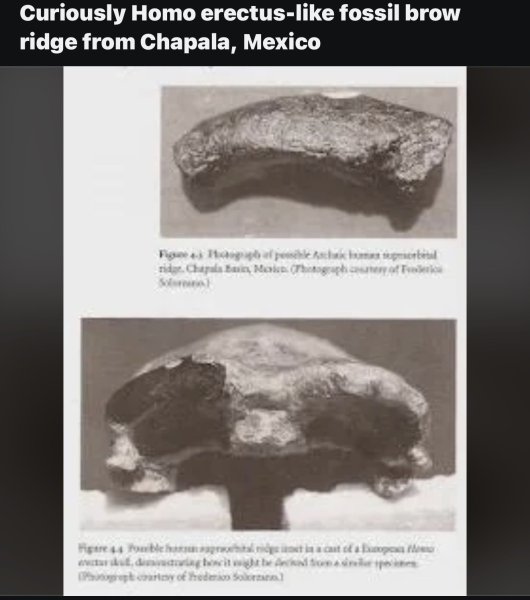
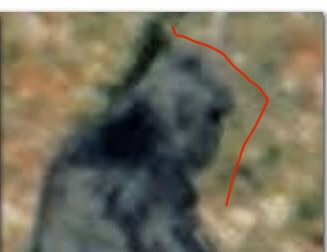 1 point

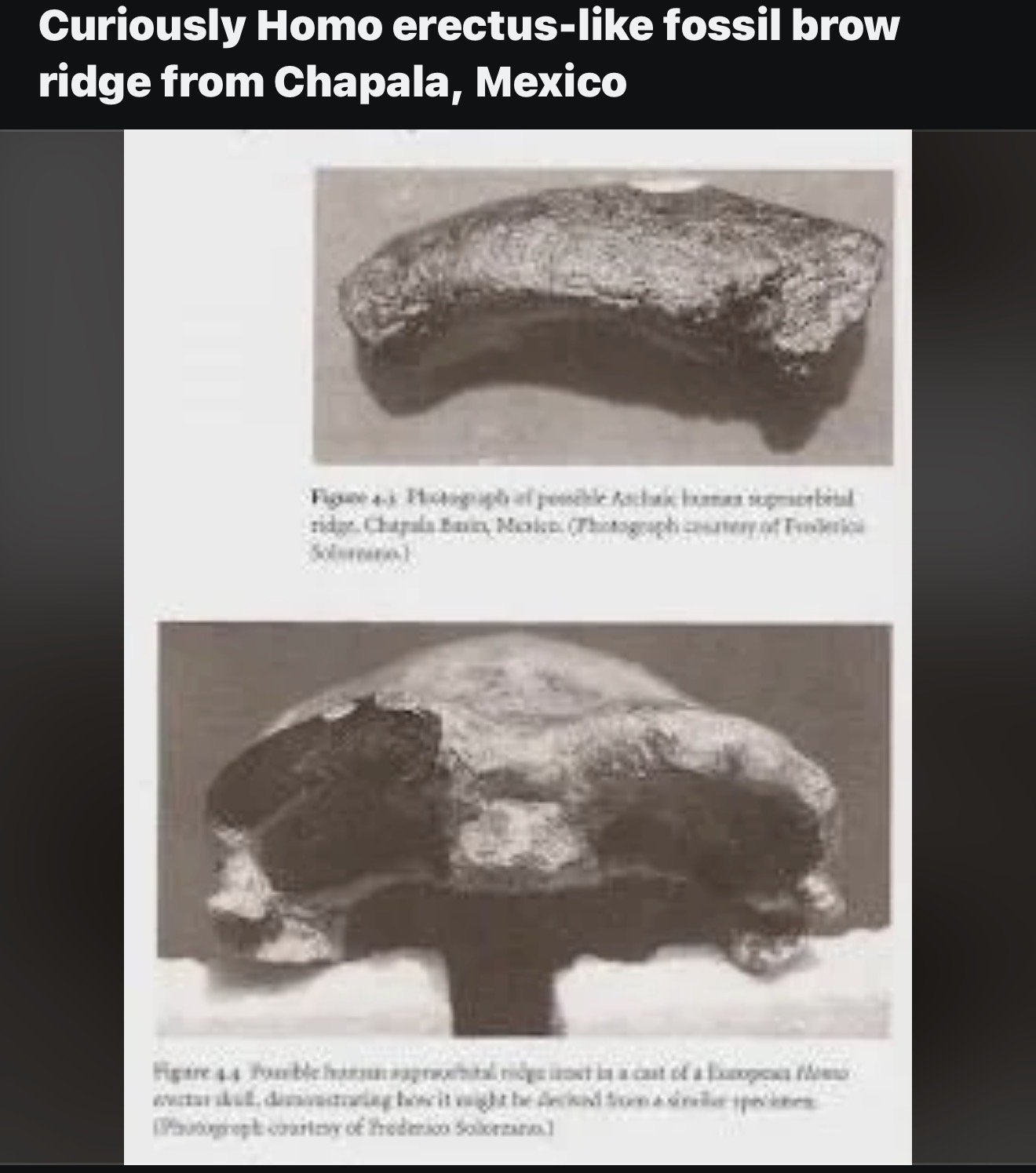
This leaderboard is set to New York/GMT-05:00